Product Overview
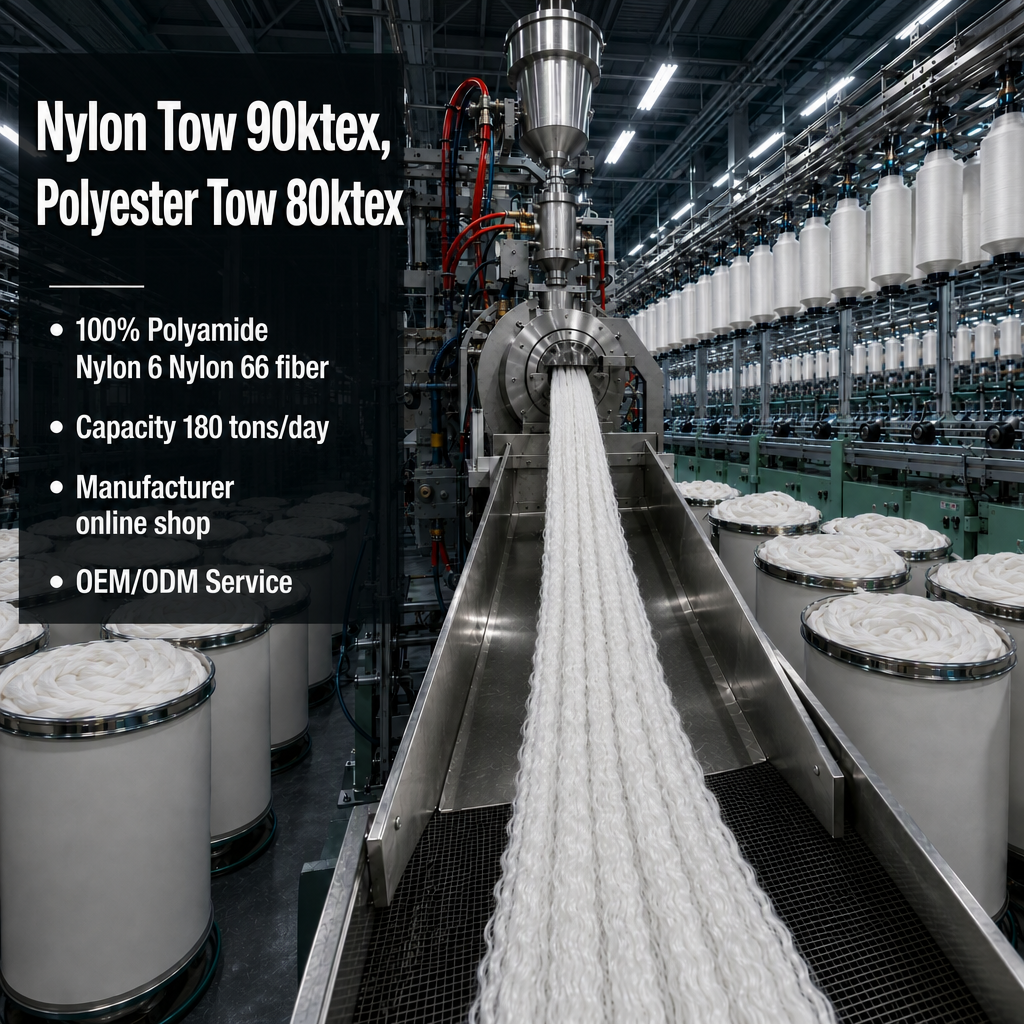
For buyers who need a stable upstream feedstock for textile conversion, nylon fiber tow solves a practical problem: it provides a continuous bundle of fine filaments that can be drawn, crimped, cut, spun, or converted into yarn and technical textile inputs without starting from short staple fiber. The product shown here is a continuous synthetic tow in white, with visible references to Nylon Tow 90 ktex and Polyester Tow 80 ktex, and it is presented as an industrial material for downstream processing rather than a finished consumer textile.
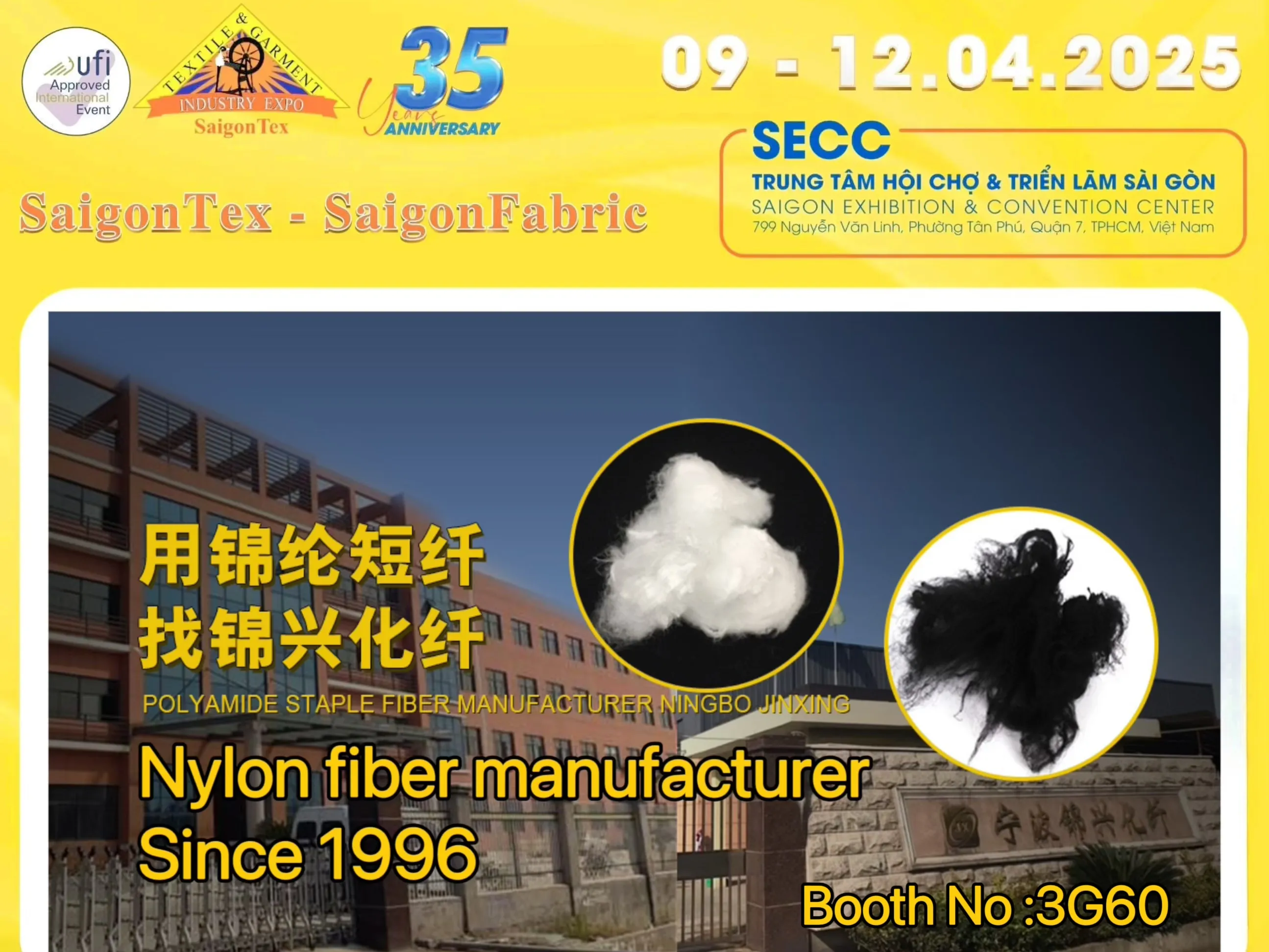
Ningbo Sinopec Fiber Co., Ltd. specializes in nylon fiber manufacturing and supports OEM/ODM service. Founded in 1996, the company reports 150 employees, including 20 engineers, a factory area of 50,000 square meters, and 20,000 square meters of production space. Its stated focus on PA6 and PA66 polyamide nylon fibers makes it relevant for customers looking for a dependable nylon tow source for textile and industrial supply chains.
What This Material Is Used For
A tow product is an intermediate form, not the final fabric. In production lines, a synthetic fiber tow can move into drawing, texturizing, crimping, cutting, spinning, or tow-to-yarn conversion. Buyers often choose this format when they need consistent filament supply for textile yarns, nonwoven feedstock, rope and cordage upstream processing, sewing thread inputs, or reinforcement-related technical textile routes.
The image indicates white polyamide fiber and also names polyester tow in the graphic. Because the exact blend in the pictured tow cannot be confirmed visually, it is best to treat the image as evidence of a fiber tow production environment with both nylon and polyester fiber tow referenced, rather than assuming one fixed composition for every package shown.
Visible Specifications and Reference Points
Product Form
The visible structure is a dense rope-like bundle of continuous filaments, handled over an industrial chute or conveyor and wound into large packages. That geometry is typical of tow handling in high-volume fiber production.
Material Notes
The overlay text explicitly mentions 100% polyamide, nylon 6, and nylon 66 fiber. Those references align with the company’s stated specialization in PA6 and PA66 products. If your project needs a polyamide fiber tow platform for downstream conversion, these are the material families to discuss first.
Reference Counts and Capacity
The image shows Nylon Tow 90 ktex and Polyester Tow 80 ktex. It also displays a capacity reference of 180 tons/day. Separately, the company information states a daily output of 100-150 tons. These figures should be read as reported or visible references, not a guaranteed specification for every order.
Materials, Finish, and Appearance
The tow appears white with a matte-to-soft lustre finish and a clean, uniform filament bundle. No visible color coating or special surface treatment can be confirmed from the image. For buyers comparing a PET fiber tow route with a nylon route, surface appearance alone is not enough to determine performance; you should confirm composition, filament count, and downstream processing behavior before committing to a production run.
As a general rule, nylon-based tow is often selected when a supplier needs a tough, processable feedstock for later conversion, while polyester tow is commonly considered where dimensional stability or broader polyester processing lines are preferred. The right choice depends on end-use requirements and your spinning or finishing line.
Manufacturing and Handling
Although the image does not reveal every machine stage, the setup is consistent with melt spinning and tow collection/handling. In a standard fiber line, polymer is extruded into filaments, gathered into tow, then guided, cooled, drawn, and wound into packages. That process flow helps produce a continuous tow with uniform handling characteristics for later conversion.
For customers buying PA fiber tow or nylon-based feedstock, manufacturing consistency matters as much as the material label. Stable winding, clean filament gathering, and careful tow transport reduce breakage and improve downstream feeding performance.
Application Scenarios
This type of product fits textile and industrial applications where the buyer wants a reliable intermediate fiber bundle rather than a finished yarn. Common scenarios include:
1. Feedstock for spinning and tow-to-yarn conversion
2. Nonwoven and technical textile precursor materials
3. Cordage, rope, and sewing thread upstream processing
4. Reinforcement-related textile supply chains
5. Industrial conversion lines that require continuous synthetic fiber tow
Quality Control and Buyer Decision Factors
When reviewing a supply offer, ask for the exact polymer grade, tow count, filament count, and package format. The image does not confirm tensile strength, elongation, thermal resistance, additive package, or certification status, so those details should be requested directly. Buyers comparing nylon tow sources usually care about process stability, package consistency, and how well the tow feeds into the next conversion step.
If you are choosing between nylon and polyester routes, define the downstream process first. Nylon fiber tow is often considered when conversion flexibility and nylon-based textile compatibility are priorities, while polyester options may be checked when a project is built around polyester processing. The best supplier is the one that matches your line speed, product spec, and winding requirements—not just the lowest headline price.
Customization and Supply Support
Ningbo Sinopec Fiber Co., Ltd. indicates OEM/ODM service, which is useful for buyers who need product adaptation, private-label supply, or line-specific packaging discussions. If your procurement team needs a custom nylon fiber tow specification, provide your target polymer family, intended downstream process, and preferred package handling method. That information helps the supplier propose a more practical solution.
Long-term buyers may also want to discuss batch planning, stable supply schedules, and how the tow will be integrated into their own processing line. Since the company focuses on nylon fiber production and has a sizable manufacturing base, it is positioned for industrial supply conversations rather than small one-off purchases.
Request a Quote
If you are sourcing nylon or polyester tow for textile processing, technical fiber conversion, or industrial feedstock, send your target material, application, and expected production format. The team can review whether the right option is a nylon-based tow, a polyester tow, or another synthetic fiber tow configuration for your process. Contact Ningbo Sinopec Fiber Co., Ltd. to discuss OEM/ODM needs and long-term supply cooperation.