Core Spun Yarn for Blended Textile Production
Core spun yarn is a practical answer for mills and brands that need a yarn with a balanced mix of hand feel, processing stability, and everyday durability. When a buyer is choosing yarn for knitting, weaving, or hosiery production, the challenge is often the same: one fiber alone may not deliver enough strength, while an overly technical yarn can feel harsh or behave unpredictably on the machine. This blend is designed to help bridge that gap, combining viscose, nylon, and PBT in a plied yarn format that supports textile manufacturing while keeping the surface suitable for fabric development.
Product Overview
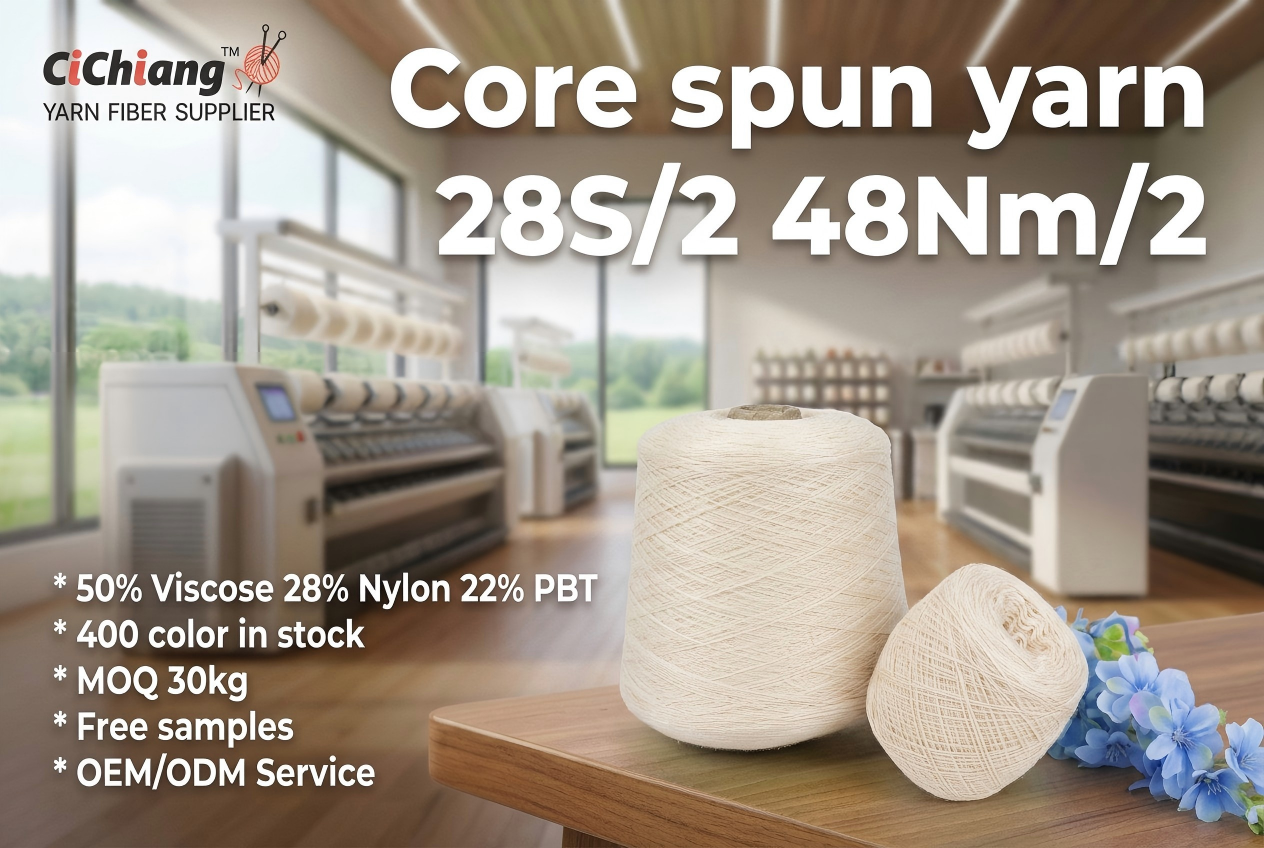
This core spun yarn is presented as a dyed yellow textile yarn in a smooth cone-wound package, shown in a textile mill and showroom setting. The visible product data indicates a blend of 50% viscose, 28% nylon, and 22% PBT, with specifications marked as 28S/2 and 48Nm/2. Because yarn numbering systems can vary by market, these labels should be confirmed against the customer’s own standard before ordering. Still, the visible information gives a clear starting point for fabric developers who need a blended yarn for apparel or general textile production.
What this yarn is suited for
As a blended yarn, it can be used in knitting, weaving, fabric production, hosiery, and related textile processes. The combination of viscose, nylon, and PBT suggests a yarn intended to offer a smoother textile touch than a pure technical filament while maintaining more structure than a soft natural-fiber yarn alone. That makes it useful when a project needs both appearance and process reliability.
Key Specifications and Capabilities
The most visible specification is the blend ratio: 50% viscose, 28% nylon, 22% PBT. The yarn is shown in a plied form, indicated by 28S/2 and 48Nm/2. The cone appearance is even and tightly wound, which is useful in production environments where package consistency matters during unwinding and downstream processing.
Visible selling points from the product image
400 colors in stock
MOQ 30 kg
Free samples
OEM/ODM service
Materials and Finish Options
The listed composition combines three fibers with different roles. Viscose contributes a textile-friendly surface and familiar drape characteristics. Nylon is commonly selected where added toughness and wear resistance are needed. PBT is often chosen in yarn blends for its resilient behavior and use in stretch-oriented or shape-conscious textile structures. Together, these materials create a blend that can serve a wide range of fabric concepts.
The shown finish is a vivid yellow, and the yarn appears evenly dyed with a neat cone build. Beyond the visible appearance, specific colorfastness, pilling resistance, or shrinkage performance is not provided and should be discussed with the supplier during sampling.
Manufacturing Process and Supply Support
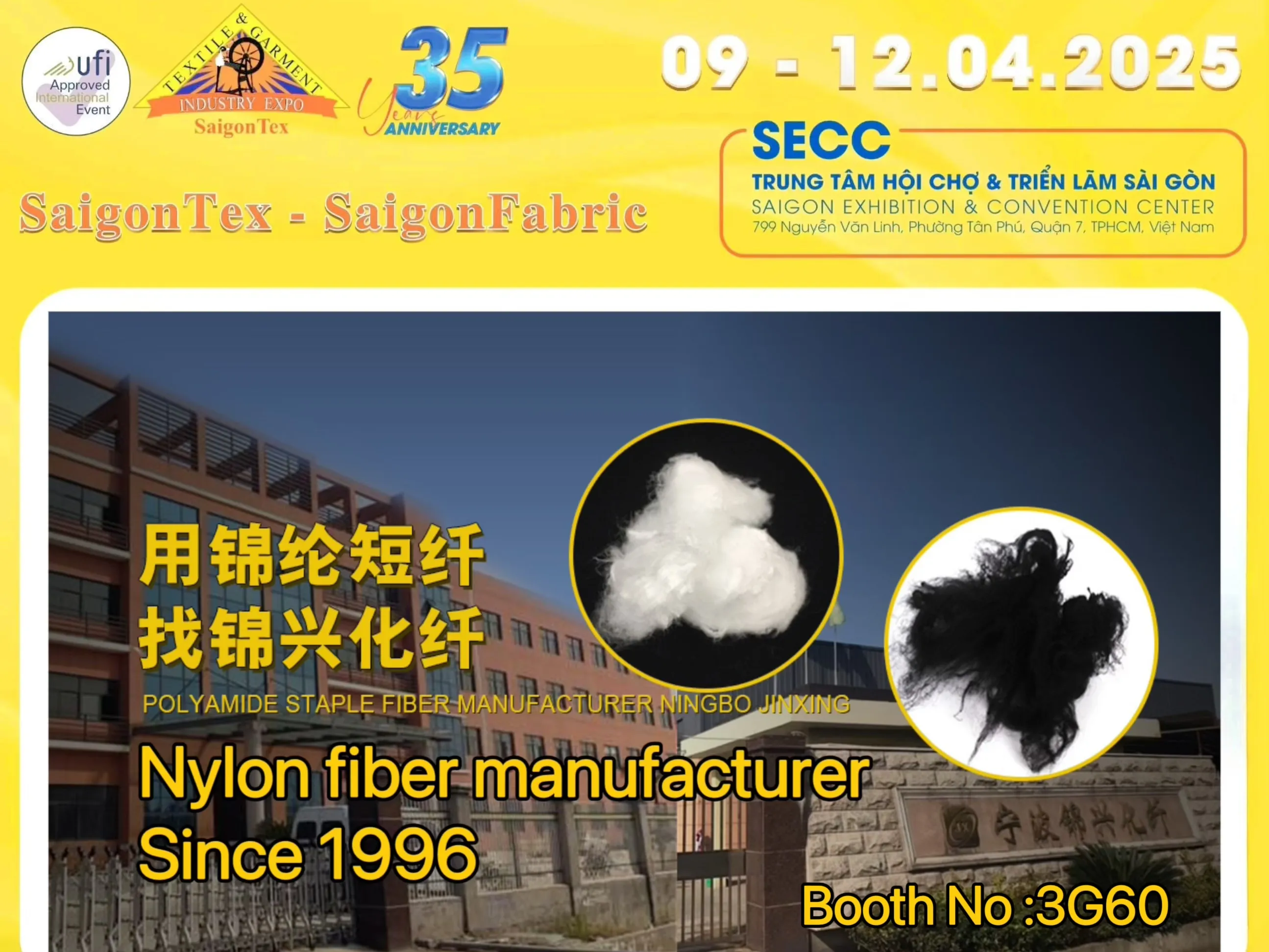
Ningbo Sinopec Fiber Co., Ltd. was founded in 1996 and focuses on nylon fiber manufacturing. The company states a workforce of 150 employees, including 20 engineers, with a factory area of 50,000 square meters and 20,000 square meters of production space. Daily output is listed at 100-150 tons, mainly in PA6 and PA66 polyamide nylon fibers. That background suggests a production environment familiar with fiber preparation, controlled processing, and industrial supply relationships.
The image also identifies the setting as a manufacturer shop and mentions OEM/ODM service. For buyers, that matters because yarn selection is not only about color and count; it is also about whether a supplier can support custom orders, sampling, and repeatable production.
Application Scenarios
Core spun yarn in this type of blend can be considered for knitted fabrics, woven fabrics, and hosiery constructions. It may also fit apparel yarn sourcing where the finished textile needs a combination of body, softness, and durability. Since only general textile use is visible or stated, specific end products should be validated through sampling and trial runs.
Quality Control and Buyer Decision Factors
When comparing a core spun yarn supplier, buyers usually look at blend consistency, shade matching, package quality, count accuracy, and whether the yarn runs cleanly on their machinery. The provided information supports a first-stage evaluation: the yarn is clearly specified, the MOQ is accessible at 30 kg, and samples are available for testing.
For sourcing teams, a few questions help narrow the decision. Is the target fabric more focused on hand feel or structure? Does the buyer need a high strength core spun yarn behavior, or is softness the priority? Will the project require cotton core spun yarn alternatives, or does the synthetic blend better match the end use? These questions shape the final selection more than color alone.
Customization and Ordering Guidance
Because OEM/ODM service is offered and 400 colors are listed in stock, the product is suitable for buyers who need both standard supply and custom development support. Start with a sample request, confirm the count system, verify the blend ratio, and align the target color with the final fabric plan. If the project requires repeated sourcing, a core spun yarn manufacturer with stable production capacity and engineering support can simplify long-term procurement.
Contact and Sample Request
If you are evaluating a core spun yarn factory for apparel or textile production, begin with a free sample and a technical discussion around your target count, color, and end-use process. Ningbo Sinopec Fiber Co., Ltd. welcomes inquiries for long-term partnerships, and the listed stock range gives buyers a practical path to move from sample to bulk order with less delay.