Why buyers look at 100% nylon yarn for soft, fur-like products
When sourcing 100% nylon yarn for plush, faux-fur, or specialty knit applications, the real question is not just whether it looks soft on a sample card. Engineers, sourcing managers, and product teams need to know whether the yarn will hold its shape, process cleanly, and create the hand-feel the market expects. That matters especially for products meant to imitate mink feather yarn, fox fur style yarn, or other long-pile effects, where appearance can win the sale but construction still decides the complaint rate later.
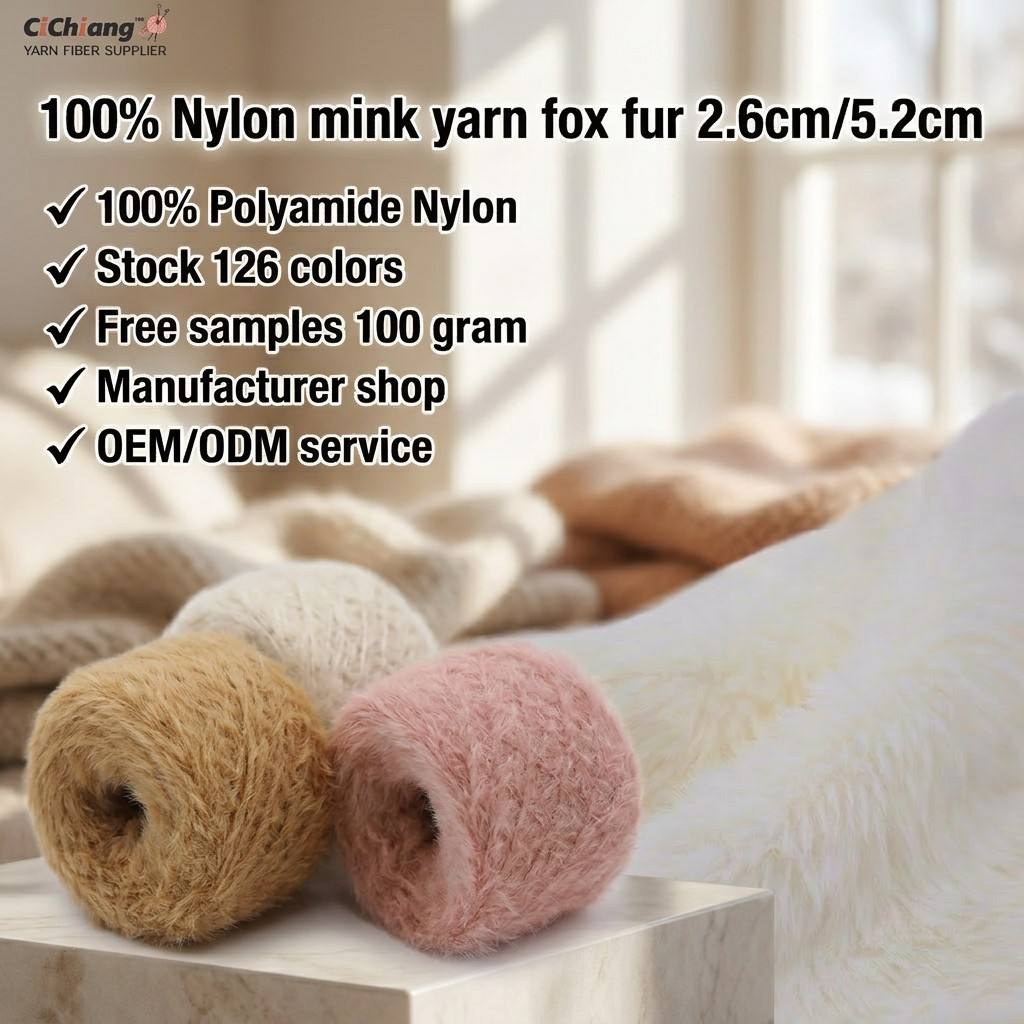
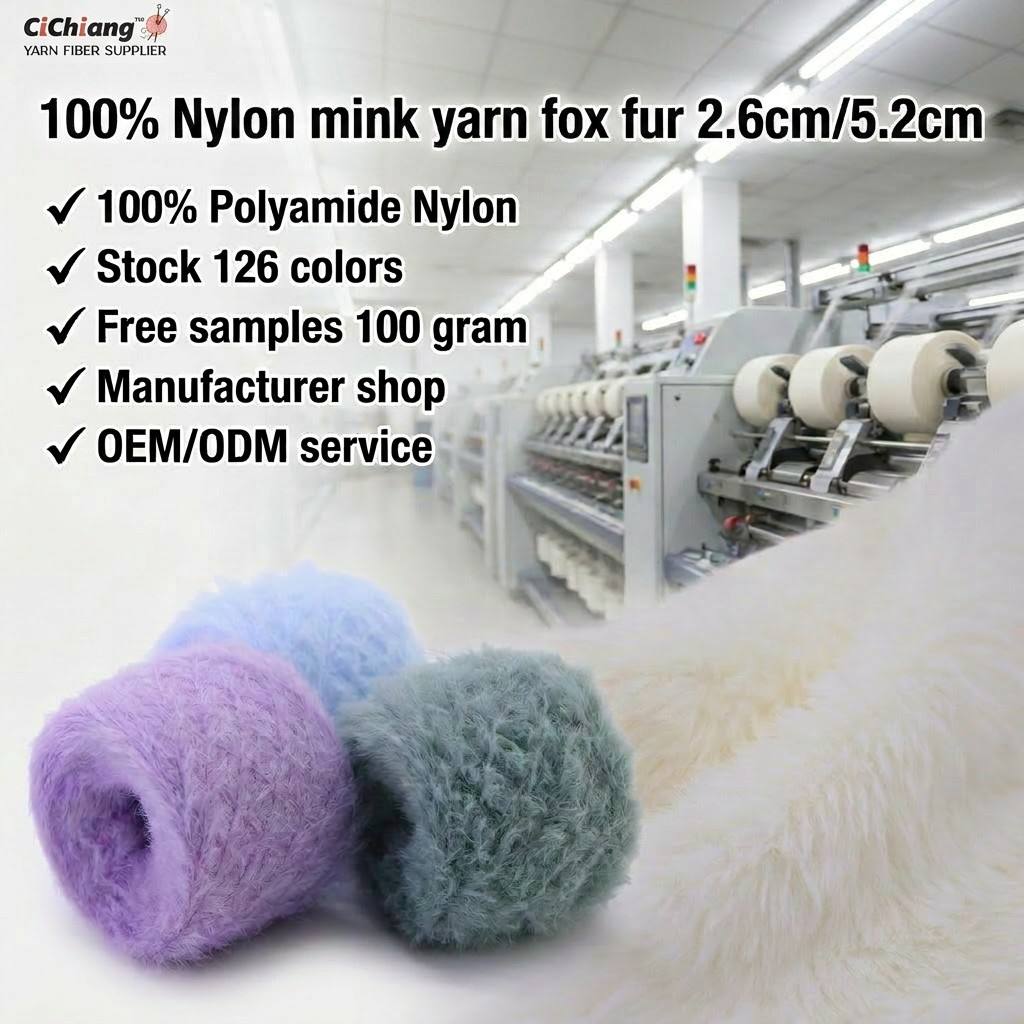
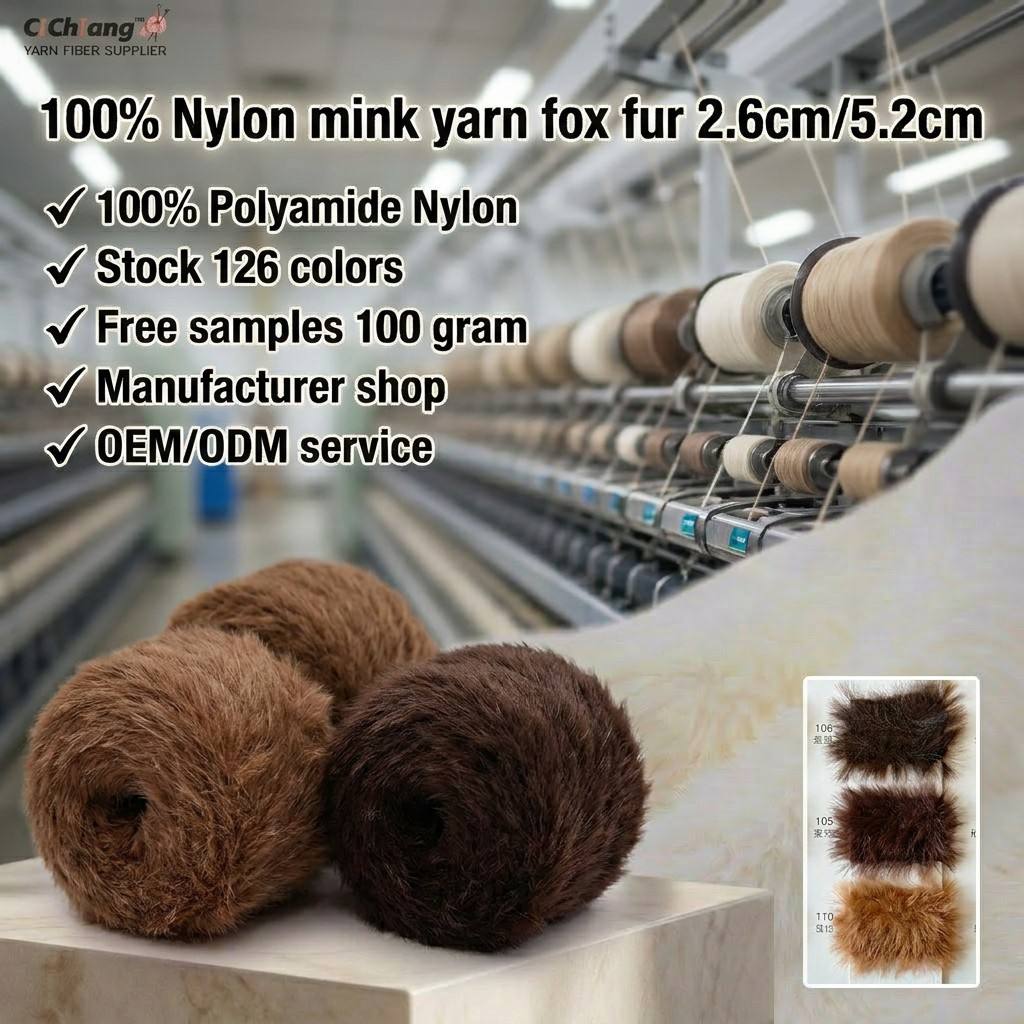
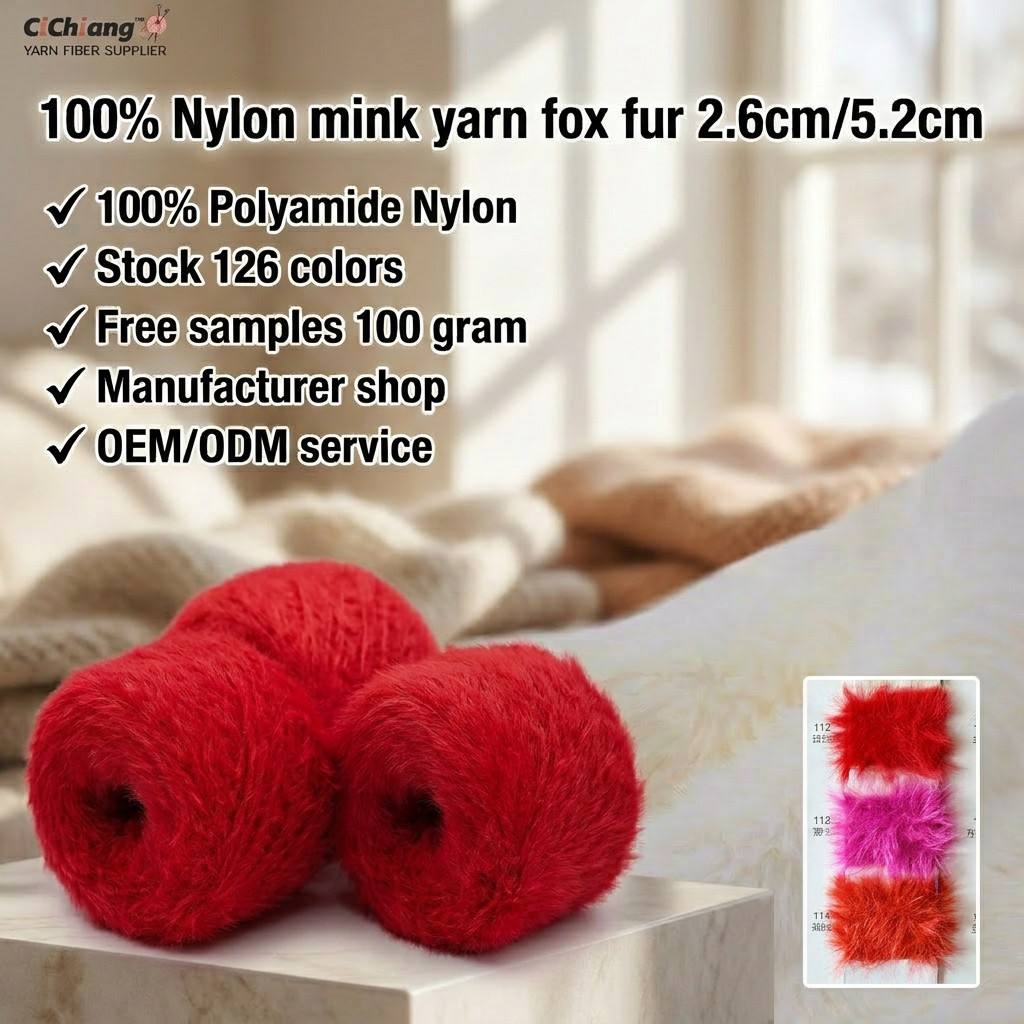
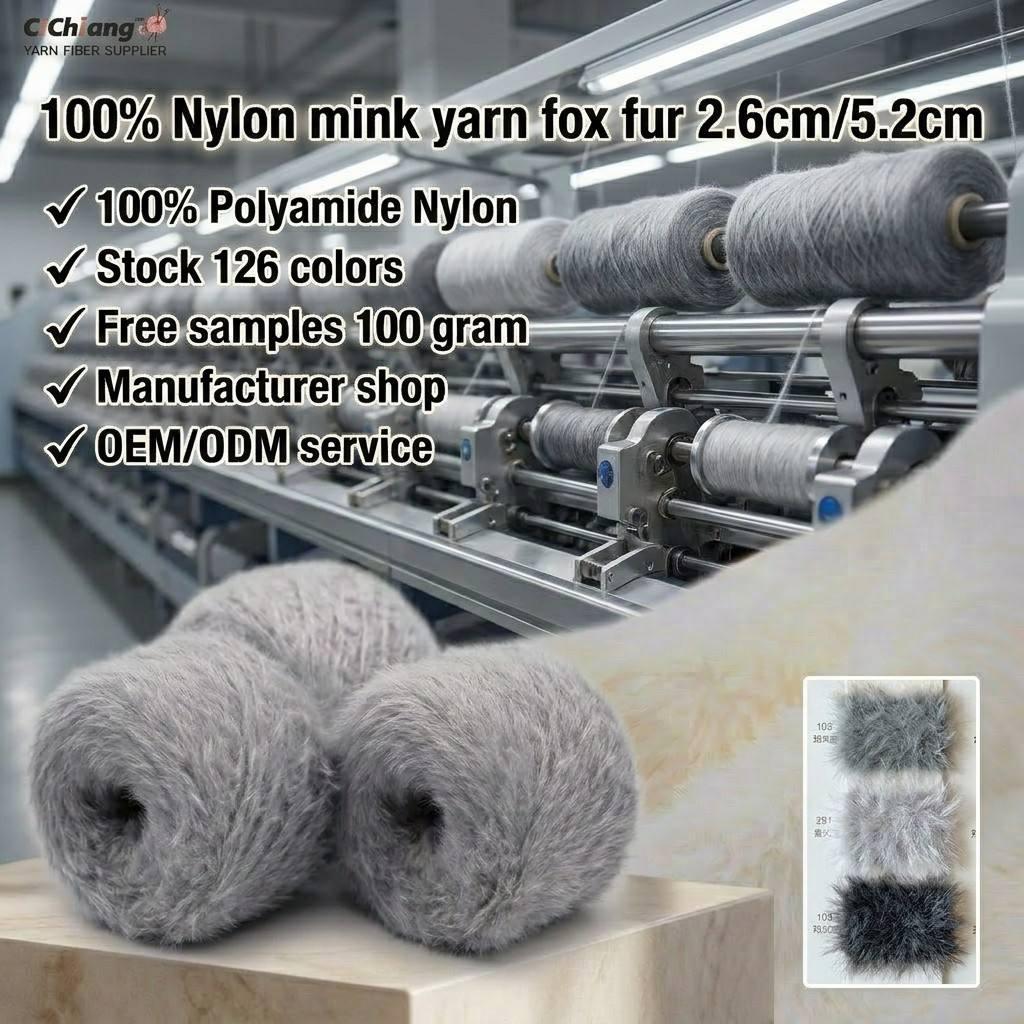
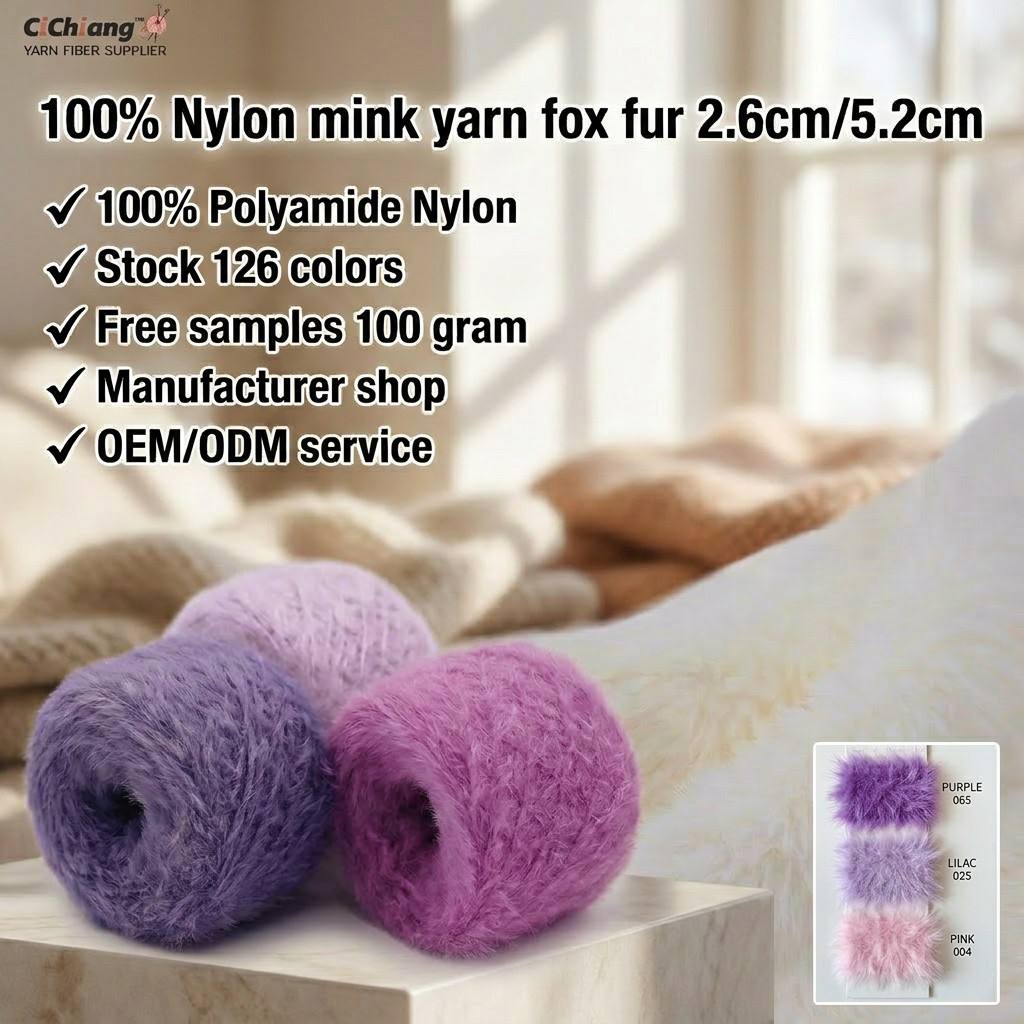
From the supplied product information, the yarn is positioned as a synthetic plush yarn or faux-fur yarn for knitting, crocheting, and textile craft use. The visible commercial claims include 126 stocked colors, free samples at 100 g, and OEM/ODM support. Those details are useful because specialty yarn projects often fail not on fiber theory, but on color continuity, sample approval, and the supplier’s ability to repeat the same look on the next order.
What this kind of yarn is meant to do
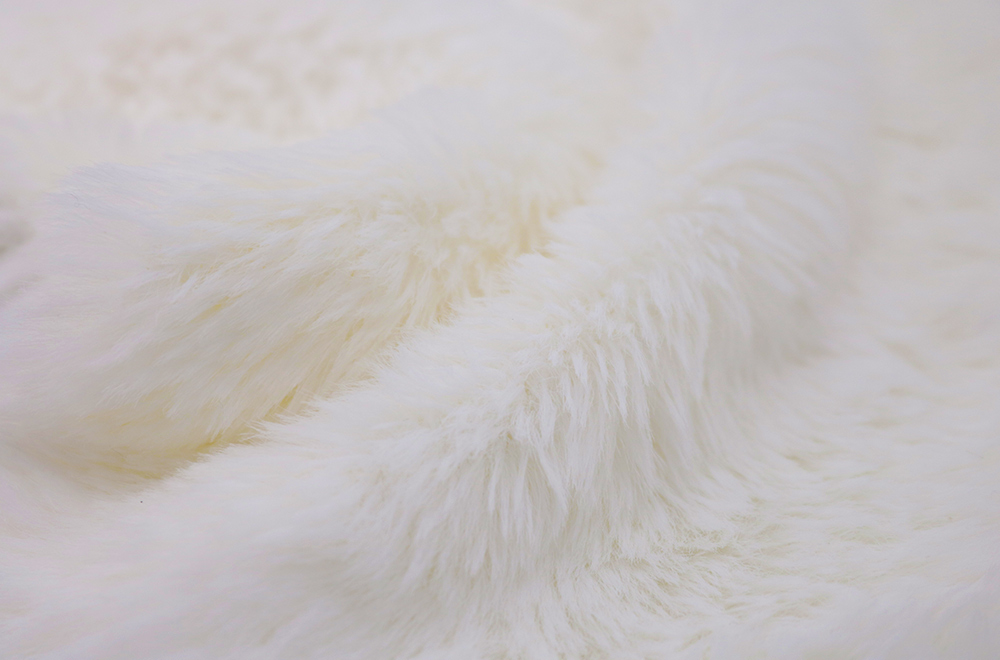
This type of yarn is designed to create a furry surface in the finished textile. Think scarves, hats, sweaters, blankets, plush accessories, trims, or decorative textile projects. The intended visual effect is closer to faux fur yarn or plush yarn than to a standard smooth knitting yarn. In other words, the core value is not crisp stitch definition. It is loft, softness, and a soft texture yarn feel that reads as warm and tactile.
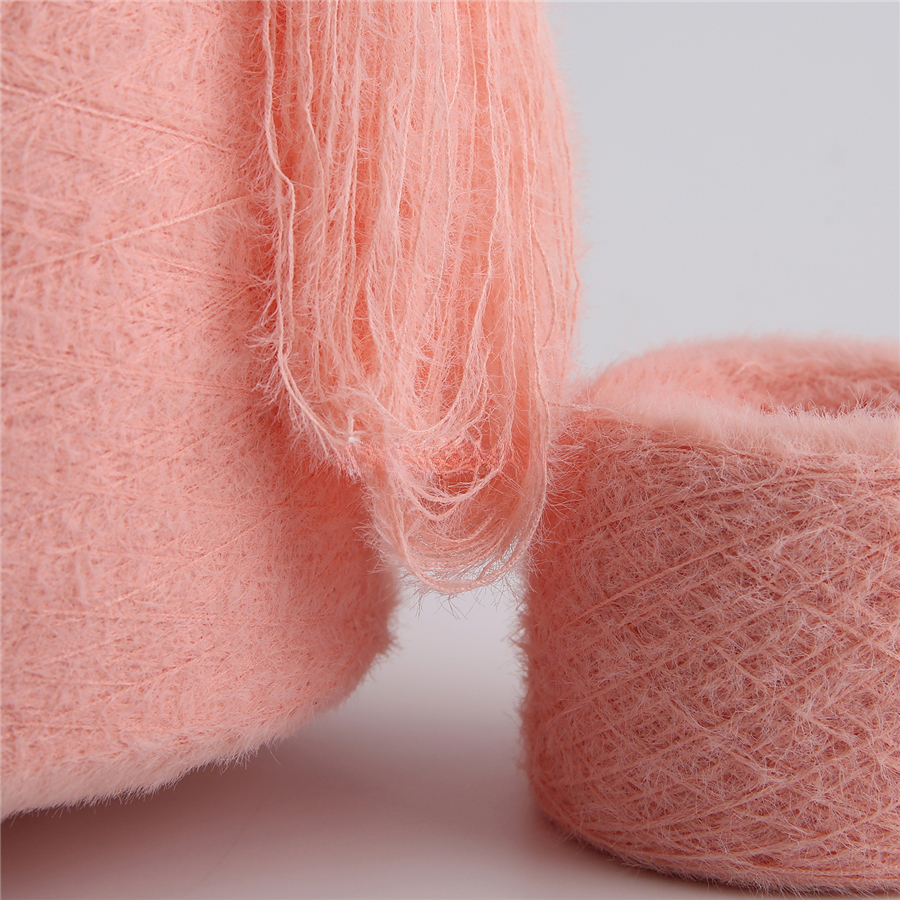
The images and product notes suggest a thick, fluffy, hairy-pile appearance wound into cones or balls, with visible purple and pink samples. The stated material is 100% nylon, also described as 100% polyamide nylon. That places it in the synthetic category, which is generally favored when buyers want a consistent fur-like finish and repeatable dyeing across large color sets.
Quick buyer takeaways
For teams comparing options, the main decision points are usually practical rather than romantic. Does the yarn create the pile length you want? Will it knit or crochet without excessive shedding? Can the supplier hold color from one lot to the next? And does the finished article need to feel dense and fluffy, or just lightly brushed?
The supplied information includes a pile-length-style claim of 2.6 cm/5.2 cm, though the exact meaning is not fully clear. Buyers should treat that cautiously and ask for clarification before approving production. It may refer to fiber effect length, pile height, or another internal specification. That kind of detail can change the whole feel of the finished product.
How 100% nylon compares with other faux-fur options
In this category, nylon is often chosen because it can support a lively pile and a soft hand. Compared with some heavier synthetic constructions, it can be used to produce a plush yarn that feels airy rather than boardy. That said, the final behavior depends not only on the polymer, but also on filament fineness, spinning method, and how the yarn is finished.
For buyers evaluating mink feather yarn, fox fur style yarn, or faux fur yarn, the key is not which label sounds more premium. It is whether the yarn creates the right surface at the right process speed. A long-pile yarn may look excellent in a close-up photo and still be awkward in knitting if the pile obscures the stitches too aggressively. That is a common surprise for first-time buyers.
Selection criteria that actually matter
1. Hand-feel and pile behavior
Request physical samples and check how the fibers move. A good fluffy knitting yarn should feel soft without collapsing into a flat mat after light handling. If the pile is too sparse, the faux-fur look will be weak. If it is too dense, the fabric may feel bulky and eat up more material than expected.
2. Color control
The supplier notes 126 colors in stock, which is a meaningful point for fashion, home décor, and seasonal programs. Still, stock color is not the same as locked shade continuity. Always confirm whether the actual production lot matches the approved swatch under your lighting conditions. Natural daylight and warehouse LEDs can tell different stories.
3. End-use suitability
Scarves and hats can tolerate a fluffy look that might be less suitable for structured garments. Blankets, pet accessories, and photography props may have different expectations for sheen, softness, and wash handling. Before committing, decide whether the yarn is for display appeal, daily wear, or decorative trim. That decision changes your acceptance criteria.
Common sourcing mistakes
One frequent mistake is assuming all soft yarns behave similarly on the machine. They do not. A faux-fur yarn can distort stitch visibility and change fabric drape in ways that surprise development teams. Another is approving a sample only by touch and ignoring pile recovery. If the fibers do not spring back, the final product can look tired before it reaches the shelf.
It is also easy to overread marketing language. Terms like plush yarn, soft texture yarn, and knitting yarn for scarves describe use and feel, not a complete technical specification. Ask for the construction details you need, especially if the product will be exported, washed, or made into children’s items.
Supplier context: scale can matter
Ningbo Sinopec Fiber Co., Ltd. was founded in 1996 and focuses on nylon fiber manufacturing. The company information supplied notes 150 employees, including 20 engineers, a 50,000-square-meter factory, and daily output of 100-150 tons, with primary production in PA6 and PA66 polyamide nylon fibers. For buyers, that suggests a company with industrial fiber capacity rather than a small craft-only shop.
That kind of background may help when a program needs stable output, repeat orders, or technical discussion around nylon-based fiber supply. Still, the finished yarn specification for a plush or faux-fur style item should be verified on its own merits. Factory scale helps, but it does not replace sampling.
Practical next steps for buyers
If you are considering this type of yarn, start with a sample set and a short list of non-negotiables: pile effect, color match, softness, and processability. Ask the supplier to explain the 2.6 cm/5.2 cm figure, confirm whether the yarn is intended for knitting or another textile process, and request color references from the stocked range. If OEM/ODM matters, discuss custom shades, packaging, and whether the yarn can be adapted for your product line.
For teams building scarves, trims, or decorative soft goods, the right question is not simply whether the yarn is “good.” It is whether it produces the intended surface consistently enough to ship, season after season, without unpleasant surprises on the line.
FAQ
Is this yarn natural or synthetic?
Based on the supplied information, it is 100% nylon, also described as 100% polyamide nylon.
Can it be used for scarves and hats?
Yes, that is one of the listed applications. Buyers should still confirm the final hand-feel, drape, and shedding behavior before full production.
Does the 2.6 cm/5.2 cm value mean pile height?
Possibly, but it is not fully clear from the provided material. It should be confirmed directly with the supplier.
Are free samples available?
The supplied details state free samples at 100 g.
Where this leaves the sourcing decision
For decorative textile programs, a 100% nylon plush or faux-fur yarn can be a practical route to a soft, fur-like surface with broad color options. The decision comes down to approving the look, testing the feel, and making sure the supplier can repeat the result. If those boxes are checked, the material becomes much easier to work with.
For technical inquiry, sample requests, or OEM/ODM discussion, it makes sense to approach the supplier early and clarify the exact yarn structure before moving into development.