Why buyers keep asking for 100% nylon yarn
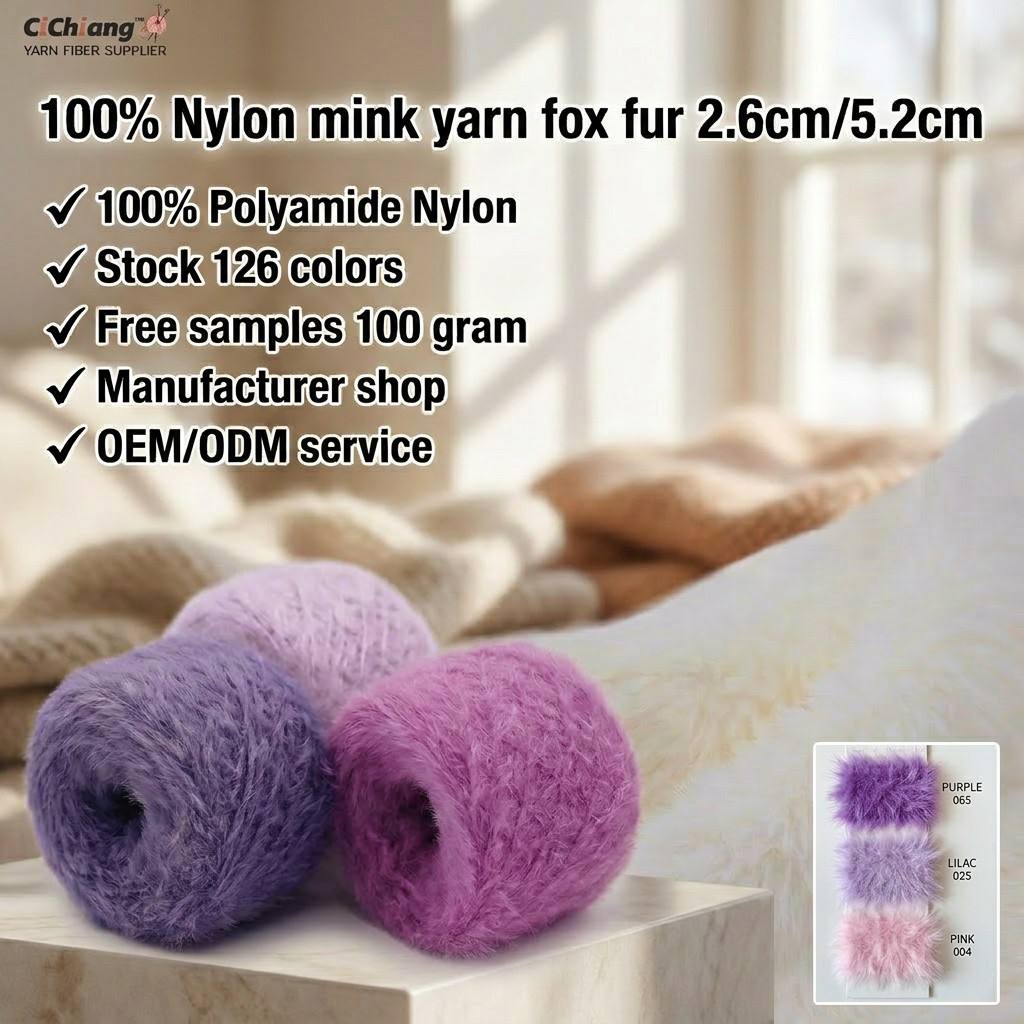
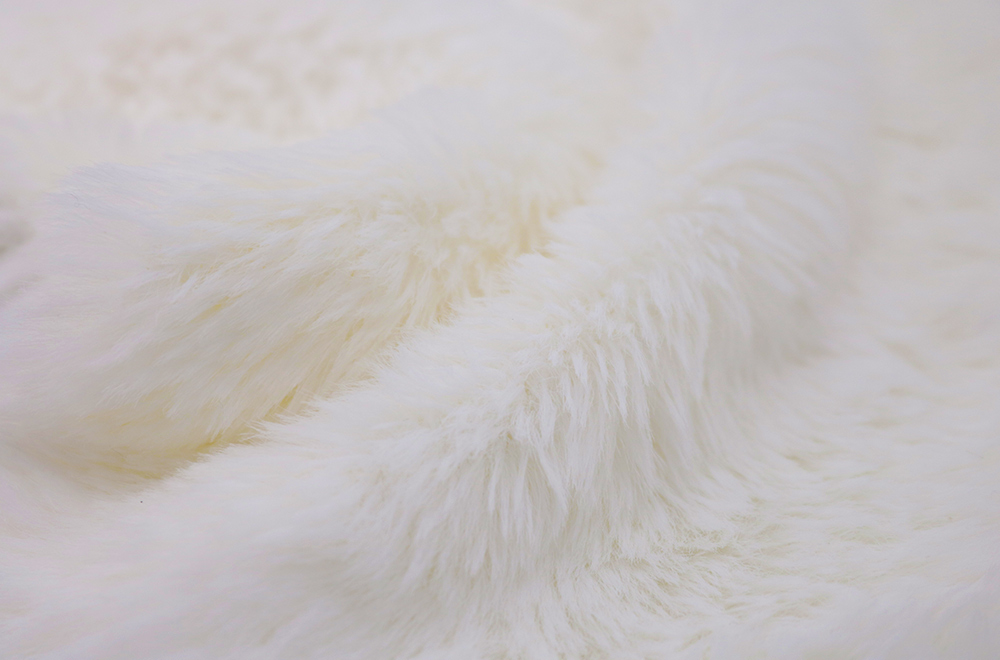
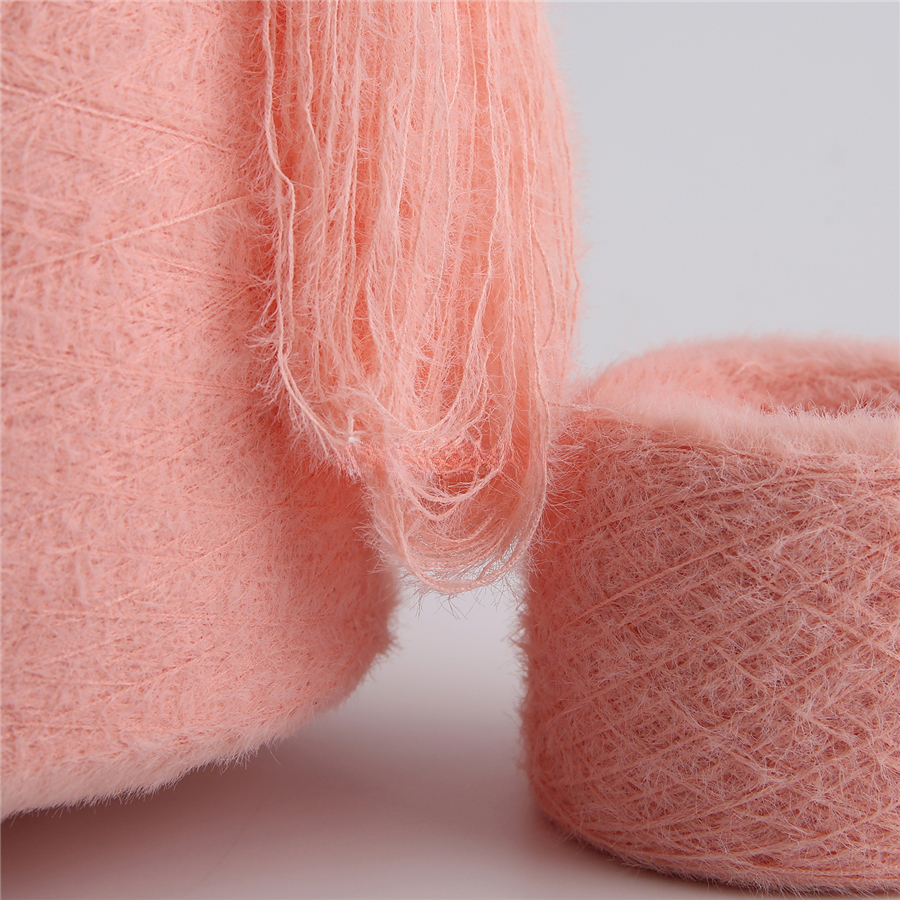
The market for 100% nylon yarn is broader than many sourcing teams expect. It is not just a technical fiber for industrial use. In practice, it sits in a sweet spot between durability, surface effect, and processing flexibility, which is why it shows up in decorative knitting, fur-effect textile samples, accessories, and trims. For buyers comparing plush yarn, faux fur yarn, or novelty yarn, the real question is often not whether the material looks soft on a screen, but whether it will behave consistently once it moves into knitting, crocheting, or finishing.
That matters because fluffy, textured yarns can be deceptive. A yarn may look rich and full in a sample photo, yet prove awkward on the machine, shed too much, or produce uneven visual volume in production. Nylon/polyamide constructions are often considered when the product needs a soft texture yarn with a more controlled synthetic base. They can also be easier to standardize than animal-fiber alternatives, especially when the goal is a mink feather yarn or fox fur style yarn effect without real fur.
What the visible product style suggests
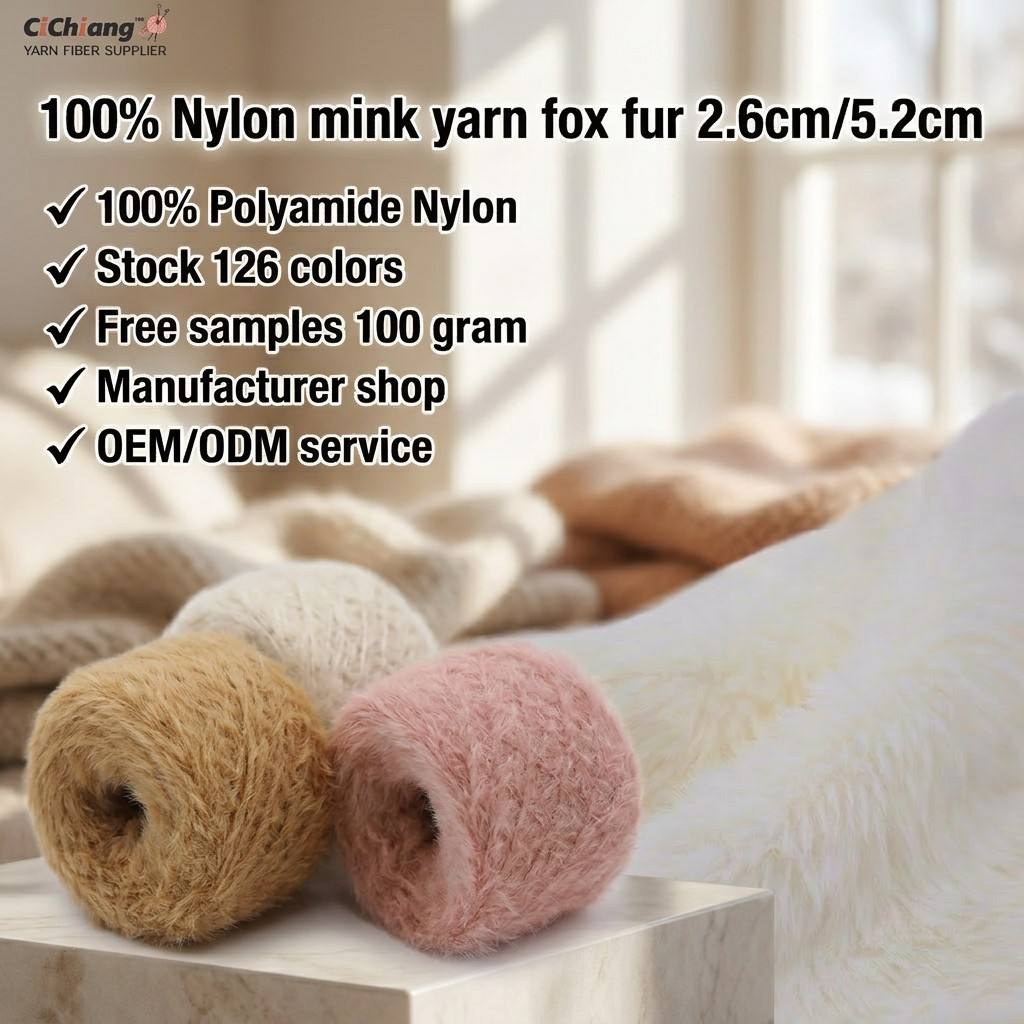
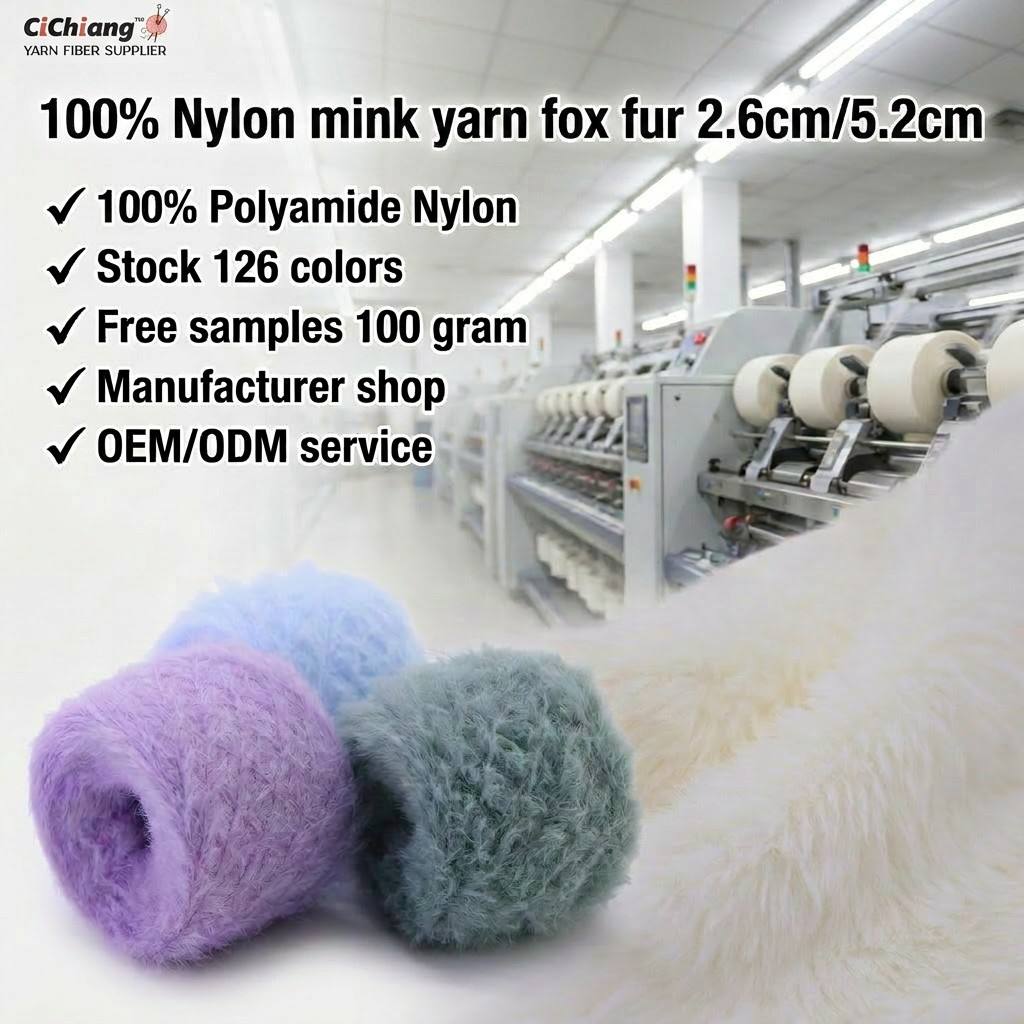
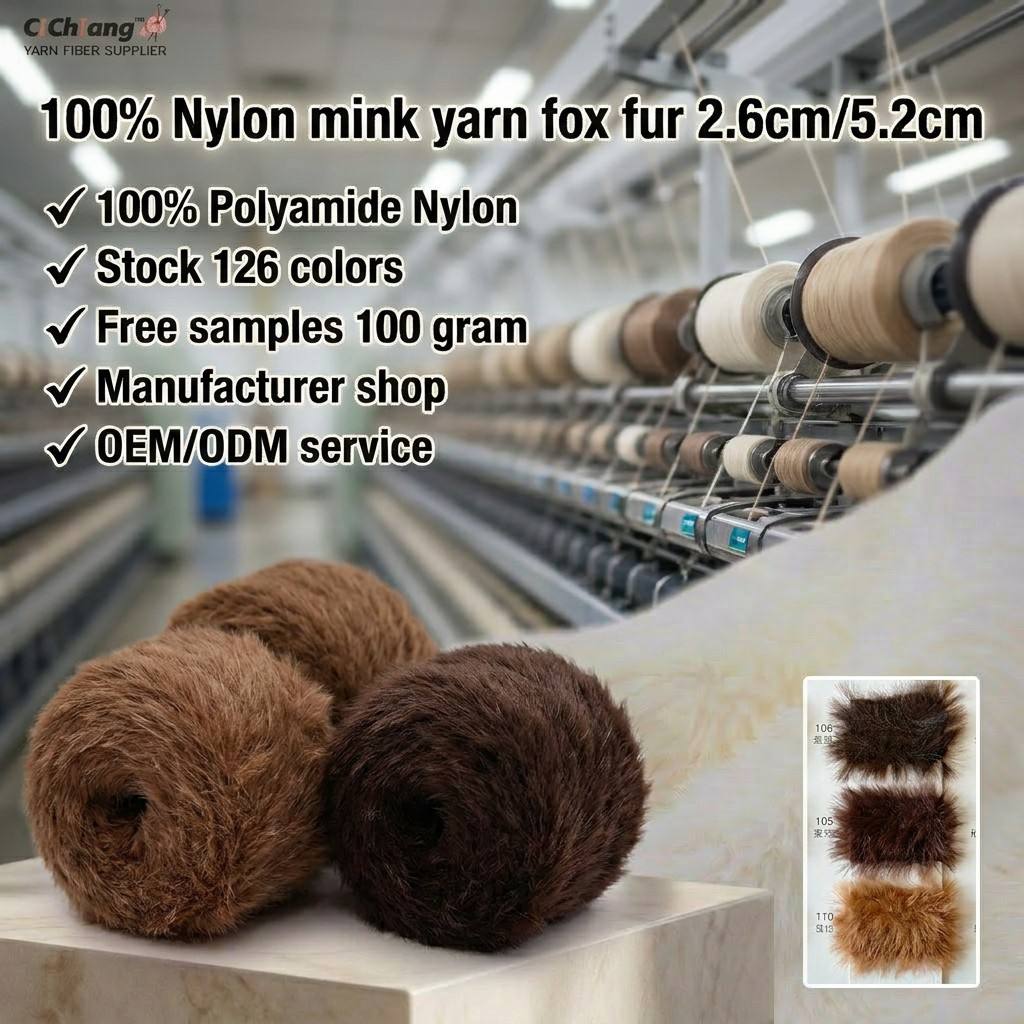
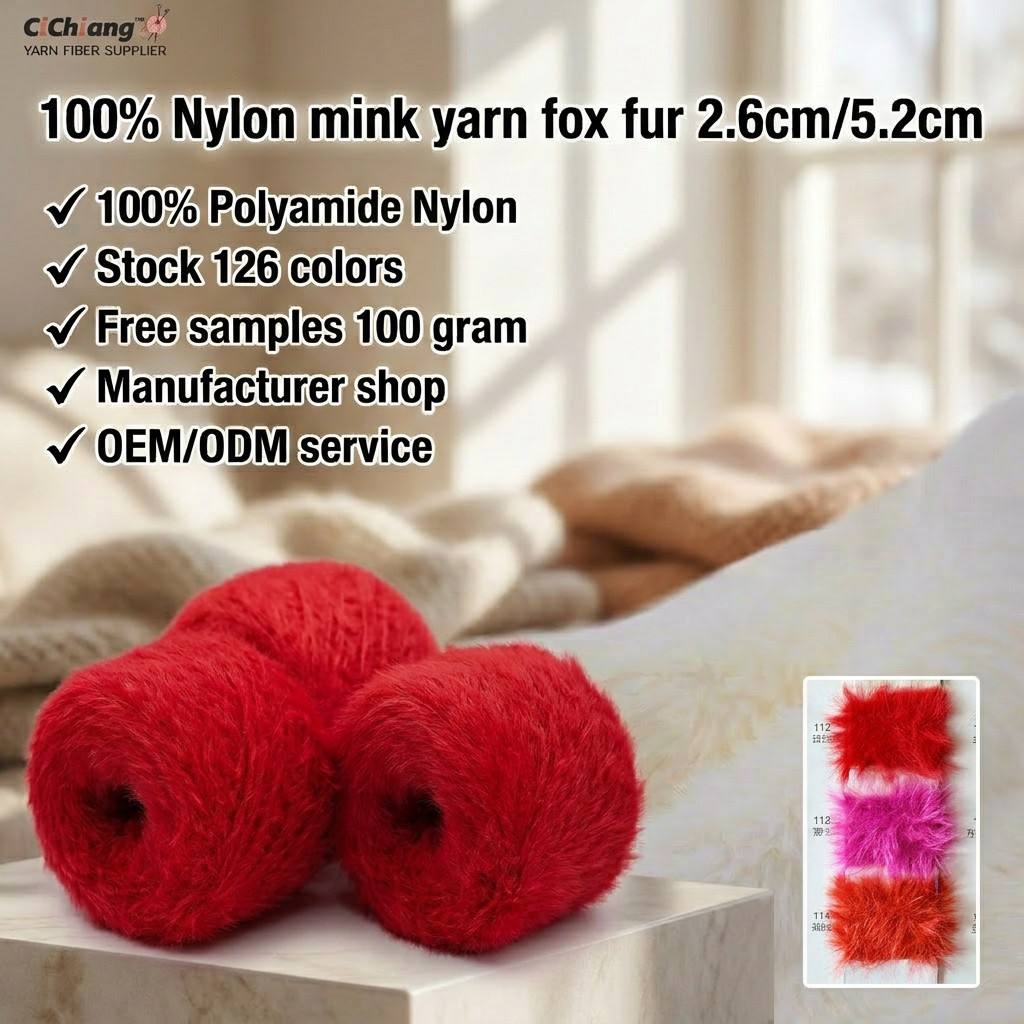
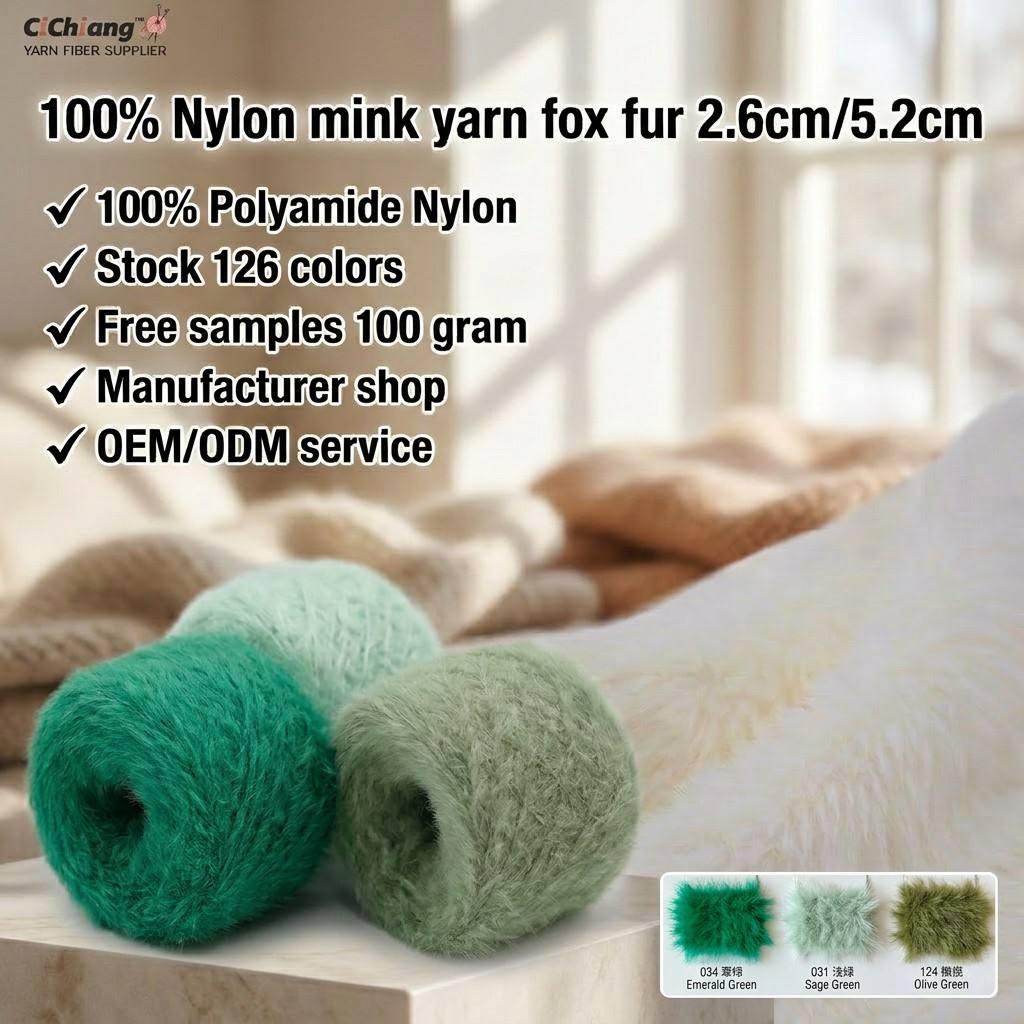
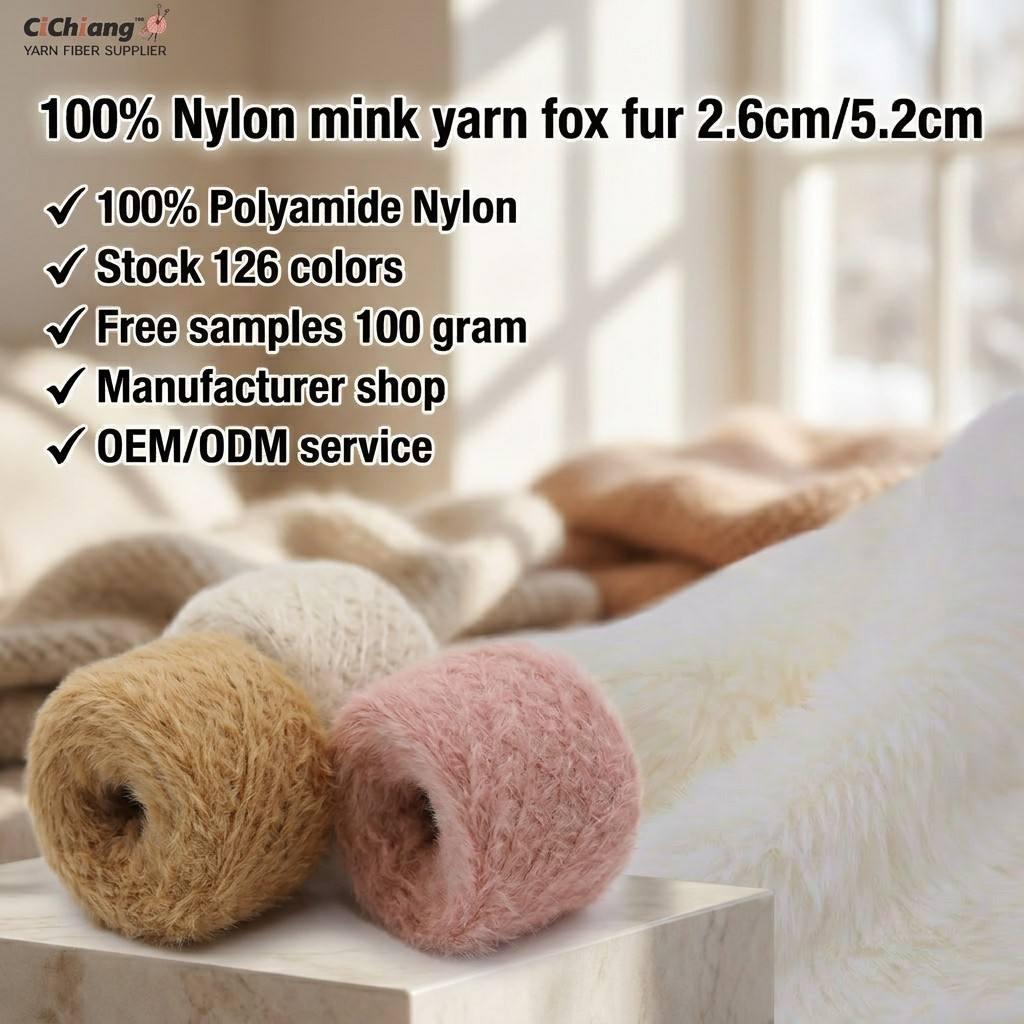
Based on the product information provided, the yarn shown appears to be a bulky, fuzzy synthetic yarn with a visible halo. The listed composition is 100% nylon or 100% polyamide nylon, and the image text also references 126 stocked colors, free 100 gram samples, and OEM/ODM service. That combination points to a supplier positioned for custom textile development rather than a one-off craft item.
The color range is important. A wide palette gives more freedom for fashion sampling and seasonal programs, especially when buyers are testing fluffy knitting yarn for scarves, hats, toy trims, or decorative panels. Pale pink, purple, and similar shades also suggest the yarn is being sold partly for visual impact. In this category, appearance is not a side note; it is the product.
Where nylon-based fluffy yarn fits best
For sourcing teams, it helps to separate use cases by end product rather than by yarn name alone.
Decorative apparel and accessories
This is the obvious fit. A synthetic fur-effect yarn can create collars, cuffs, scarf edges, and fashion trims with a distinctly soft, tactile surface. If the design brief calls for a plush yarn look rather than a smooth knit, nylon novelty yarn is often part of the discussion.
Craft, sampling, and visual merchandising
The shown product style also suits product photography, display pieces, and sample swatches. A fluffy surface catches light differently from a plain filament yarn, which helps designers judge volume and hand feel early in development.
Home décor and costume work
For cushions, throws, props, or costume accents, the goal is usually surface effect over technical precision. That makes fur-effect yarn and faux fur yarn useful, though buyers should still check compatibility with the intended construction method.
What to clarify before you place an order
With novelty yarns, the buying mistake is assuming that a familiar name means a familiar performance.
Ask the supplier how the pile is formed, how the yarn is intended to be knitted or crocheted, and whether the construction suits your equipment. The product text mentions a 2.6 cm/5.2 cm cue, but that measurement basis is not fully clear from the image alone, so it should be confirmed before production planning. It is also sensible to ask for sample confirmation on shedding, color consistency, and packing format.
If you are comparing knitting yarn for scarves with a more decorative faux fur yarn, do not treat them as interchangeable. A scarf yarn needs acceptable drape, wearability, and manageable bulk. A trim yarn may prioritize surface drama and color over all else.
Why the company background matters
Ningbo Sinopec Fiber Co., Ltd., founded in 1996, is presented as a nylon fiber manufacturer with 150 employees, including 20 engineers. The company also states a 50,000 square meter factory footprint, with 20,000 square meters of production space and daily output of 100-150 tons, primarily in PA6 and PA66 polyamide nylon fibers.
For buyers, that background suggests scale and process familiarity in nylon fiber manufacturing. It does not automatically guarantee that every novelty yarn will perform the same way, but it does indicate the supplier is operating from a fiber-production base rather than a simple trading desk. That can matter when you need repeatable color lots, customized structures, or ongoing supply for a development program.
Practical buyer cautions
A plush surface can hide a lot. Do not assume the yarn is suitable for every stitch structure just because it looks soft in the swatch photo. Confirm the intended end use, the likely cleaning method, and whether the yarn’s bulk will affect machine settings or hand knitting speed. If the yarn is being considered for consumer wearables, ask for enough sample yardage to test pilling, shedding, and appearance after handling. Small checks save large headaches later.
What this product is really helping you decide
If you are sourcing synthetic novelty yarn, the decision is usually between visual effect and production practicality. A 100% nylon yarn with a fur-like surface may be the right choice when you need a strong decorative impression, broad color options, and a supplier capable of OEM/ODM support. It may not be the right choice if your brief demands a fine, smooth, lightweight yarn.
For teams comparing mink feather yarn, fox fur style yarn, or other fluffy knitting yarn options, the next step is simple: request a sample, confirm the construction details, and test it in the actual end-use process before you commit volume.