Why buyers keep coming back to 100% nylon yarn
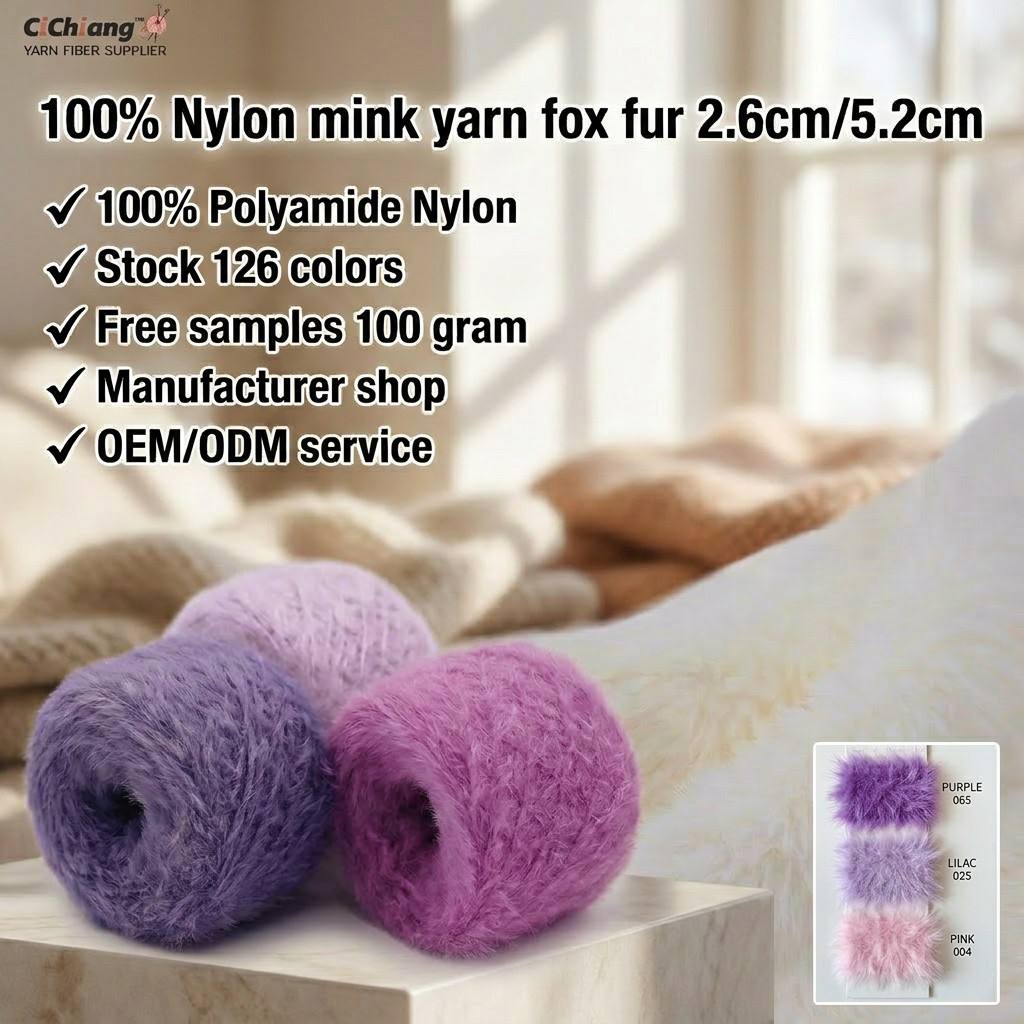
In textile sourcing, 100% nylon yarn sits in an unusual middle ground: it can be engineered to look playful and soft, yet it is still a synthetic material with the processing consistency manufacturers like. For brands and factories that need a fluffy surface without moving into natural-fiber variability, nylon is often the practical starting point. That matters whether you are building a winter accessory line, a decorative trim program, or a plush textile component for toys, cushions, or costume products.
The immediate question for most buyers is not whether the yarn looks attractive in a sample photo. It is whether the yarn will behave predictably in production. Will it feed cleanly through knitting or crochet processes? Will the pile hold its shape? Can the same shade be repeated across multiple orders? Those are the issues that separate a nice-looking swatch from a workable production material.
What the product family actually covers
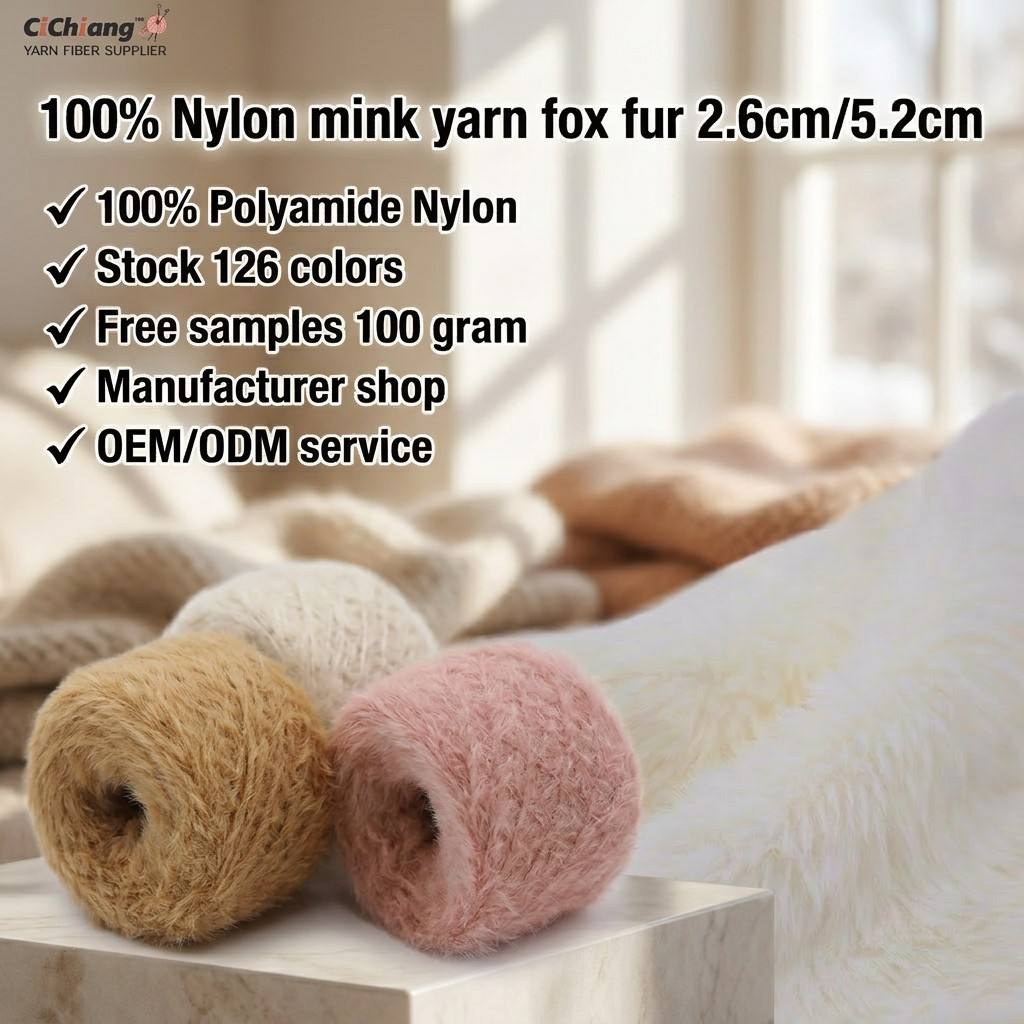
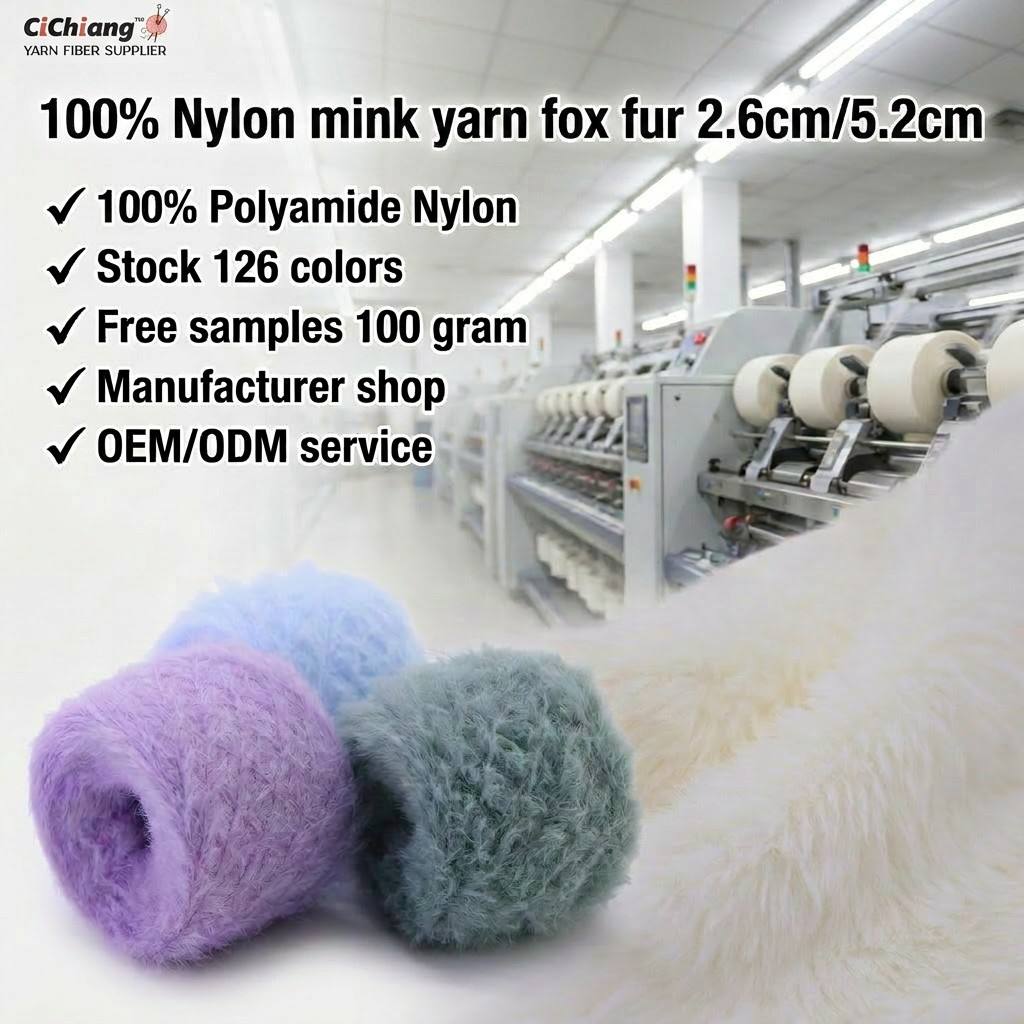
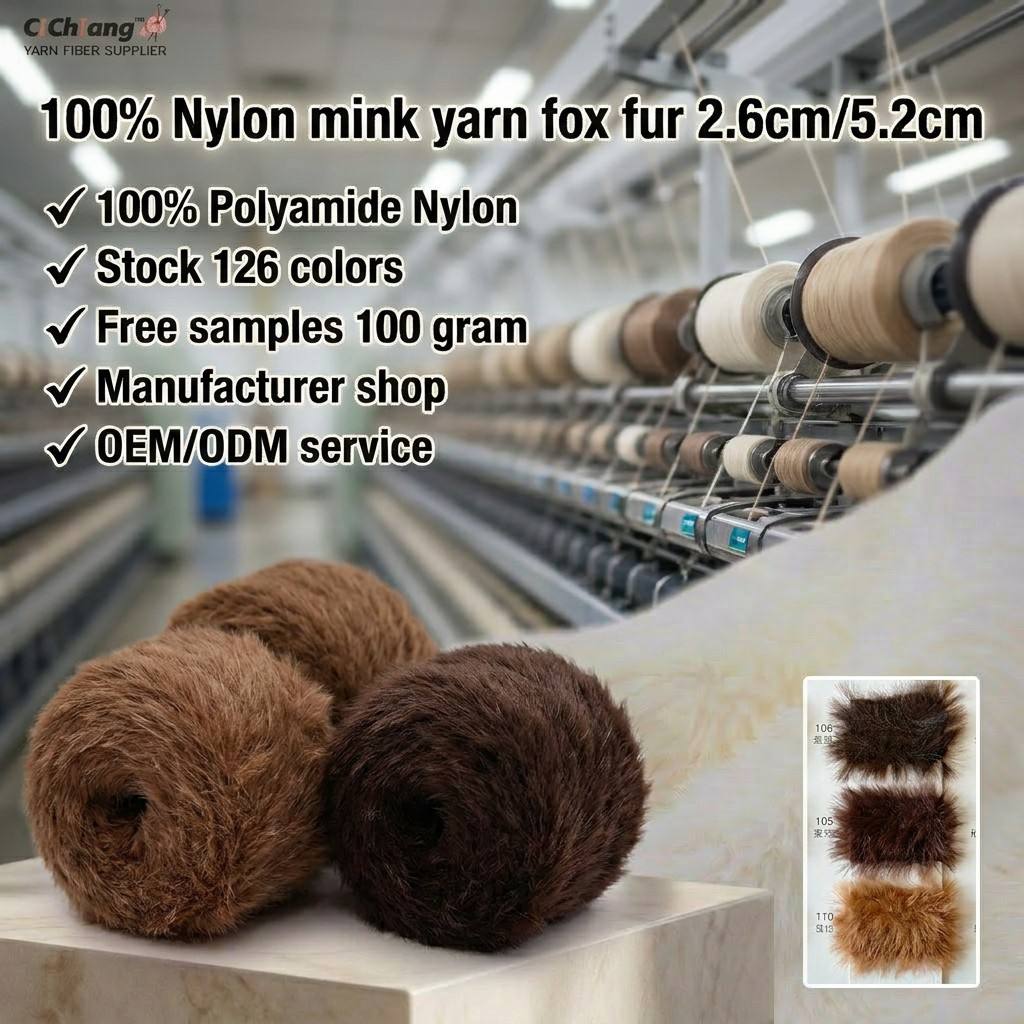
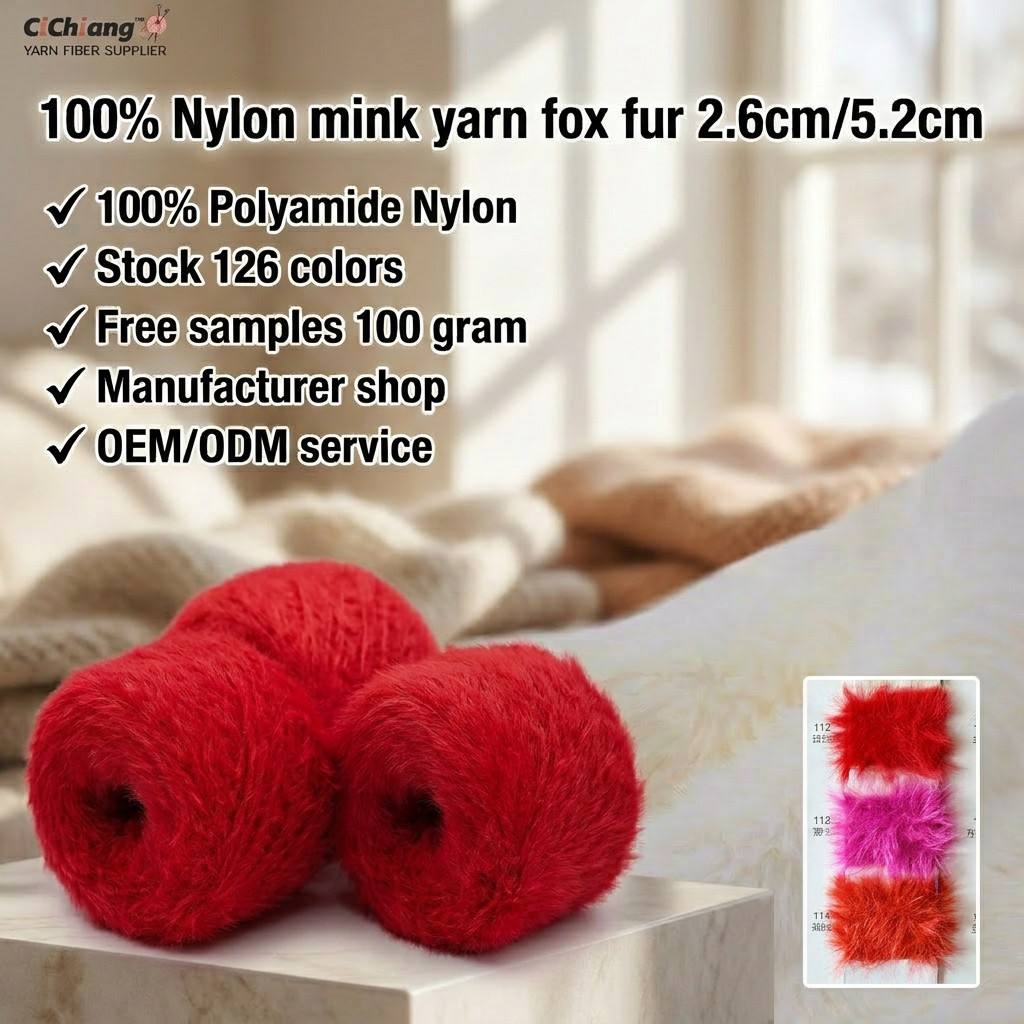
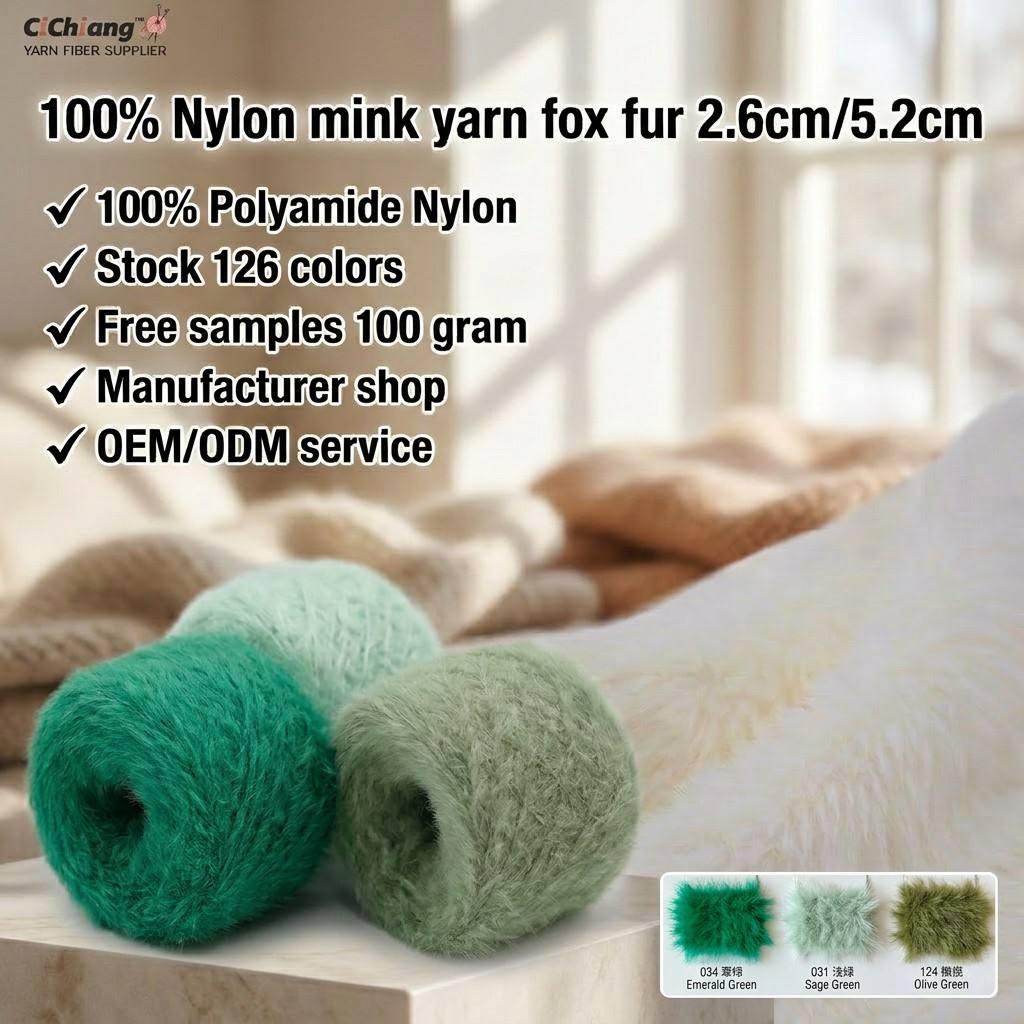
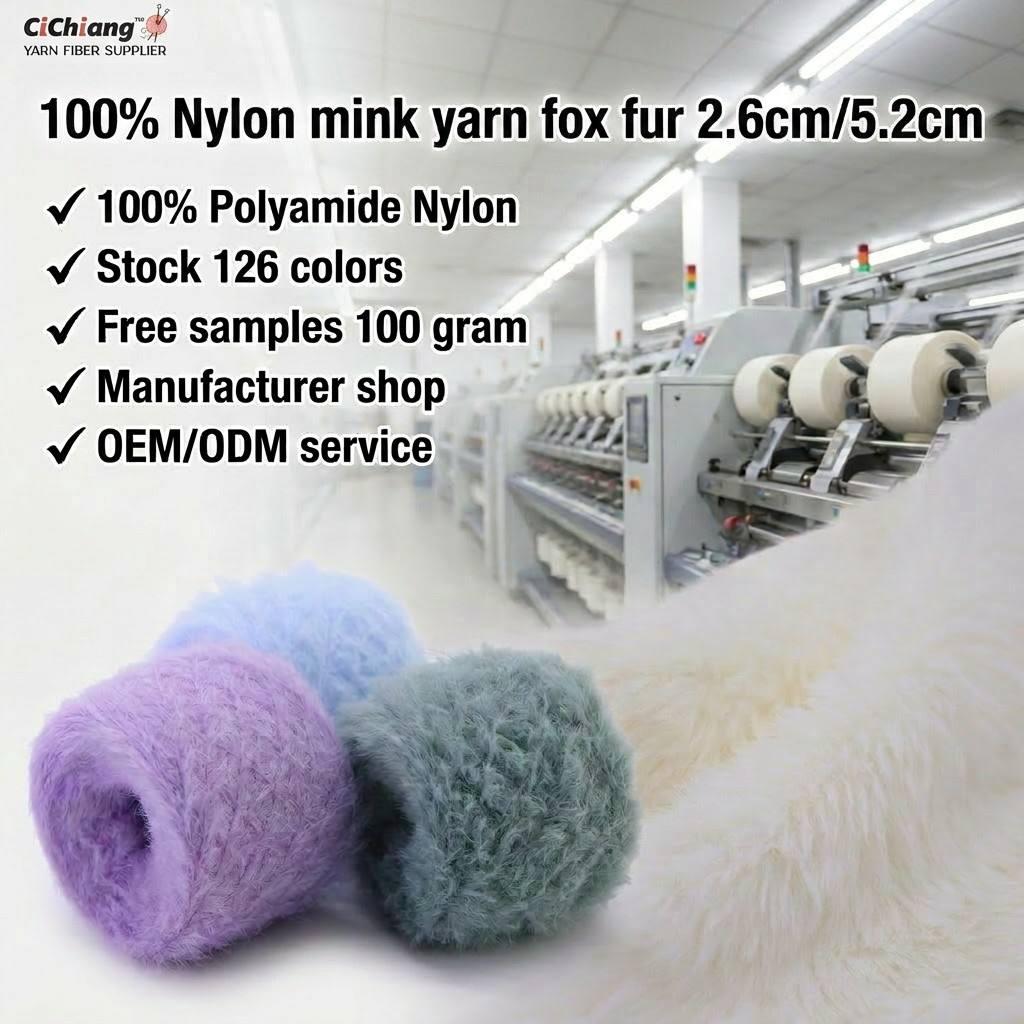
The term can be broader than it first appears. In the materials supplied here, the yarn is described as a synthetic fancy yarn with a faux-fur or eyelash-style appearance, wound into rolls and offered in multiple stock colors. The stated structure is long-pile and fuzzy, with a fur-like surface. That puts it in the same general conversation as mink feather yarn, fox fur style yarn, faux fur yarn, plush yarn, and fluffy knitting yarn, although each of those labels may imply slightly different looks, pile density, or end use.
For sourcing teams, the useful distinction is between appearance and function. A yarn marketed for scarves may be chosen primarily for handfeel and visual volume. The same construction might also be used in decorative textile trims, toys, or home accessories, where a soft texture yarn creates a warmer, fuller surface than a plain filament yarn would.
What the supplied product details suggest
The supplier information points to a yarn manufacturer in Ningbo, with a long operating history and an industrial-scale nylon fiber business. The company states it was founded in 1996, employs 150 people including 20 engineers, and operates a factory of 50,000 square meters with 20,000 square meters of production space. It also says daily output reaches 100-150 tons, mainly in PA6 and PA66 polyamide nylon fibers. Those are meaningful signals for buyers who care about continuity of supply and technical support.
The product image and notes also mention 126 stock colors, free samples of 100 g, and pile length figures listed as 2.6 cm and 5.2 cm. The exact meaning of those two measurements is not fully explained, so buyers should not assume it is a simple linear pile-height spec without confirming it. That said, the presence of both values suggests the supplier is working with visibly long pile material rather than a short, flat yarn.
Where this type of yarn fits best
For scarves and accessories, the appeal is obvious: the finished article can look fuller and feel warmer without requiring bulky construction. In craft use, the yarn can create a dramatic surface with relatively modest stitch structure. In decorative manufacturing, the same fuzzy profile can make a trim, accent, or product cover read as more premium or more seasonal.
It is also easy to see why product teams in toys, packaging inserts, or staging props might test this material. A plush or fur-like textile surface can add tactile value fast. Still, buyers should keep one practical caution in mind: a high-pile synthetic yarn is not interchangeable with every knitting yarn for scarves. The yarn’s feeding behavior, shedding tendency, and stitch definition can vary a lot, and those differences often show up only after sample knitting.
How buyers should evaluate it before placing an order
Check the end-use first
Start with the product requirement, not the color card. If the goal is fashion accessories, handfeel and visual volume may outweigh everything else. If the yarn is for industrial or repeat-use items, consistency and durability become more important than the initial softness.
Ask for clarification on construction
Because the image does not show the full yarn geometry, confirm whether the material is intended as eyelash yarn, faux-fur yarn, or another fancy yarn type. That affects how it behaves in knitting, crochet, weaving, or trim application. Small wording differences in textile sourcing often hide large performance differences.
Request samples in the target colors
The supplier says free samples are available, which is useful, but samples should be tested in the actual production method. A yarn that looks appealing in the cone or roll may change character once tensioned, washed, or brushed.
Common mistakes in sourcing fluffy synthetic yarns
One frequent mistake is assuming all soft-looking yarns are interchangeable. They are not. Another is overlooking shade consistency across lots, especially when a program depends on multiple stock colors. A third is buying only for appearance and forgetting the downstream process. A lofty pile can create needle drag, uneven edges, or unexpected bulk if the machine or pattern is not adjusted.
Buyers should also avoid making performance claims without test data. The supplied information does not include strength values, washability, flame behavior, or abrasion results, so those should be treated as open questions rather than assumed benefits.
Questions worth asking the supplier
Before committing to a production run, ask what the 2.6 cm and 5.2 cm figures refer to, how the yarn is packaged, whether the same shade can be repeated in later lots, and which PA6 or PA66 fiber base is used for your intended application. If you are sourcing for private label or OEM work, also ask how color matching is handled and whether the supplier can support long-term replenishment.
For a company with industrial nylon fiber capability, those are reasonable questions, not picky ones. They are the difference between a sample that looks good on a desk and a material that works on the line.
Next step for sourcing teams
If your project calls for a plush, faux-fur look with synthetic consistency, this is the point to request samples, confirm construction details, and compare a few candidate yarns side by side. Ningbo Sinopec Fiber Co., Ltd. appears positioned as a nylon fiber manufacturer rather than a general reseller, which may be useful if your program needs repeat orders or broader material support. The sensible move is to test the yarn in your real process before you promise it to a customer.