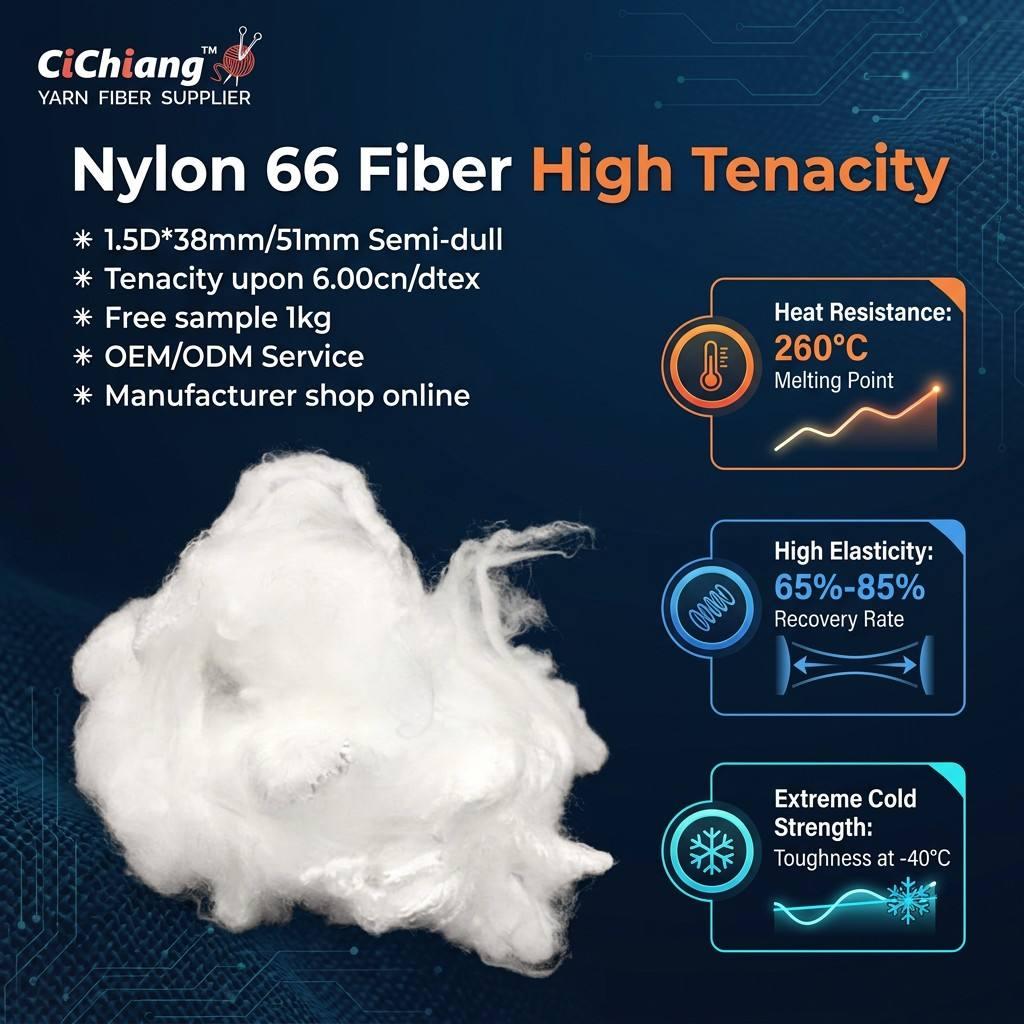
Advantages of HT Nylon 66 Fiber
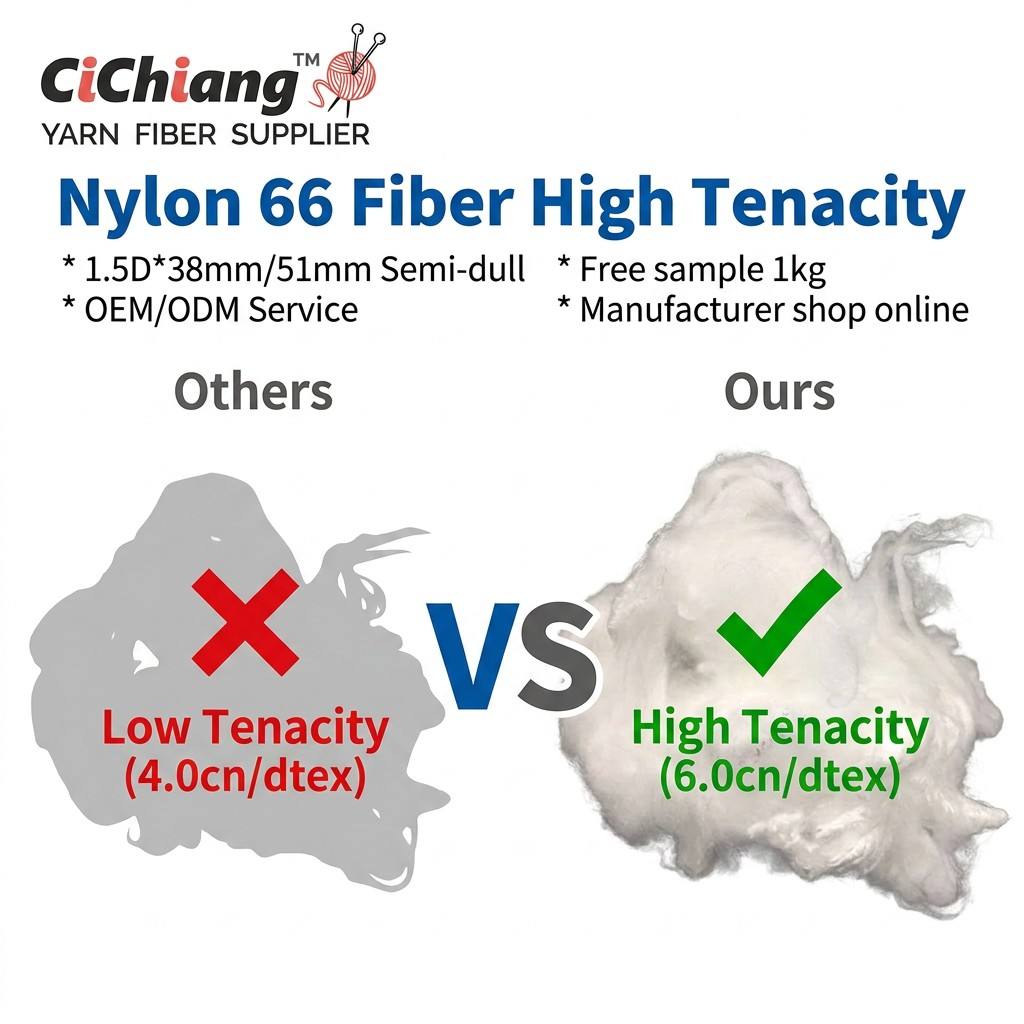
Thanks to its regular molecular chain, high hydrogen bond density, and higher
crystallinity compared with Nylon 6, high-strength Nylon 66 (PA66) exhibits prominent advantages over ordinary Nylon 6, polyester, and polypropylene yarns in five key
dimensions: spinning processing stability, yarn mechanical properties,
downstream weaving & sewing performance, finished product durability, and environmental adaptability.
1. Processing Advantages in Spinning Production
(Cost Reduction & Efficiency Improvement)
1.1 Fast crystallization rate, suitable for high-speed melt direct spinning
PA66 features a symmetrical molecular structure, with a crystallization rate 12 times
that of Nylon 6 and 20% higher crystallinity. It delivers stable melt fluidity and
supports high-speed direct spinning technology, which shortens the production process and reduces energy consumption. In mass production, it effectively avoids spinning defects such as broken filaments, fuzzy yarns, and merged filaments, lowers spinning end breakage rate, and improves the operational efficiency of spinning
machines.
1.2 Wide thermal setting window for easy yarn dimension control
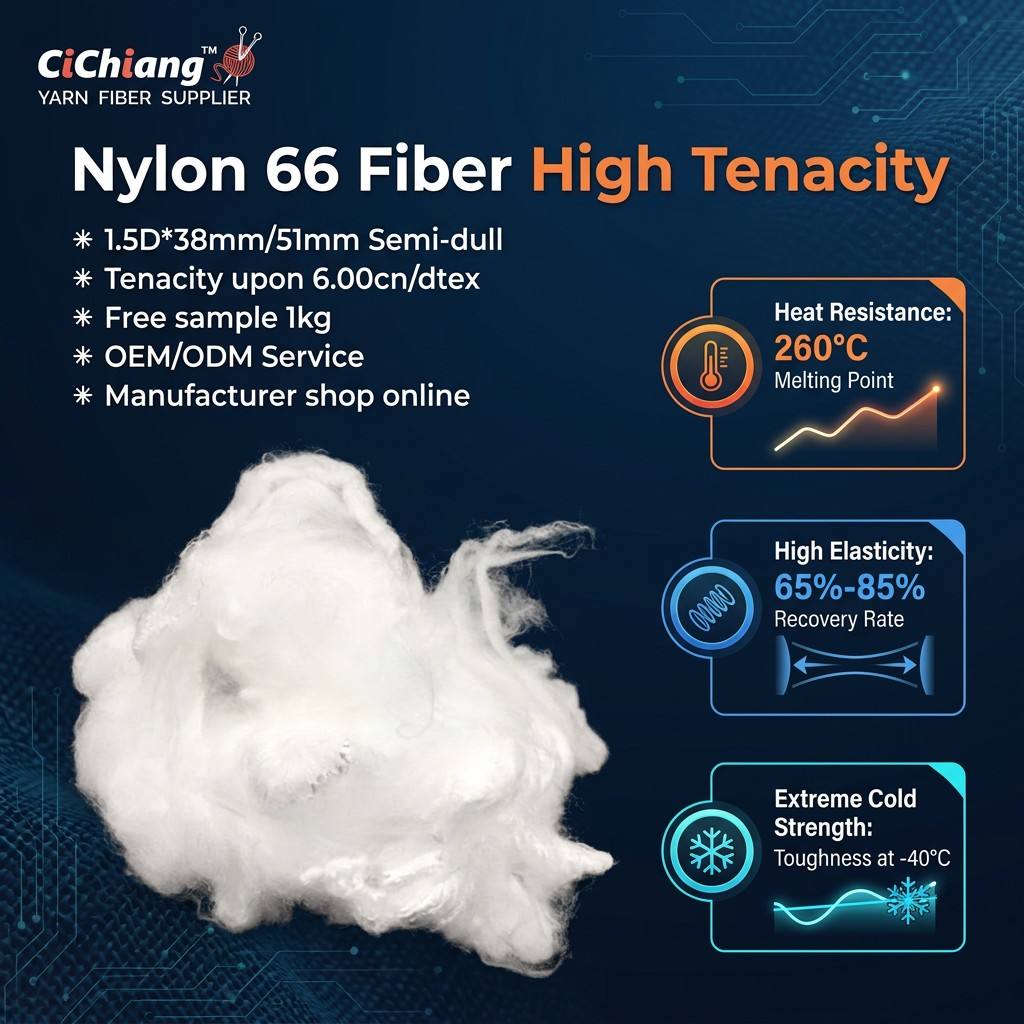
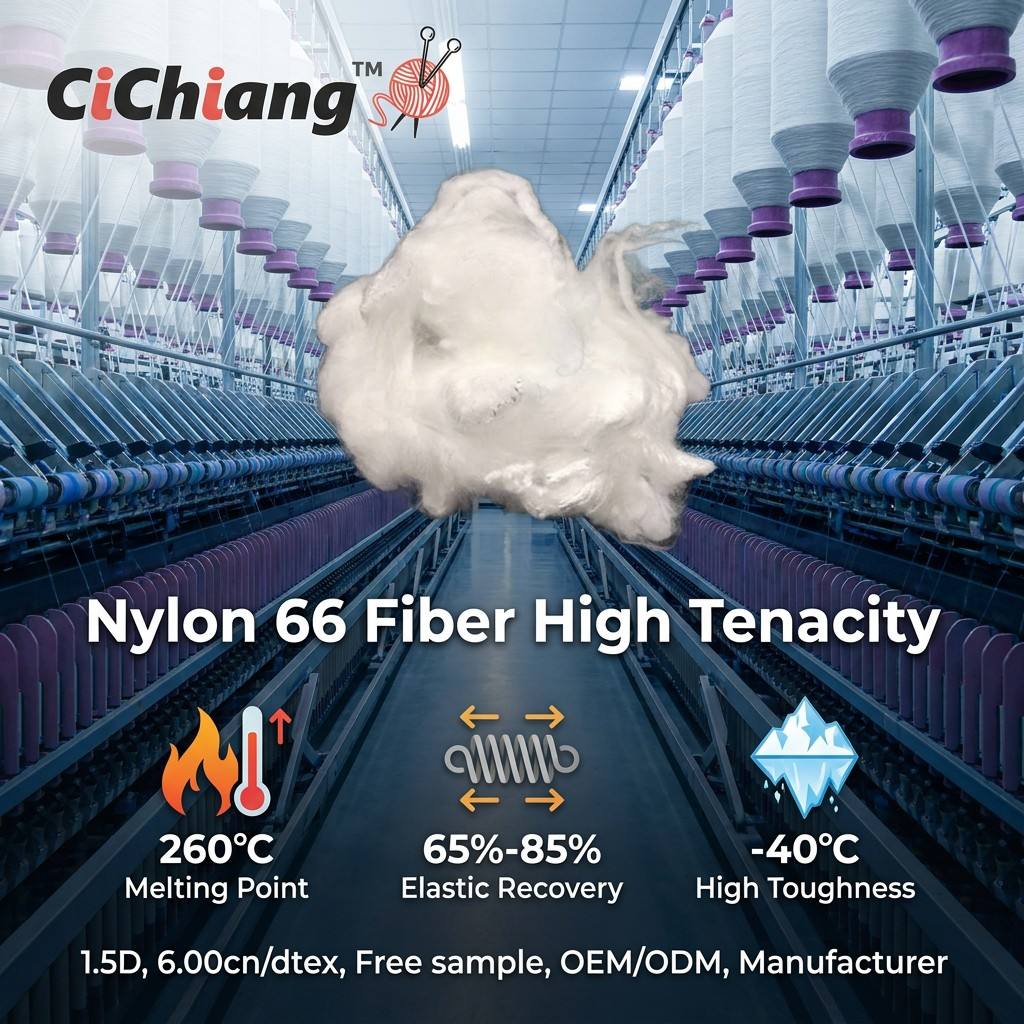
PA66 has a melting point of approximately 260℃ (versus 220℃ for Nylon 6) and a continuous heat resistance of 80~120℃. It has a wide processing range for hot
stretching and thermal setting, avoiding melt adhesion during processing. It can
stably produce high-strength FDY, industrial filament, and sewing line precursor with controllable low shrinkage, eliminating yarn retraction and twisting problems in
downstream processes.
1.3 Smooth fiber surface reducing spinning friction loss
With a dense molecular structure and low friction coefficient, PA66 causes less wear and tear on spinning accessories such as yarn guides, steel rings, and rollers during spinning, doubling, and winding processes. It reduces equipment loss, minimizes yarn hairiness and flying flocs in the workshop, cuts waste filament loss in cleaning and
winding procedures, and improves the finished product rate.
1.4 Support large-scale production of multi-specification high-strength yarns Compatible with both chip spinning and melt direct spinning processes, PA66 can stably produce high-denier industrial filaments (150D~2000D) and fine-denier high-strength civil yarns. It meets diverse spinning demands for sewing threads, woven
belts, tire cords, outdoor fabrics, and other products with stable specification switching performance
2. Mechanical Performance Advantages of Spun Yarns
(Core High-Strength Properties)
2.1 Superior tensile strength with higher bearing capacity at the same denier
The strength of high-strength PA66 yarn reaches 8–10 cN/dtex, 20%~25% higher than ordinary Nylon 6 yarn of the same specification. To meet the same tensile load requirement, finer denier yarns can be adopted to realize product lightweighting.
When applied to load-bearing woven belts, safety sewing threads, and lifting ropes, it provides a higher safety margin and effectively prevents thread breakage and seam cracking.
2.2 High resilience and low creep with no deformation under repeated stress
PA66 yarn has an elastic recovery rate of 65%~85% (under 5% elongation), which can quickly restore its original state after tension unloading. It shows negligible creep under long-term continuous load, avoiding slackness and elongation under long-term tension and bearing. It is ideal for safety belts, luggage handles, and elastic wear.
resistant fabrics with permanent structural stability.
2.3 Excellent wear resistance and fatigue resistance against repeated bending breakage
With self-lubricating properties, its wear resistance is over 20% higher than Nylon 6. It withstands repeated friction and bending fatigue, retaining much higher strength after tens of thousands of friction and bending cycles than polyester and ordinary
nylon yarns. When made into sewing threads, it resists breakage and hair cracking during high-speed sewing and thick leather piercing.
2.4 Outstanding impact toughness with no brittle fracture at low temperatures
It maintains high toughness at extremely low temperatures down to -40℃ without
hardening or brittle cracking. It is the preferred spinning material for alpine outdoor products, cold-chain equipment, and winter labor protection fabrics, making up for the defects of brittle failure of polyester and insufficient strength of polypropylene at low temperatures.
3. Adaptability Advantages for Downstream Weaving
and Sewing
3.1 Breakage-free high-speed sewing with stable industrial stitching performance
High-strength PA66 yarn features low hairiness and tight filament cohesion. It avoids needle skipping, thread breakage, and needle hole melting adhesion during high-
speed sewing and thick leather/automotive interior stitching. With excellent
resistance to high needle temperature during continuous sewing, it greatly improves sewing efficiency and reduces machine downtime for thread replacement.
3.2 Low weaving end breakage and few grey fabric defects
Thanks to high breaking strength and knot strength, PA66 yarn reduces warp and weft end breakage during shuttle weaving, warp knitting, and circular knitting. It
minimizes machine downtime for splicing and fabric defects such as missing warp and weft, lowering the defective rate and improving loom productivity.
3.3 Excellent fabric tear strength and bursting resistance
Fabrics woven from PA66 yarn show significantly better tear resistance and bursting strength than Nylon 6 fabrics of the same weight. Outdoor jackets, workwear,
Luggage fabrics and conveyor belt base fabrics made of PA66 yarn are more resistant to tearing and sharp object scratching.
4. Long-Term Service and Environmental Resistance
Advantages of Finished Yarns & Fabrics
4.1 Excellent dimensional stability with low moisture absorption and shrinkage. The dense hydrogen bond structure endows PA66 with lower moisture absorption
than Nylon 6, ensuring low shrinkage of yarns and fabrics under changing
temperature and humidity. It avoids elongation and deformation of workwear and outdoor fabrics after long-term washing and maintains permanent dimensional stability of woven belts and safety belts.
4.2 Chemical corrosion resistance for special working condition products
It resists weak acids, weak alkalis, most organic solvents, and oil stains. PA66 spun products such as filter fabrics, environmental woven belts, and chemical hose lining fabrics are not easily degraded by corrosion, with slower strength attenuation than cotton and polyester products in oily environments.
4.3 Weathering and aging resistance for prolonged outdoor service life
PA66 has better basic UV and oxidation resistance than Nylon 6. With UV-resistant masterbatch added during spinning, it shows slow strength attenuation under long-
term outdoor exposure. It greatly extends the service life of outdoor products such as tents, climbing ropes, automotive safety woven belts, and sunshade fabrics.
5. Comprehensive Advantage Comparison with Other
Fiber Yarns
|
Comparison Dimension |
High-Strength Nylon 66 Yarn |
Ordinary Nylon 6 Yarn |
Polyester Industrial Yarn |
|
High-Speed |
Fast |
Slow |
High melt |
|
Spinning Performance |
crystallization, suitable for high-speed direct spinning |
crystallization, prone to end breakage at high speed |
viscosity, high spinning resistance |
|
Heat Processing Resistance |
Melting point 260℃, wide setting window |
Melting point 220℃, prone to yarn adhesion at high temperature |
Melting point 255℃, poor resilience |
|
Tensile Strength |
8~10/dtex |
6~7.5cN/dtex |
7–9 cN/dtex |
|
Resilience & Creep Resistance |
High resilience, no long-term slackness |
Moderate resilience, prone to creep |
Poor resilience, difficult to recover after stretching |
|
Wear & Fatigue Resistance |
Excellent |
Good |
Average |
|
Low-Temperature Toughness |
No brittleness at - 40℃ |
Declined toughness at low temperature |
Prone to brittle fracture at low temperature |
|
High-Speed Sewing Adaptability |
No yarn melting for high-speed thick material sewing |
Suitable for medium and low speed sewing |
Prone to yarn melting and breakage by needle heat |
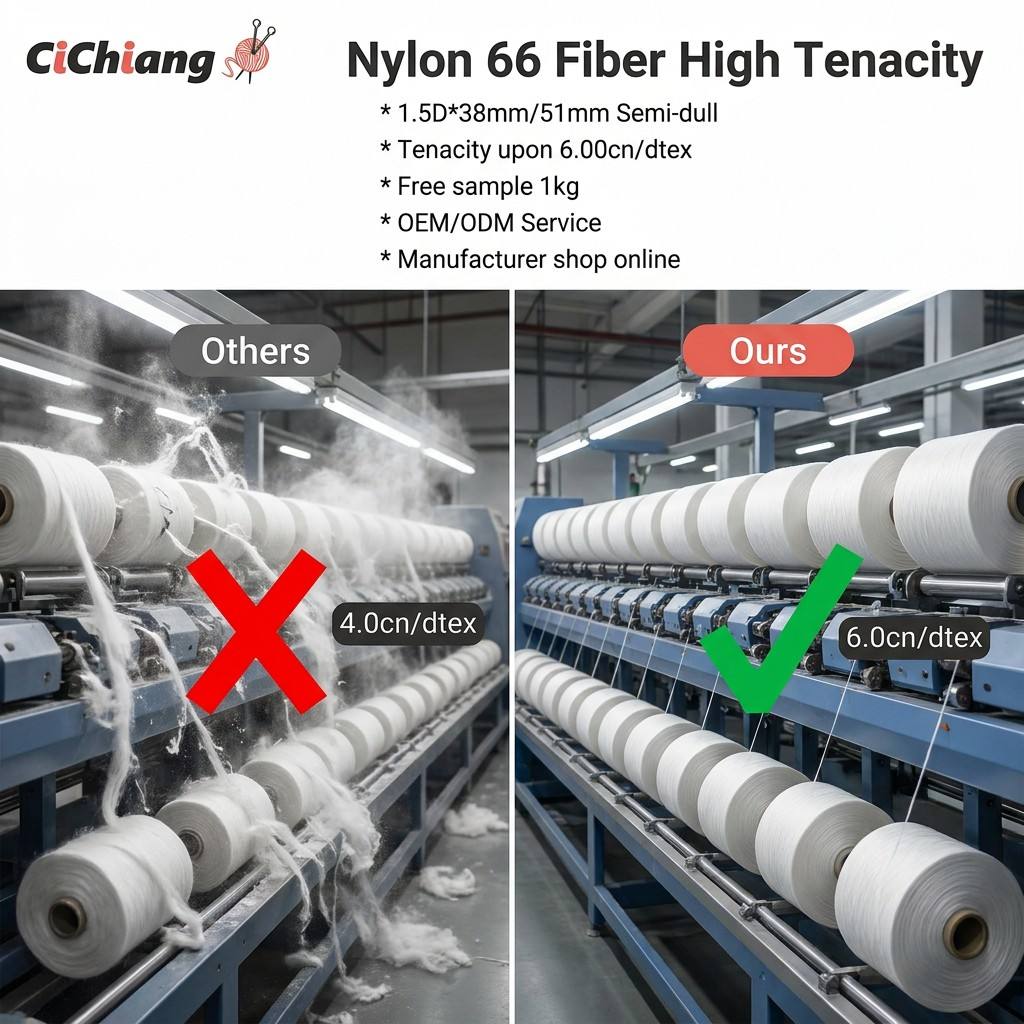
6. Typical Spinning Application Scenarios
Tire cords, automotive safety belts, industrial sewing threads, lifting woven belts, fire hoses, high-end outdoor fabrics, military wear-resistant textiles, leather and luggage sewing threads, conveyor belt base fabrics, climbing ropes, high-strength labor
protection workwear.