What buyers usually mean when they search for 100% nylon yarn
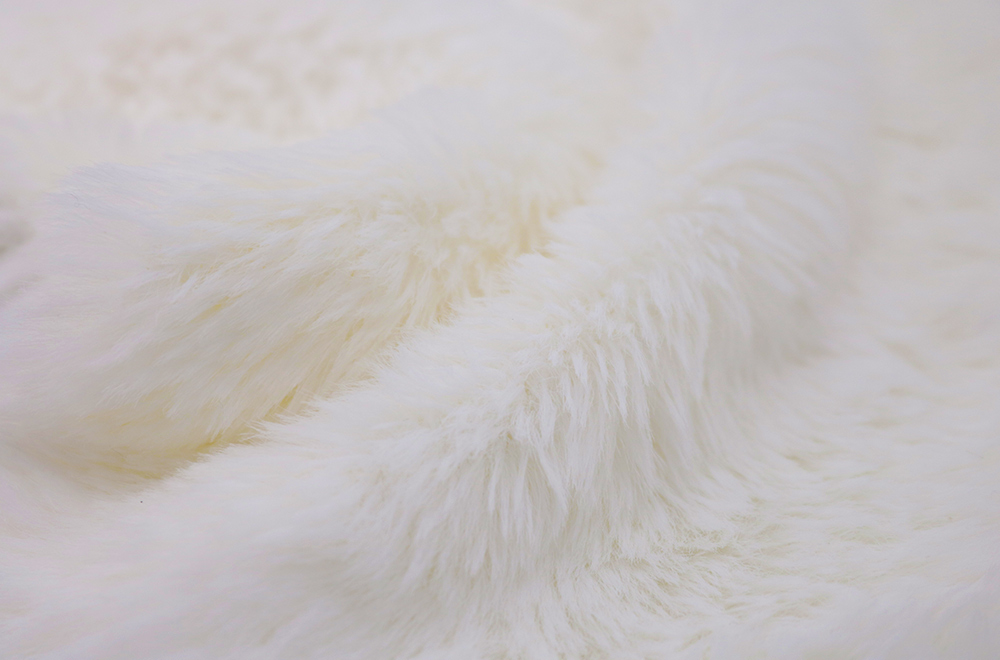
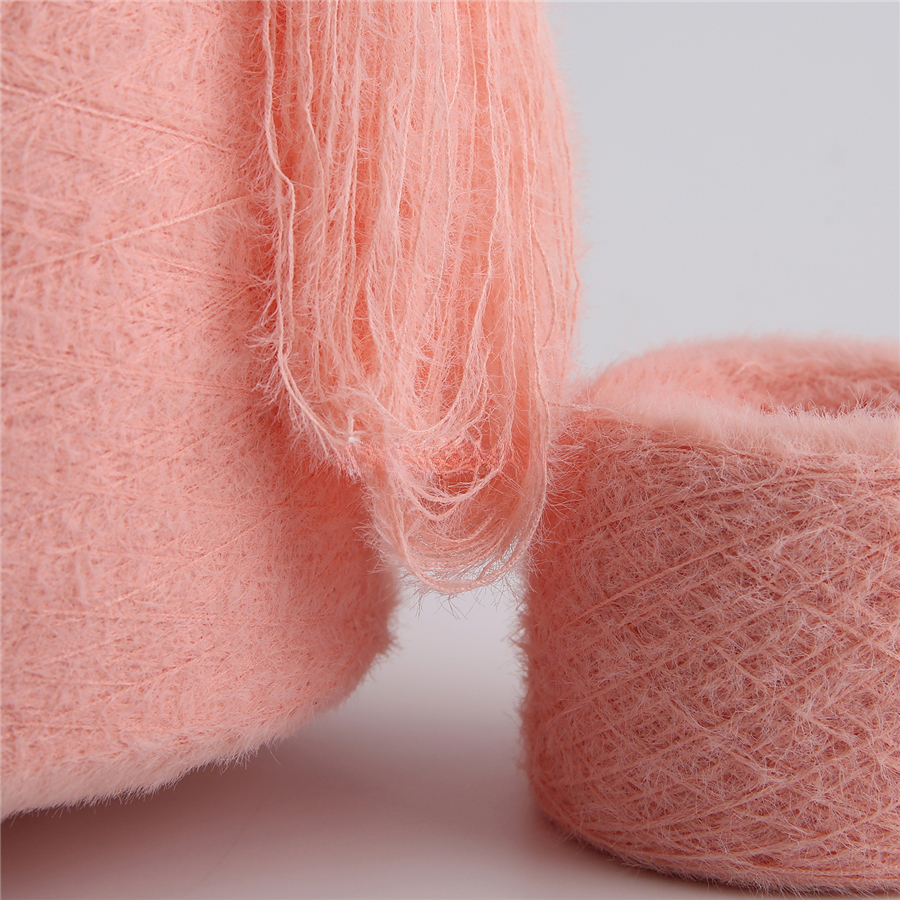
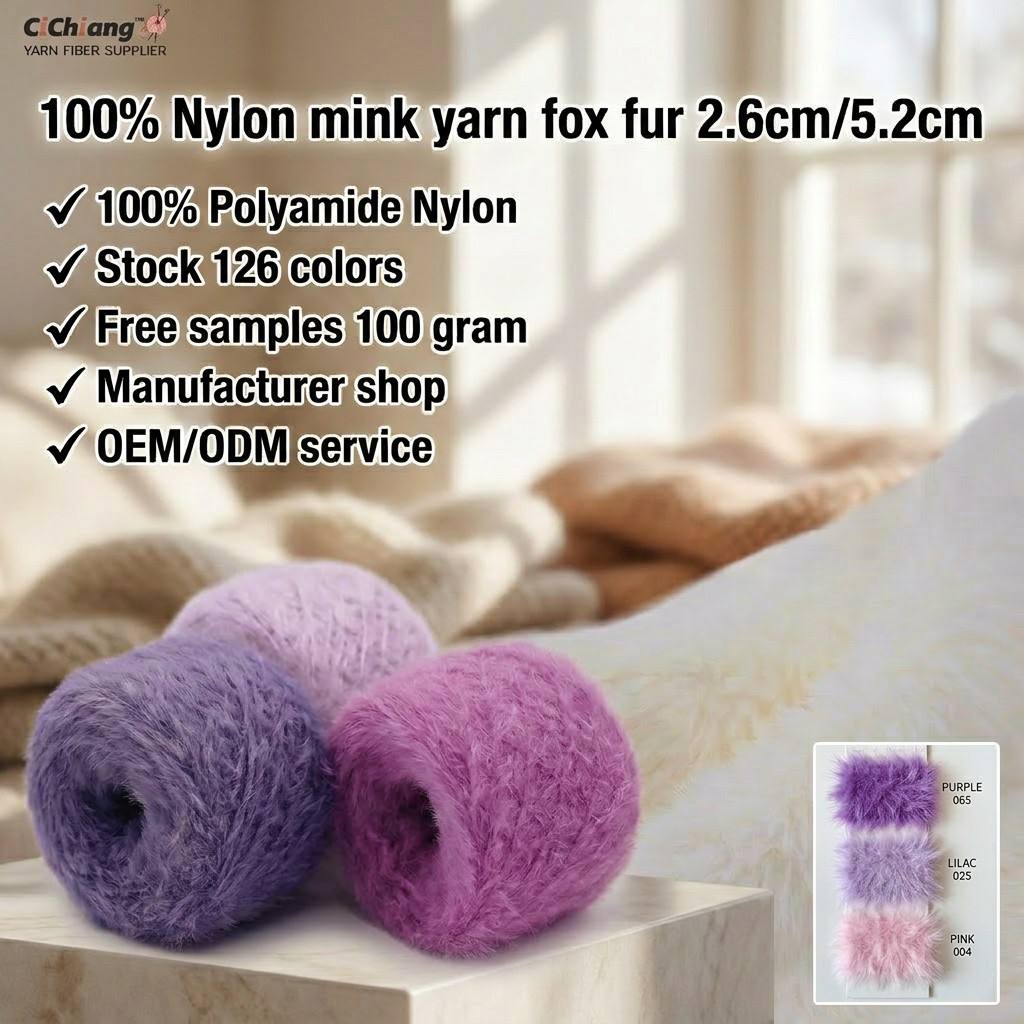
When sourcing 100% nylon yarn, most buyers are not just comparing color cards. They are trying to solve a more practical question: which nylon construction will behave the way the finished product needs it to behave? For some teams, that means a fluffy, fur-like hand for scarves, hats, or costume trims. For others, it means a synthetic fiber supply that can be processed into decorative textile materials, padding, or converter products without surprises on the production floor.
The term can cover more than one product style. In the market, nylon-based yarn may be sold as plush yarn, soft texture yarn, fluffy knitting yarn, or even a faux fur yarn / mink feather yarn style product. That is exactly where buyers need to slow down. The appearance may be similar from a distance, but the structure, pile behavior, and end use can differ enough to affect knitting performance, finishing, and consumer feel.
Why the material choice matters to engineering and sourcing teams
Nylon is used widely in textile manufacturing because it can be processed into fiber forms that are lightweight, resilient, and workable in industrial production. In the case of decorative yarns, the material is often selected for its ability to support a soft surface and a visually full, furry effect. That makes it relevant for knitting yarn for scarves, winter accessories, plush toys, trims, and other products where hand feel is part of the selling point.
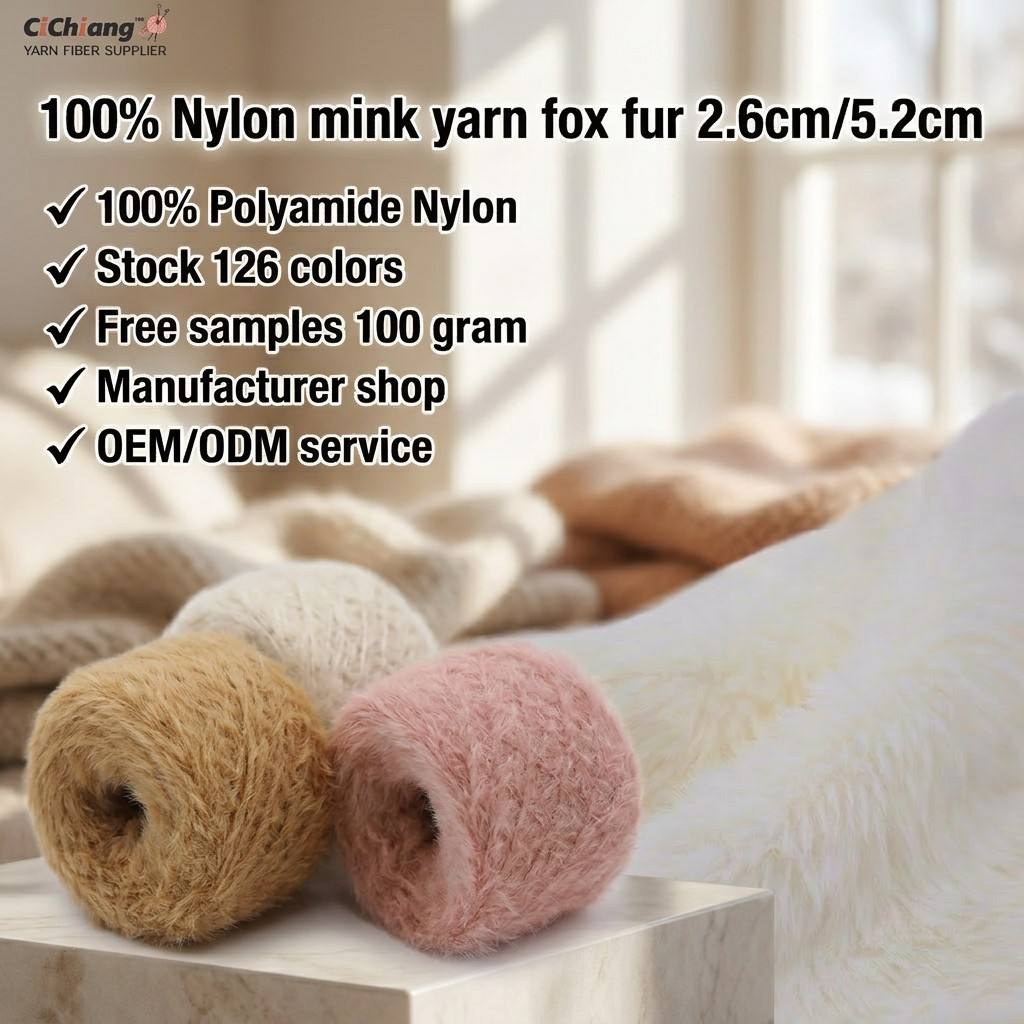
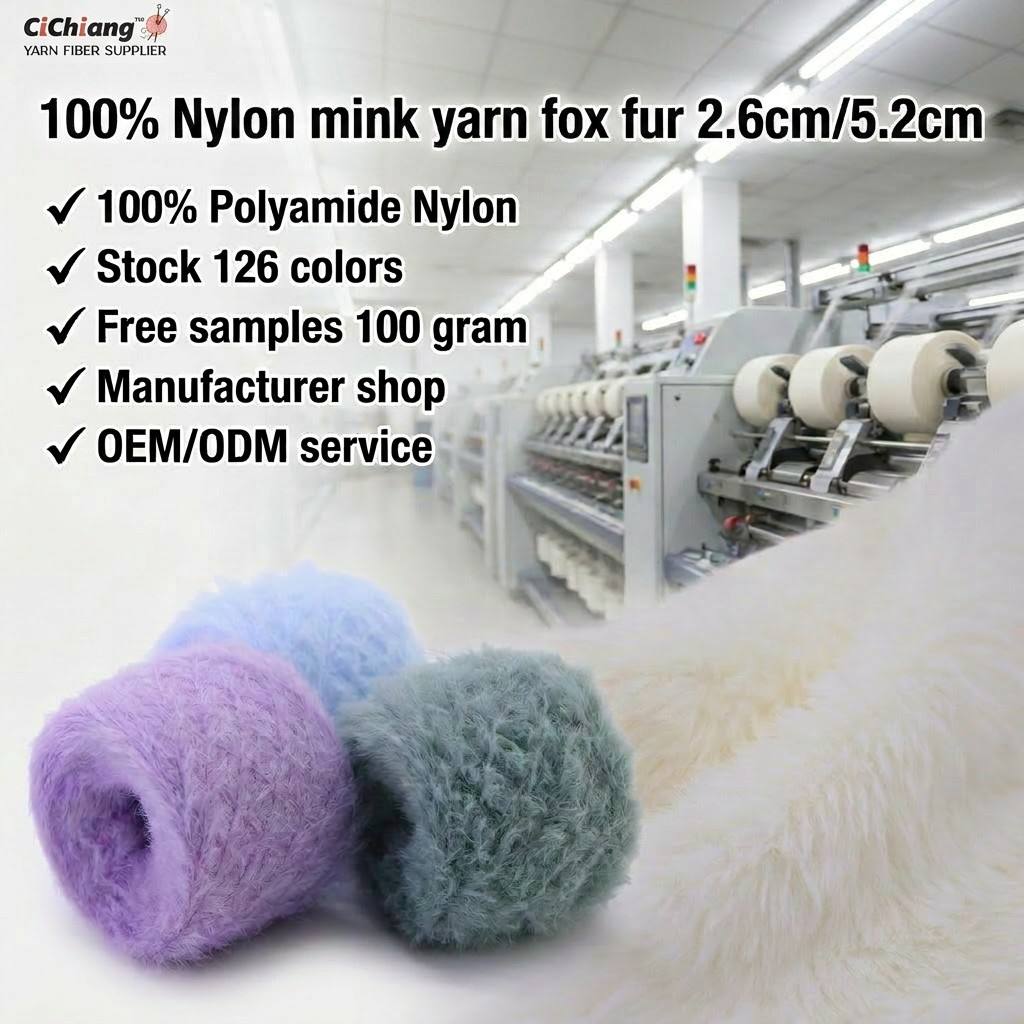
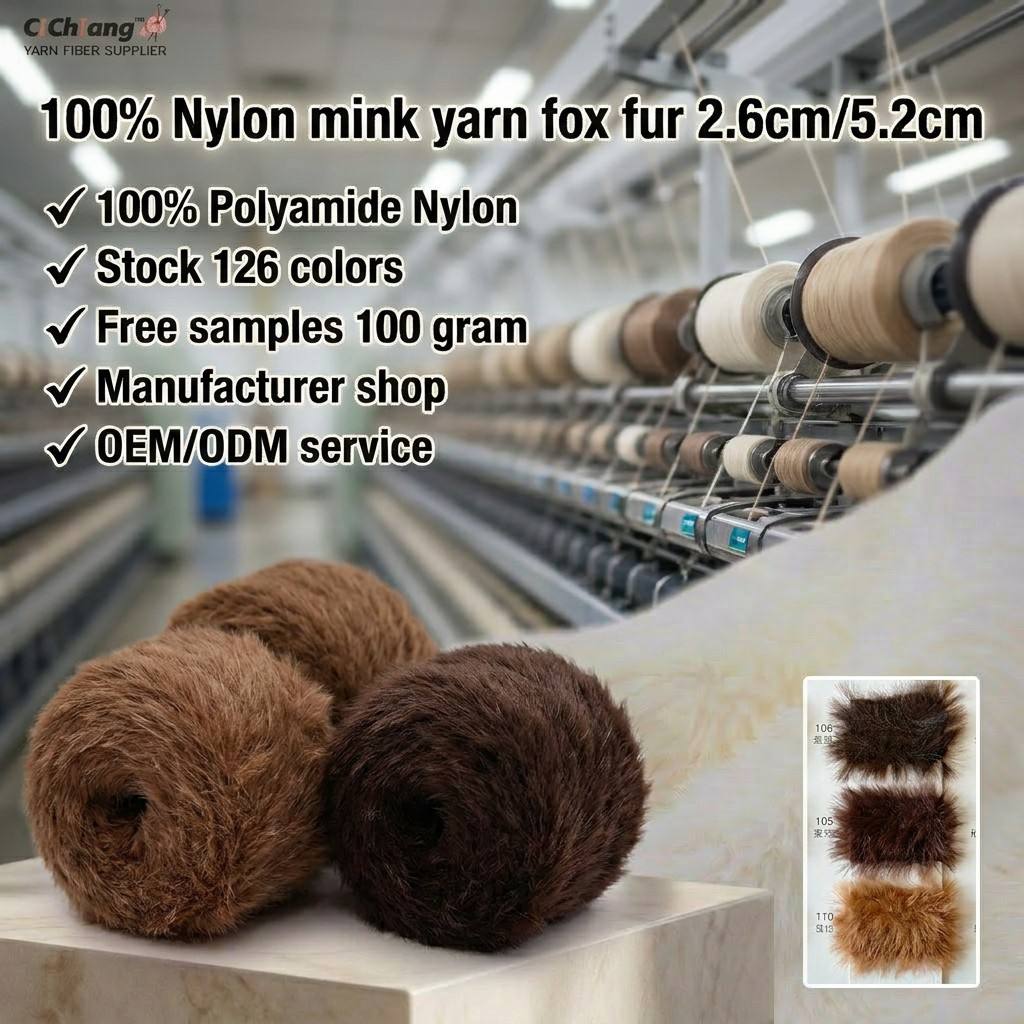
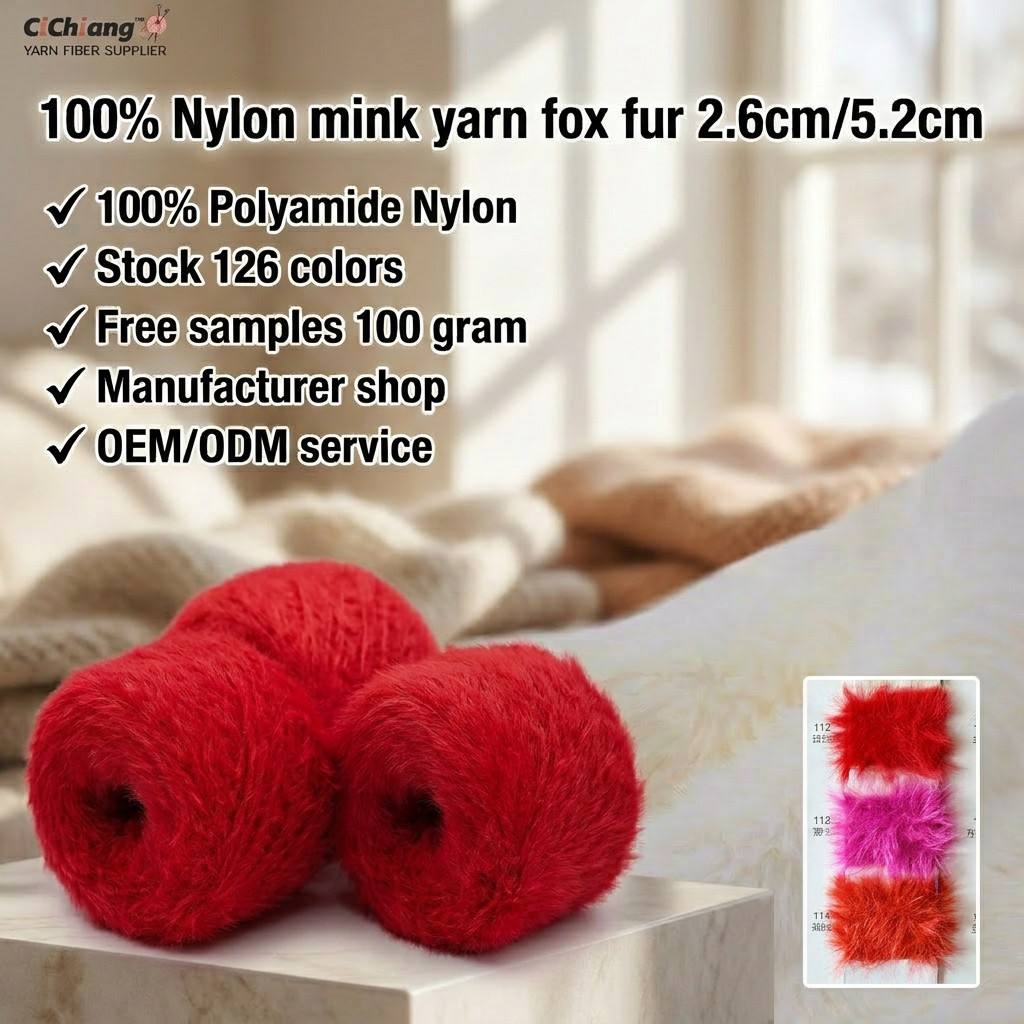
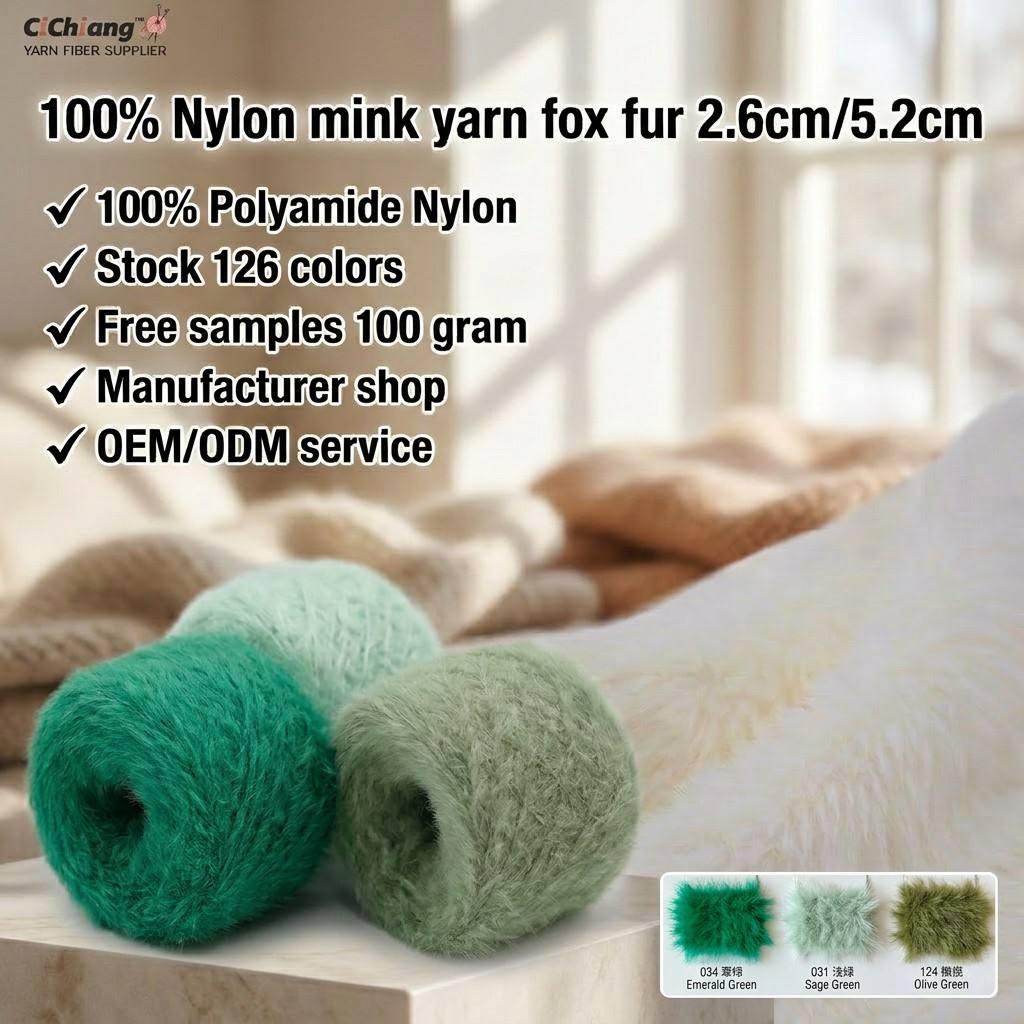
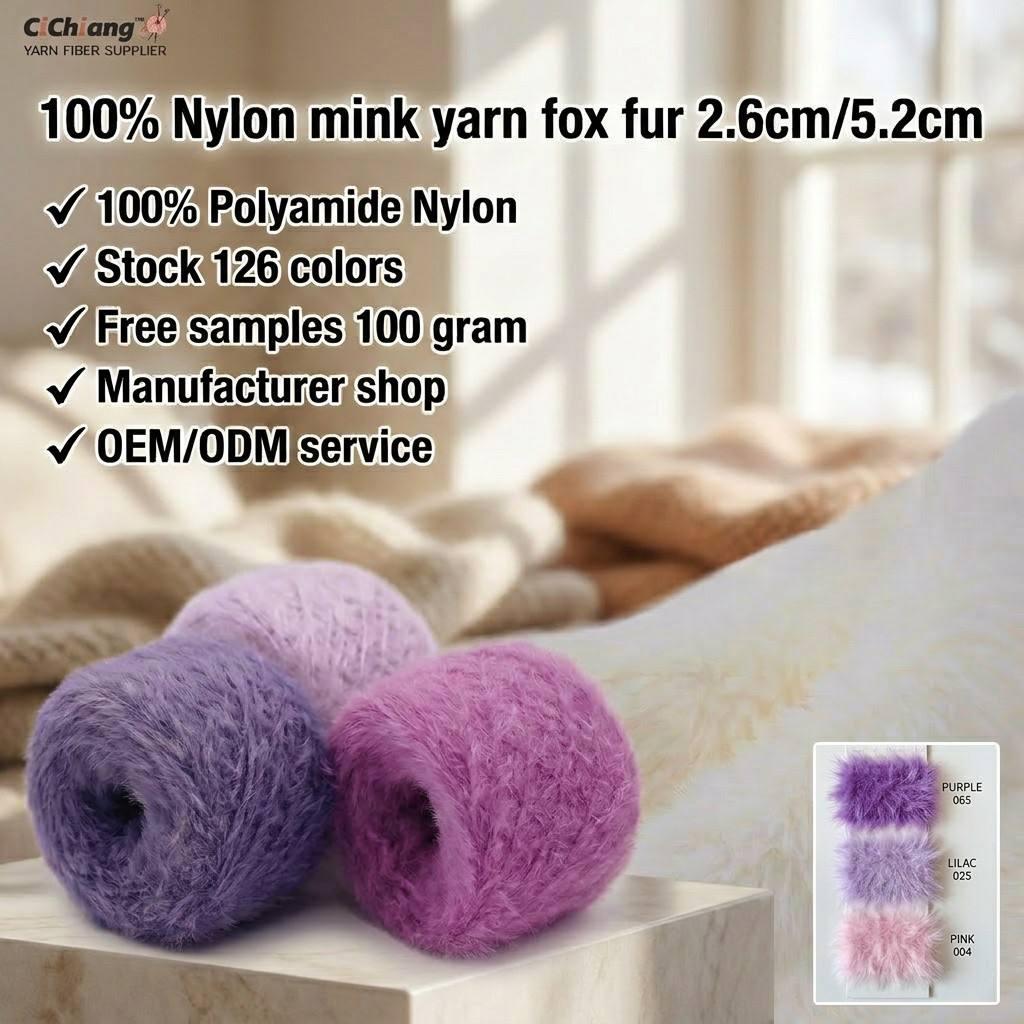
The image-based product data provided here points to a pile-like, brushed, faux-fur appearance. It also notes 100% nylon / polyamide nylon, OEM/ODM supply, 126 colors, and free samples in a 100 g format. Those are useful commercial clues, but they are not a substitute for confirming the actual yarn structure, pile length, gauge compatibility, or machine suitability. A buyer who skips that step may end up with yarn that looks right in a swatch and behaves badly in production.
Key product cues worth checking before you order
Material identity
Confirm whether the yarn is truly 100% nylon, and whether the supplier means polyamide nylon in a single-fiber system or a processed blended structure. For decorative yarn, the surface can be heavily brushed, so the visible “fur” effect may not tell you much about the underlying core.
Surface and pile
For faux fur yarn, the pile length and density affect both appearance and processing. The provided product data mentions visible pile-length figures of 2.6 cm / 5.2 cm, though the meaning of those numbers is not fully clear from the image alone. Treat that as a point for clarification, not as a final specification.
Color range and consistency
Stock in 126 colors is useful if you are building a multi-SKU craft line or coordinating seasonal collections. Still, buyers should ask whether dye lots are controlled tightly enough for repeat orders. Decorative yarn can look consistent in a photo while showing shade drift between lots.
How nylon faux-fur style yarn compares with other soft yarn types
Compared with standard knitting yarn, a faux fur yarn or plush yarn usually gives a fuller surface and hides stitch definition. That is a feature when the goal is a fluffy, tactile finish. It is less helpful when the pattern itself needs to be visible. For example, cables and lace motifs tend to disappear under a long-pile surface.
Mink fur yarn and fox fur style yarn are often used as marketing terms to describe the look rather than the source material. Buyers should not assume any animal fiber content from those names alone. In the data supplied here, the product is presented as synthetic, which is the safer reading for sourcing and compliance planning.
Typical applications and where buyers need caution
This type of yarn is commonly considered for scarves, hats, sweaters, blankets, plush toys, costume pieces, and decorative trims. It can also be used in craft and textile converter projects where a soft texture yarn is needed for visual impact. That said, the more elaborate the surface, the more likely it is to shed fibers during cutting, knitting, or finishing. Production teams should plan a sample run before committing to a full order.
For home decor or stage pieces, the plush look may be the main requirement. For apparel, comfort, cleanability, and pilling behavior become more important. The supplier data does not provide wash performance, warmth, or durability claims, so those should be tested rather than assumed.
What Ningbo Sinopec Fiber Co., Ltd. brings to the table
Ningbo Sinopec Fiber Co., Ltd., founded in 1996, specializes in nylon fiber manufacturing. The company states it has 150 employees, including 20 engineers, and a factory spanning 50,000 square meters, with 20,000 square meters of production space. It also reports a daily output of 100 to 150 tons and focuses primarily on PA6 and PA66 polyamide nylon fibers.
For buyers, that kind of scale can matter. It suggests an established fiber manufacturing base rather than a small trading operation. The data also notes long-term partnership interest, which is often relevant for brands or converters that need repeatable supply. Still, product fit matters more than factory size. A strong mill is not automatically the right mill for every plush yarn program.
Buyer checklist before requesting a sample
Ask for the exact fiber composition, construction method, and whether the yarn is intended for hand knitting, machine knitting, or another process. Request confirmation on pile length, package size, color consistency, and whether the sample offered at 100 g reflects the production format. If your end product is sensitive, also ask about shedding, washing, and any finishing steps that may affect hand feel.
One practical warning: do not approve a production order based only on how the yarn photographs. Decorative yarn often looks richer in image than in actual use, especially after tension, steam, or washing changes the pile.
Next step for sourcing teams
If you are evaluating 100% nylon yarn for plush or faux-fur applications, start with a sample comparison and a short process trial. Ask the supplier to explain the yarn structure in plain terms, not only with marketing names like plush yarn or fox fur style yarn. That will save time, and in a textile program, time usually means fewer surprises later.