Why buyers keep asking about 100% nylon yarn
When sourcing 100% nylon yarn for apparel, trims, or decorative textile production, the real question is usually not just what the yarn is made of. It is whether the material will behave the way the product team needs it to: soft enough for consumer-facing items, stable enough for repeat processing, and consistent enough to keep production moving. In specialty yarn markets, that matters more than a glossy product photo. A yarn may look like mink feather yarn, fox fur style yarn, or even a plush decorative fiber, but the buyer still has to decide whether it can be knitted, crocheted, wound, dyed, or used in a larger textile assembly without headaches.
This is where many procurement conversations slow down. The visual appeal is obvious. The practical performance is not. A fluffy yarn can look ideal for scarves or winter accessories, while a roll-form fibrous material may suit filtration, padding, insulation, or another industrial use entirely. The decision a buyer needs to make is simple in wording and less simple in execution: which form of nylon-based fiber fits the end use, and what information still needs to be confirmed before ordering?
Three looks, three buying mindsets
Not every fuzzy product should be treated the same way. Based on the supplied product information, there are at least three relevant categories buyers may encounter.
1) Long-pile textile or faux fur-like material
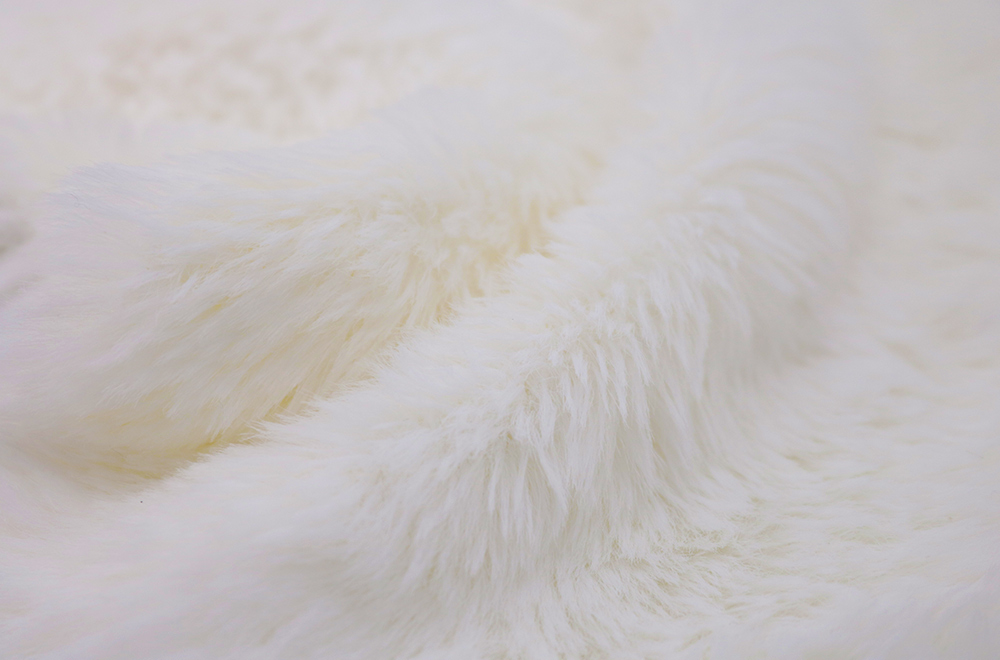
The white, fluffy surface material looks like a long-pile textile with a dense, soft hand. For fashion trims, costume pieces, home décor accents, and similar soft goods, the important questions are backing, pile stability, and how the surface behaves after cutting or stitching. Buyers in this category care about feel first, then processing behavior. If the pile sheds heavily or crushes too easily, the finished item can disappoint even if the material looks premium on day one.
2) Fancy yarn for knitting and crocheting
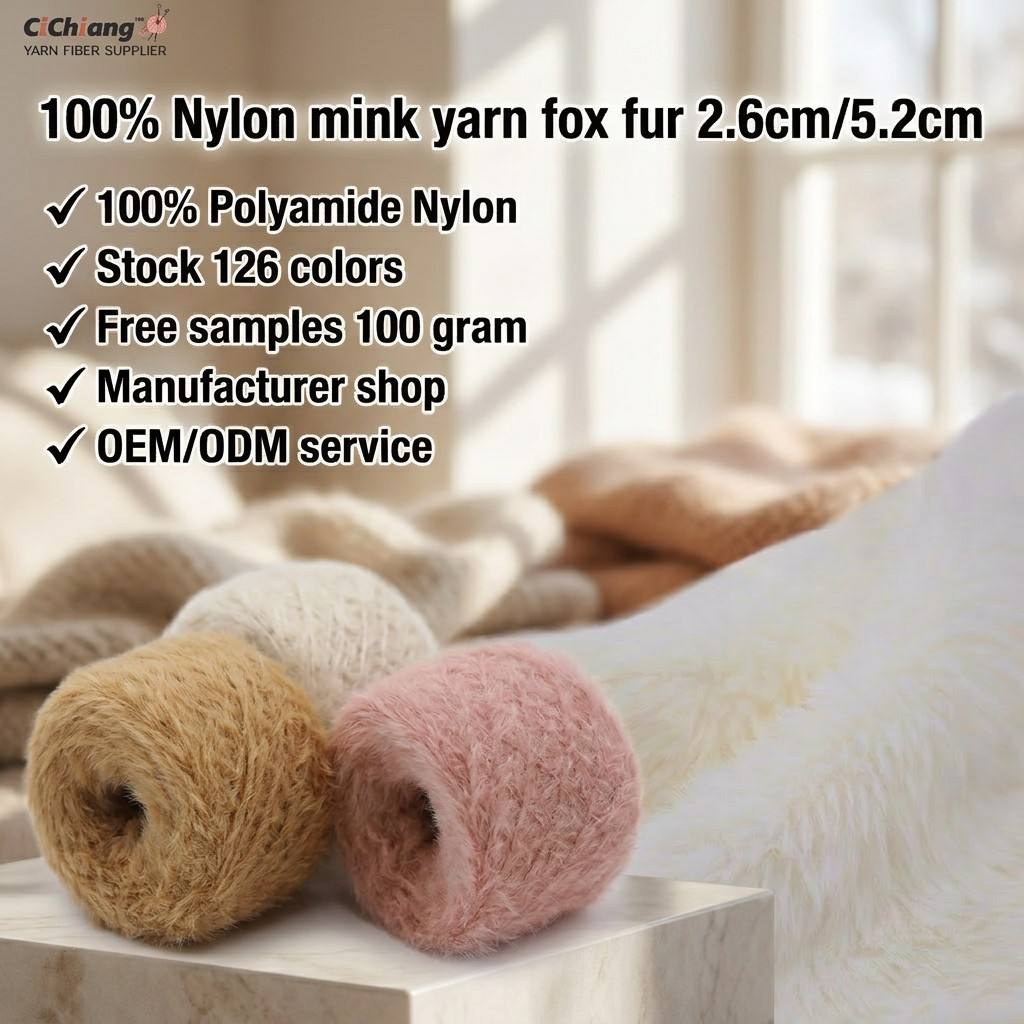
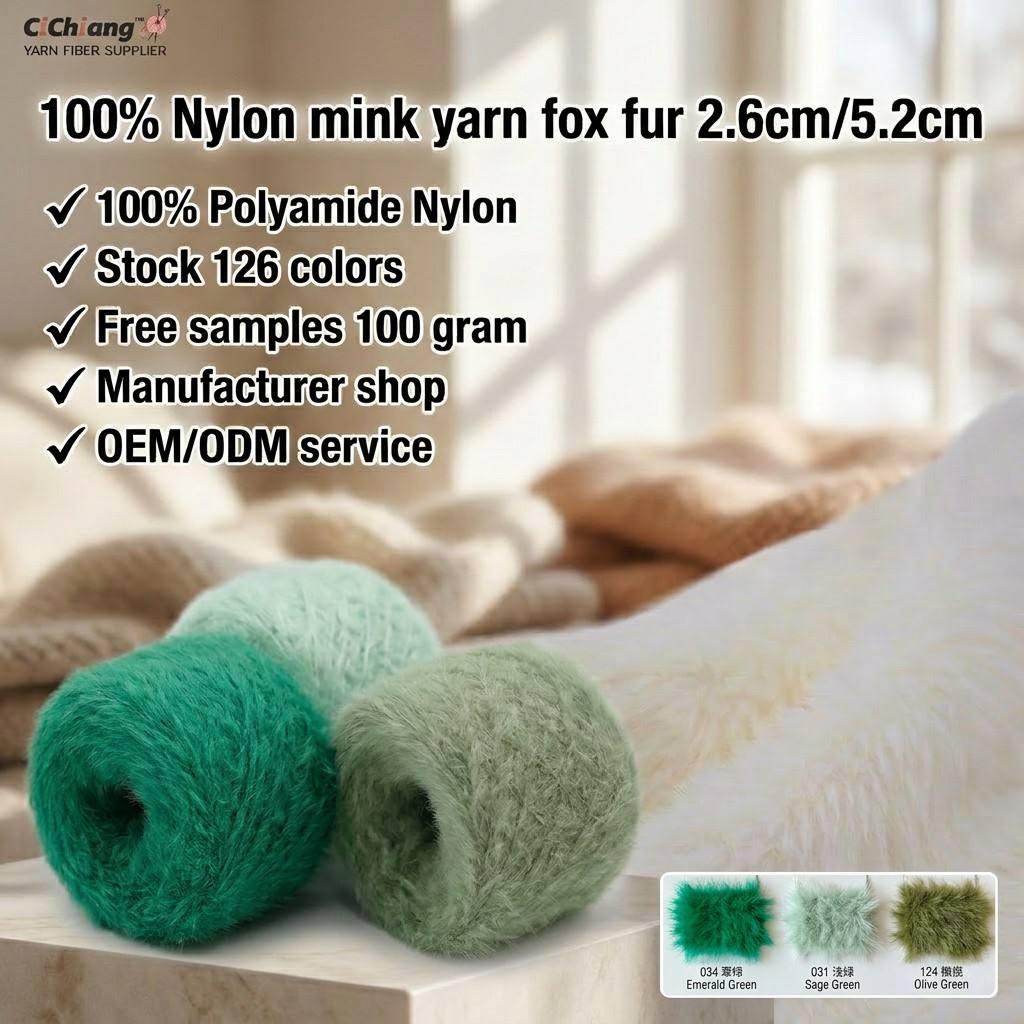
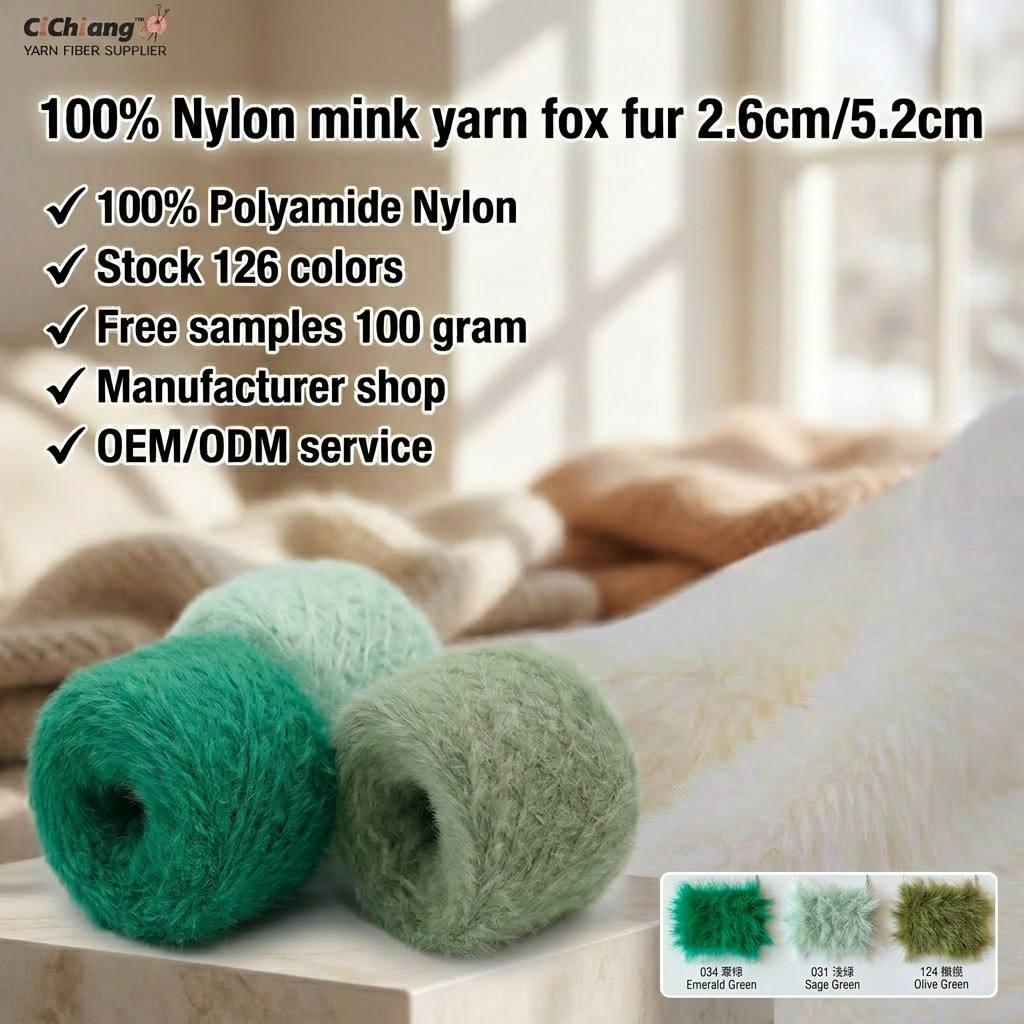
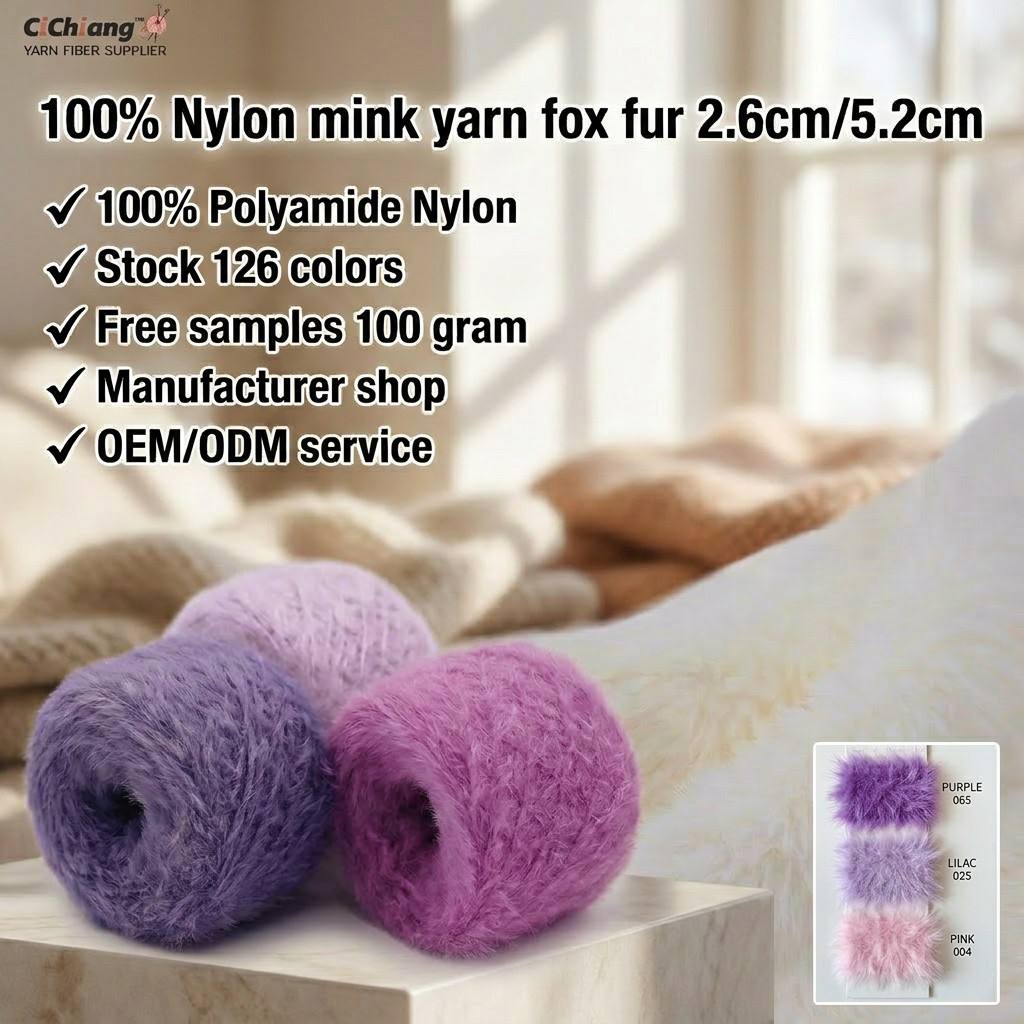
The yarn product described as mink fur yarn, fox fur style yarn, faux fur yarn, or plush yarn is a specialty spinning category rather than a standard smooth yarn. The supplied claim of 100% polyamide nylon is important here, because nylon is often chosen for its softness, bulk, and synthetic consistency. This type of fluffy knitting yarn is commonly considered for scarves, hats, sweaters, blankets, and decorative craft items. It is the kind of yarn that can turn a simple pattern into a high-impact product, though it also demands a bit more testing than basic acrylic or cotton yarn.
3) Roll-form fibrous material for industrial or semi-industrial uses
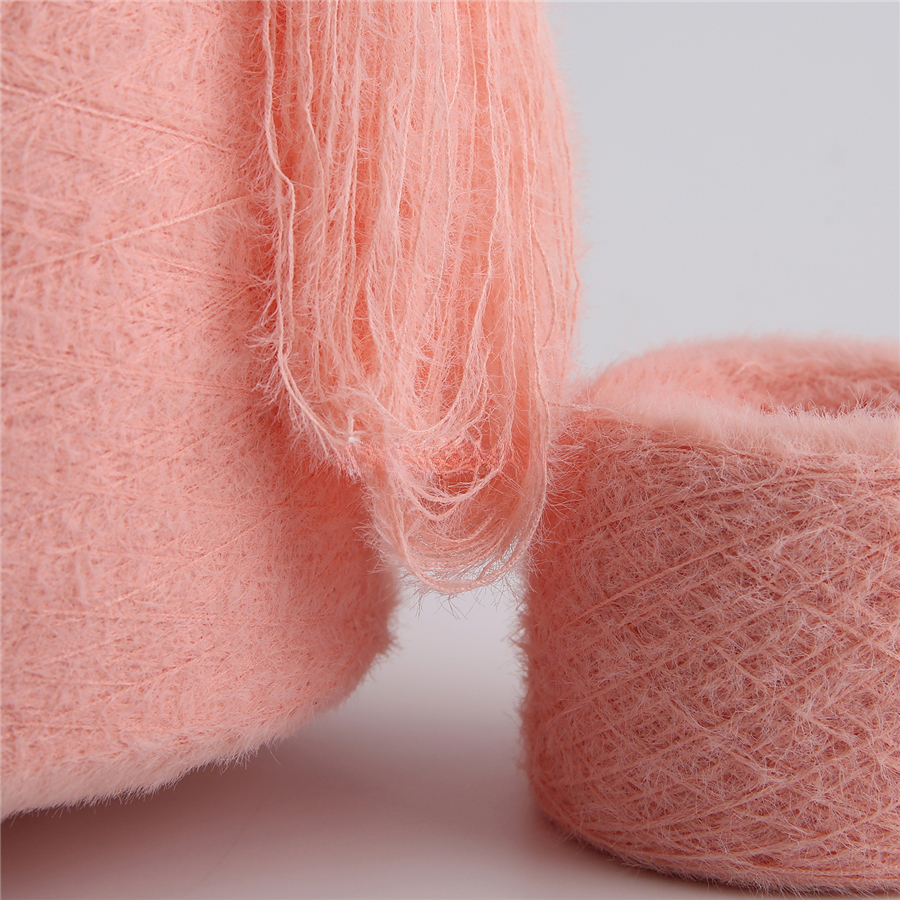
The pale pink cylindrical rolls look closer to a porous fibrous web than to finished garment yarn. From appearance alone, it could be useful as a filtration medium, cushioning layer, acoustic or thermal insulation component, or a processing material in textile workflows. That is only an informed visual read, not a confirmed function. For sourcing teams, the caution here is obvious: don’t buy by appearance alone if the end use depends on density, pore structure, or temperature resistance.
What 100% nylon brings to the table
In specialty yarn markets, nylon has earned its place for practical reasons. It is widely used in synthetic textile manufacturing because it can be made into uniform fibers, it accepts color well, and it can deliver a soft or silky feel when the construction calls for it. For a buyer looking at 100% nylon yarn, the appeal is usually a mix of hand feel, appearance, and production predictability.
That said, “100% nylon” is not a full spec sheet. It tells you the base material claim, but not the pile length, yarn count, backing structure, weight, or wash behavior. The supplied product text mentions a pile/length claim of 2.6 cm / 5.2 cm, though the exact meaning of those figures is unclear and should be clarified with the supplier before purchase. That is a small but important point; many sourcing mistakes start with one ambiguous number that everyone assumes they understand.
Selection criteria buyers should actually check
If you are comparing soft-texture yarns for commercial use, a neat product title is not enough. Ask for the details that affect manufacturing and user experience:
Fiber identity and construction. Confirm whether the material is truly nylon-based and whether it is spun, cut-pile, looped, or otherwise constructed. The difference affects processing and final appearance.
Surface behavior. A soft texture yarn can still shed, mat, or flatten under handling. For scarves or trim, that may be acceptable; for retail products with high consumer contact, it may not be.
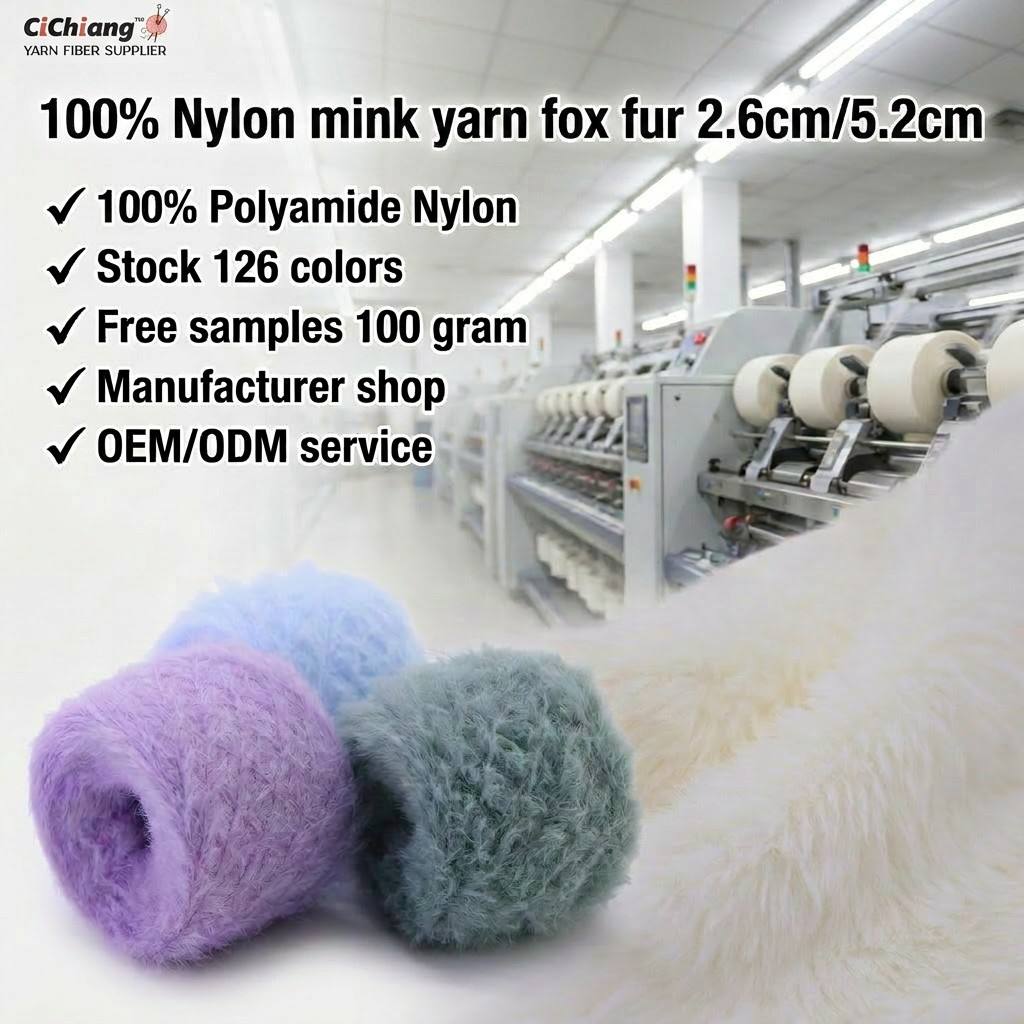
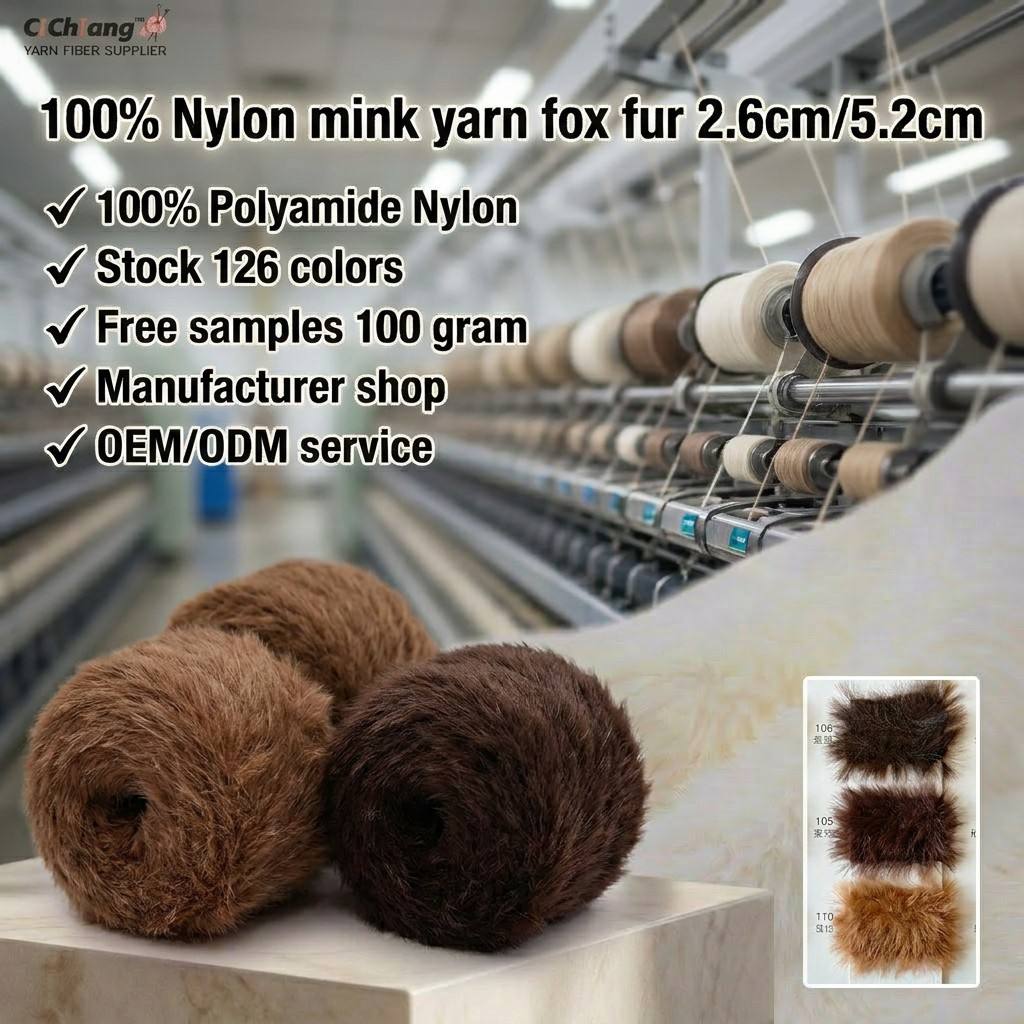
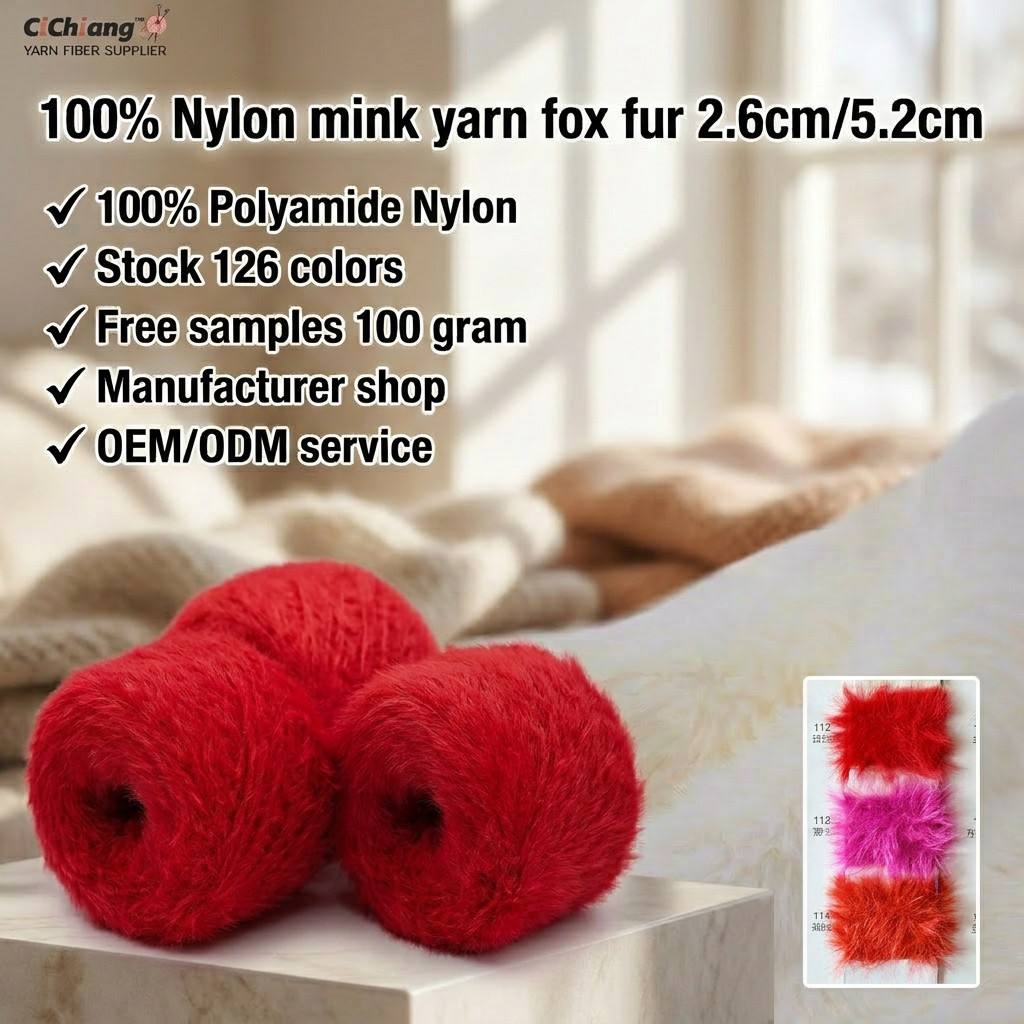
Color range. The supplied information mentions 126 stock colors and sample shades including purple, lilac, and pink. That is useful for product development teams, especially when building coordinated collections or seasonal ranges.
Supplier support. The mention of OEM/ODM service and free 100-gram samples is relevant for developers who want to test hand feel and stitch performance before committing to a larger order.
Factory capability. Ningbo Sinopec Fiber Co., Ltd. states that it was founded in 1996 and specializes in nylon fiber manufacturing. The company also notes 150 employees, including 20 engineers, with a 50,000-square-meter factory and daily output of 100-150 tons, mainly PA6 and PA66 polyamide nylon fibers. For buyers, those details suggest a supplier with scale and technical depth, which can matter when consistency and repeat orders are part of the plan.
Common mistakes in sourcing fluffy yarn and pile textiles
The first mistake is assuming that all plush yarns behave the same in knitting. They do not. Some hide the stitch structure well, others make pattern reading difficult, especially for less experienced production teams. A second mistake is ignoring the backing or core structure when the product is more fabric-like than yarn-like. A third is approving color from a swatch without checking how the shade looks under production lighting. Soft textile goods can shift noticeably between showroom light and factory floor reality.
Another practical warning: if the end product must be machine washed, flame tested, or used in a technical application, do not rely on marketing language. Ask for the exact performance data. The image text supplied here does not include those results, and they should not be guessed.
Buying advice for engineering, sourcing, and product teams
For consumer textile products, start with samples and stitch trials. For industrial-looking fibrous rolls, start with a function check: what does the material need to do mechanically, and what failure mode matters most? Compression, airflow, loft retention, or surface uniformity may each point to a different specification.
If the yarn is being considered for scarves or similar items, the buyer-facing conversation should include touch, drape, and how much bulk the finished item will have. A knitting yarn for scarves can look luxurious on the shelf but may require a different needle size or construction approach than standard yarn. That is not a defect; it is part of the category.
What to ask the supplier next
Before moving forward, request clarification on fiber composition, pile length, yarn weight, backing or core construction, color availability, sample terms, and any test data relevant to your use case. If you are working with Ningbo Sinopec Fiber Co., Ltd., the company’s nylon fiber manufacturing background may be useful for technical discussion, especially if your project involves PA6 or PA66-based materials.
For buyers choosing between decorative plush yarn, faux fur-style textiles, and roll-form fibrous media, the right next step is not to order blindly. It is to match the material form to the actual end use, then verify the details that affect processability. That saves time later, and in textile sourcing, time is often the most expensive thing in the room.