Why buyers compare a nylon 6,66 fiber abrasive scouring pad before they place an order
When sourcing a nylon 6,66 fiber abrasive scouring pad, most buyers are not just looking for a cleaning item. They are trying to solve a production problem: how to get consistent scrubbing performance, predictable wear, and a pad structure that can survive repeated use without falling apart too early. For engineers and purchasing teams, the real question is whether the fiber base will behave reliably in the final pad, sponge, or scrubber line.
That is why the discussion usually starts with the raw material itself. The fiber quality, cut length, fineness, and finish all influence how a finished abrasive product feels in use and how it is processed on the manufacturing side. If the base fiber is uneven, the pad can become lumpy, weak, or difficult to bond. If it is too aggressive, the product may clean well but wear surfaces too harshly. Buyers often discover that the “right” abrasive pad is really the result of choosing the right fiber input.
What this product information actually tells buyers
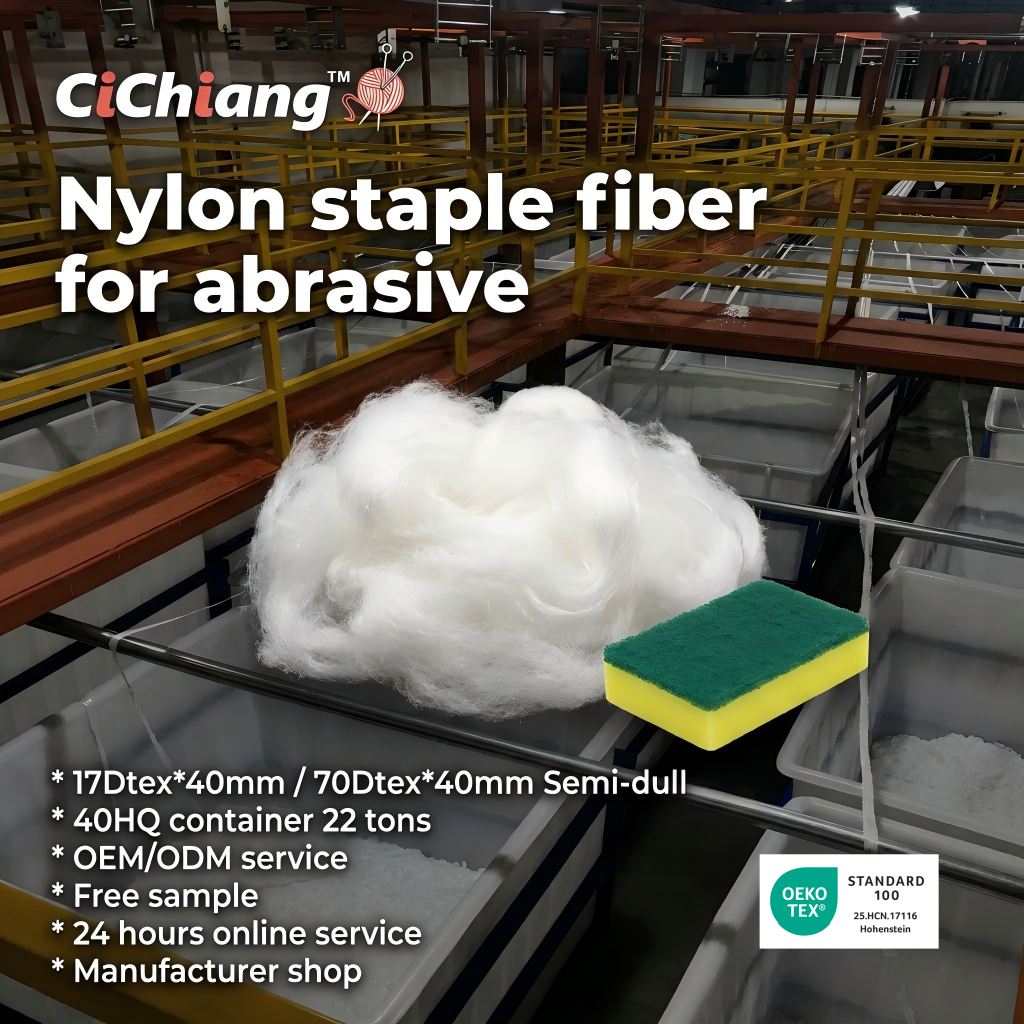
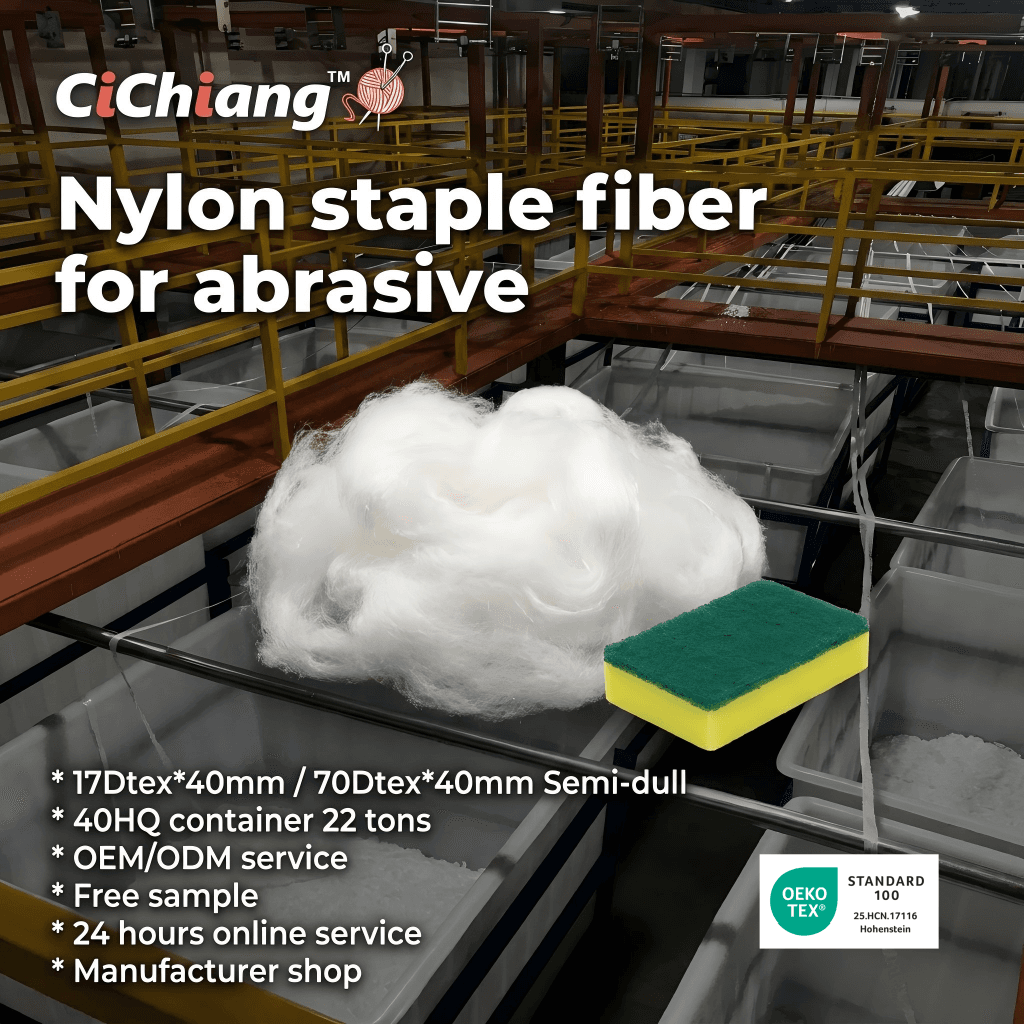
The supplied product data points to a nylon staple fiber used for abrasive applications, rather than a finished consumer pad. That distinction matters. A scouring pad nylon fibers material is typically the starting point for OEM or ODM manufacturers making industrial scrub pads, cleaning pads, or composite abrasive products.
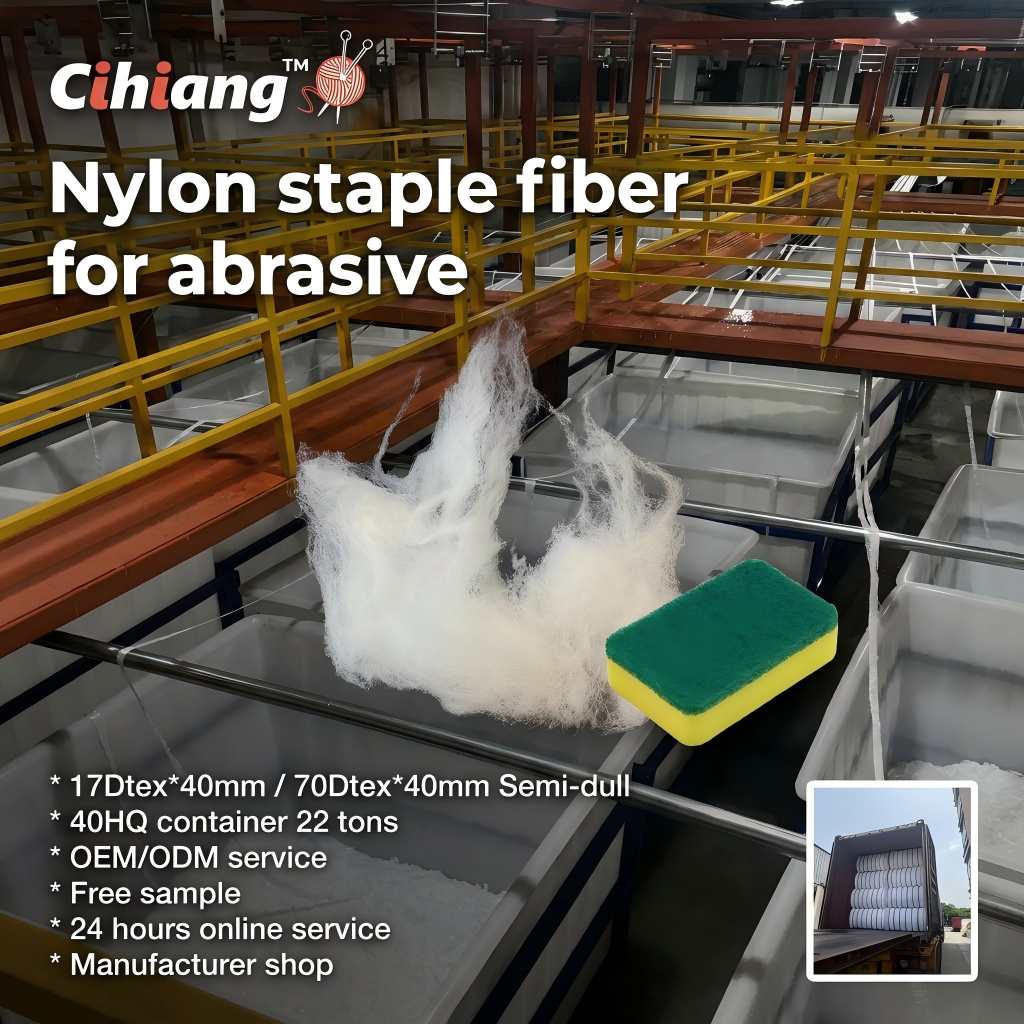
The listed options include 17Dtex*40mm and 70Dtex*40mm, both with a semi-dull finish. In practical terms, that suggests two different fiber profiles for different product structures. Finer fiber usually gives a denser, more flexible feel, while a coarser option may support a more open or more aggressive scrub structure. The semi-dull finish is also worth noting because it can help reduce excess shine in the final textile structure and may better suit industrial cleaning products where appearance is secondary to function.
The packaging note of 22 tons per 40HQ container is another useful buying cue. For large-volume sourcing, container efficiency can affect landed cost and production planning, even when unit pricing is not the main issue.
How abrasive scouring pads are typically judged
Buyers usually compare an abrasive scouring pad nylon 6,66 product on a few practical points:
First is processing stability. Can the fiber feed cleanly into the next step, whether that is carding, blending, forming, or bonding? Second is end-use balance. Does the pad cut through soil and residue without damaging the target surface too quickly? Third is durability. A nylon fiber scrub pad that breaks down too soon creates complaints in the field and higher replacement rates.
For industrial buyers, consistency matters as much as raw performance. Even a pad that tests well in a sample run can become a problem if the input fiber varies from batch to batch. That is one reason manufacturers often ask for samples before moving to container orders. The supplier notes mention free sample support and 24-hour online service, both of which are useful when development cycles are tight.
Company background and what it suggests
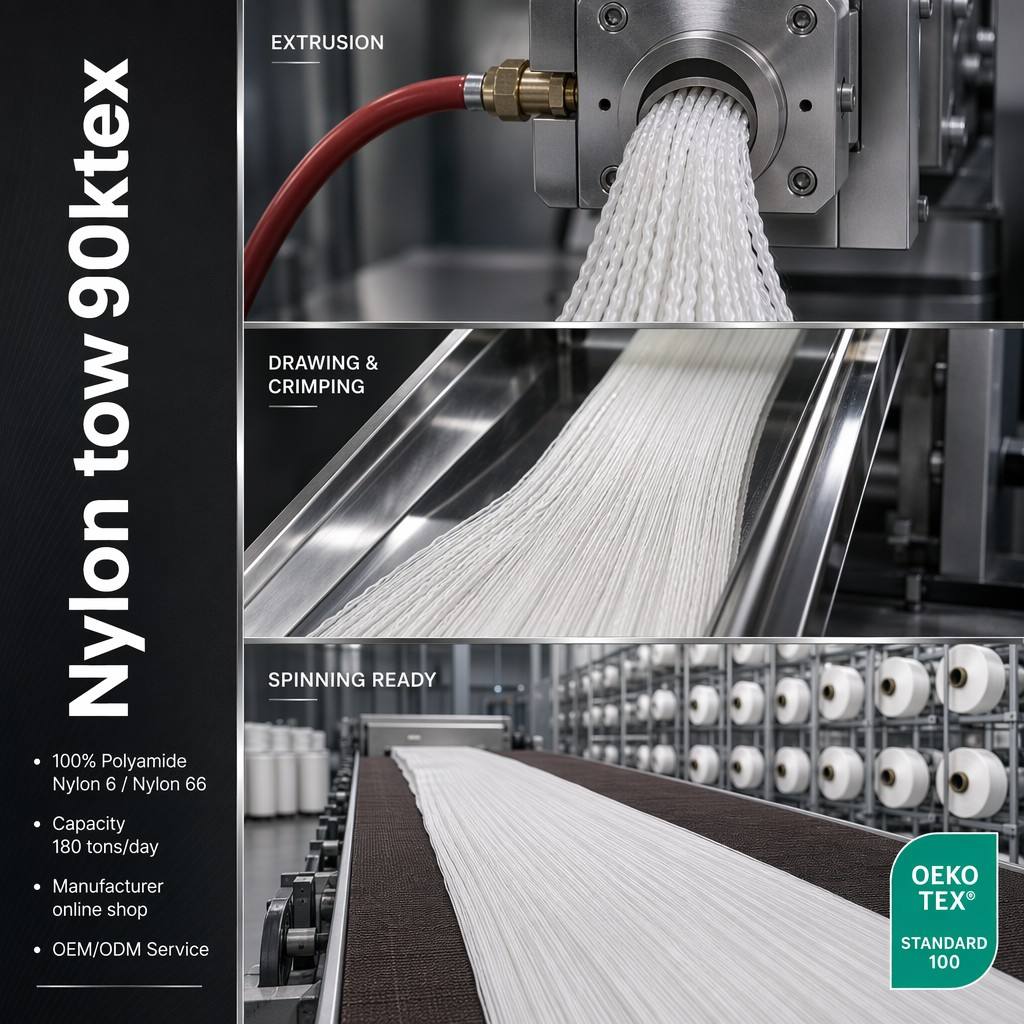
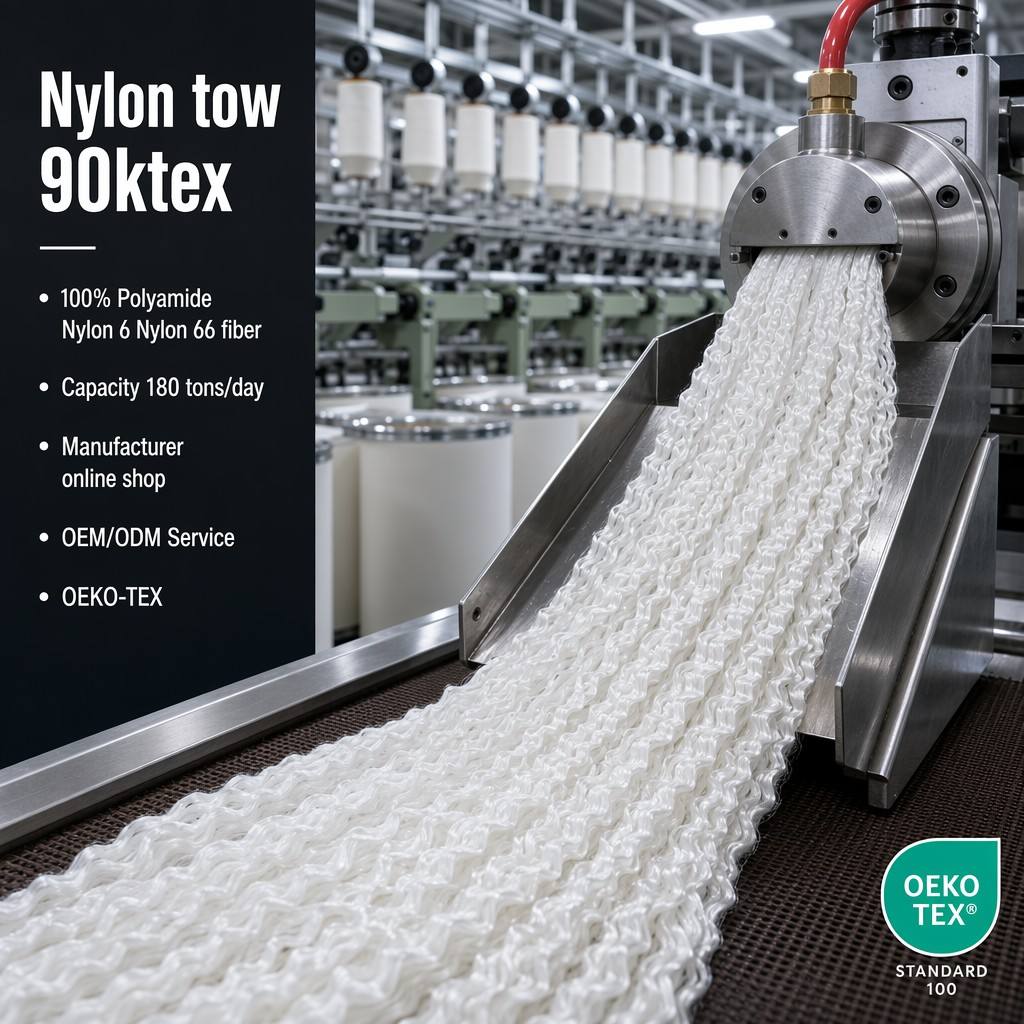
Ningbo Sinopec Fiber Co., Ltd. was founded in 1996 and focuses on nylon fiber manufacturing. The company states that it has 150 employees, including 20 engineers, with a 50,000-square-meter factory and 20,000 square meters of production space. It also reports a daily output of 100-150 tons and production of PA6 and PA66 polyamide nylon fibers.
For sourcing managers, that profile suggests a supplier built around industrial fiber output rather than a small trading operation. The presence of engineers is important too, because abrasive and cleaning products often need some development back-and-forth before the structure is settled. The company also notes an OEKO-TEX STANDARD 100 certification badge shown in the listing, which buyers may want to verify directly as part of their normal compliance review.
Selection criteria that matter more than marketing language
1. Match the fiber to the final pad structure
A nylon 6.6 scouring pad intended for heavy-duty cleaning will not behave the same as a lighter maintenance pad. Ask how the fiber dimensions support the final density and scrub level you need.
2. Check whether the finish suits the application
Semi-dull fiber is often a practical choice for functional textile products. It is not a cosmetic feature, but it can still affect how the finished product looks and feels.
3. Confirm volume and supply stability
If your demand is recurring, container load and daily output matter. A supplier that can support industrial volumes is usually easier to integrate into long production schedules.
Common mistakes buyers make
One frequent mistake is assuming every abrasive nylon scouring pad behaves the same just because the material name sounds familiar. In reality, fiber size, cut length, processing route, and pad construction all change performance. Another common issue is buying on appearance alone. A bright, fluffy sample may look good in a sales photo but still be unsuitable for the actual cleaning task.
A smaller but costly mistake is skipping sample validation. Even when a supplier looks strong on paper, a buyer should still test feed behavior, pad integrity, and use performance in the intended application. That is especially true for industrial scrub products where surface sensitivity and wear rates can vary a lot.
FAQ for sourcing teams
Is this a finished scouring pad?
No. The available information points to nylon staple fiber used as the raw material for abrasive products.
Can the product be used for OEM development?
Likely yes, based on the supply format and manufacturer profile, but final suitability depends on your pad structure and processing method.
What should buyers ask for first?
Request a sample, confirm the 17Dtex*40mm or 70Dtex*40mm option you need, and review the certification and packing details against your own purchasing requirements.
A practical next step
If you are sourcing an abrasive scouring pad nylon 6,66 input for pad manufacturing, start with the fiber specification rather than the finished product label. Ask how the material is intended to be processed, what volume can be supported, and whether the supplier can work with your development cycle. For teams building a stable supply chain, that is usually the difference between a workable program and a recurring quality headache.
Ningbo Sinopec Fiber Co., Ltd. appears positioned for industrial fiber supply, and the listed sample support makes it easier to evaluate fit before committing to larger orders. For buyers who need repeatable input material for abrasive nylon scouring pad production, that is the right place to begin the conversation.