How to Select Nylon Fancy Tops for Spinning and Textile Development
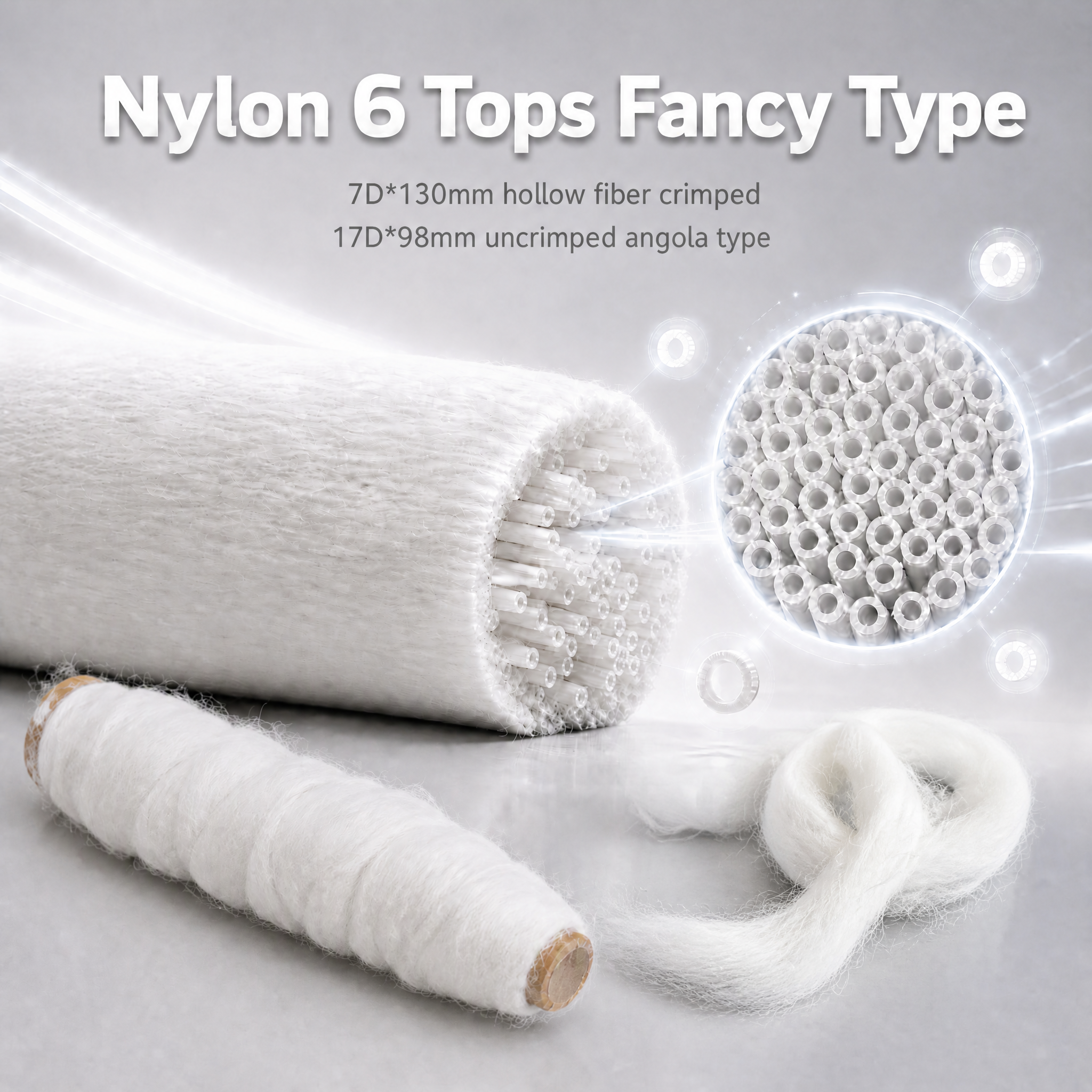
Nylon fancy tops are textile intermediate materials used when a yarn or fiber product needs a distinctive hand, loft, appearance, or processing profile. For sourcing managers and product engineers, the important decision is not simply whether a fiber bundle looks soft or attractive. The buyer must confirm polymer type, linear density, fiber length, crimp, finish, package format, and downstream compatibility before approving a material for production.
This matters because “top,” “sliver,” “tow,” and “roving” can describe materials with different structures and processing histories. A product labeled as an Angola type top may also be a style designation rather than a reference to animal fiber. In the supplied product information, the material is identified as nylon, with both Nylon 6 and Nylon 6,6 variants represented. That distinction should be confirmed directly with the supplier before testing or purchase.
Quick comparison of the listed nylon top variants
| Variant | Material | Listed construction | Potential sourcing implication |
|---|---|---|---|
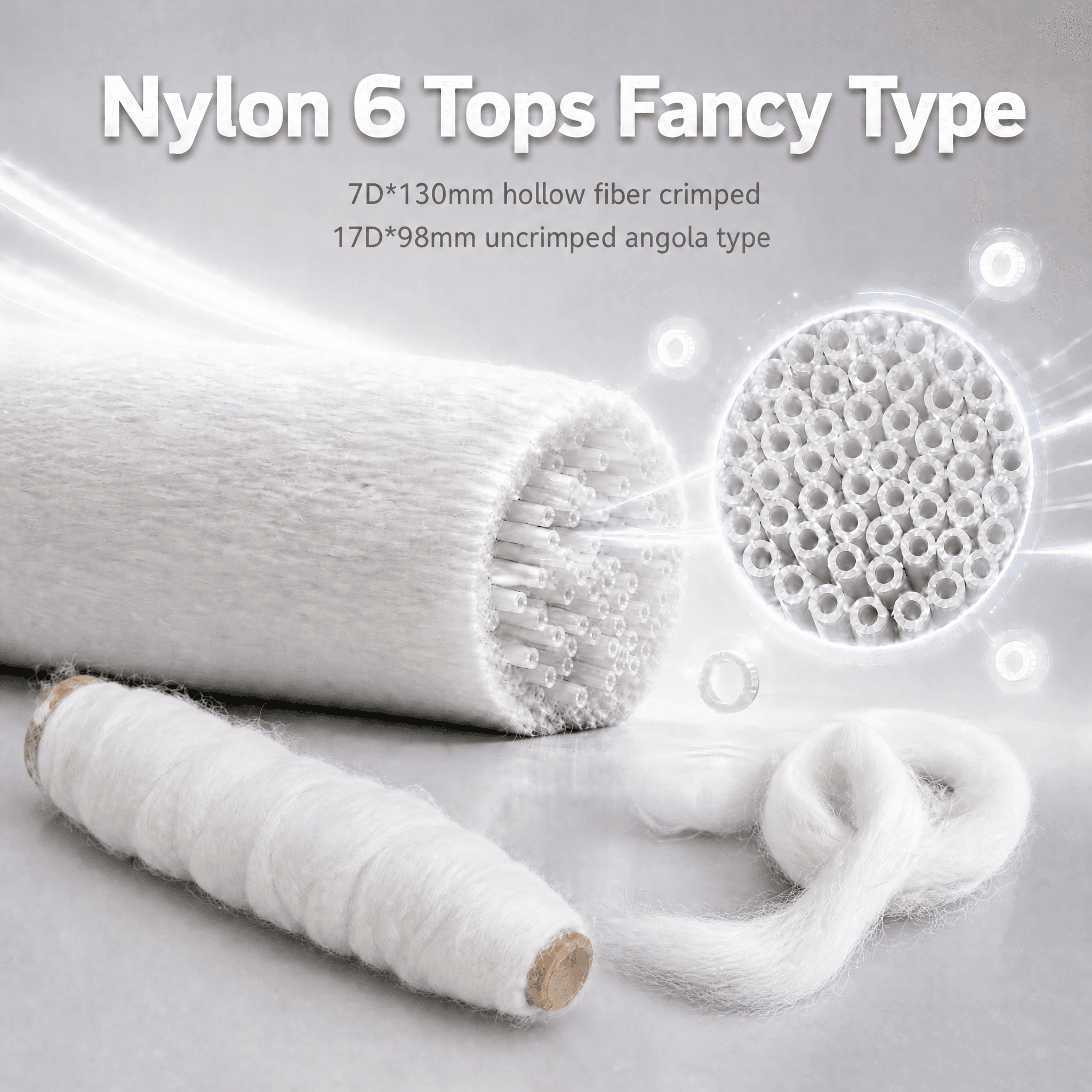
| 7D × 130 mm | Nylon 6 | Hollow fiber, crimped | May provide additional bulk or resilience, subject to testing |
| 17D × 98 mm | Nylon 6 | Hollow fiber, uncrimped | Straighter feedstock with hollow structure |
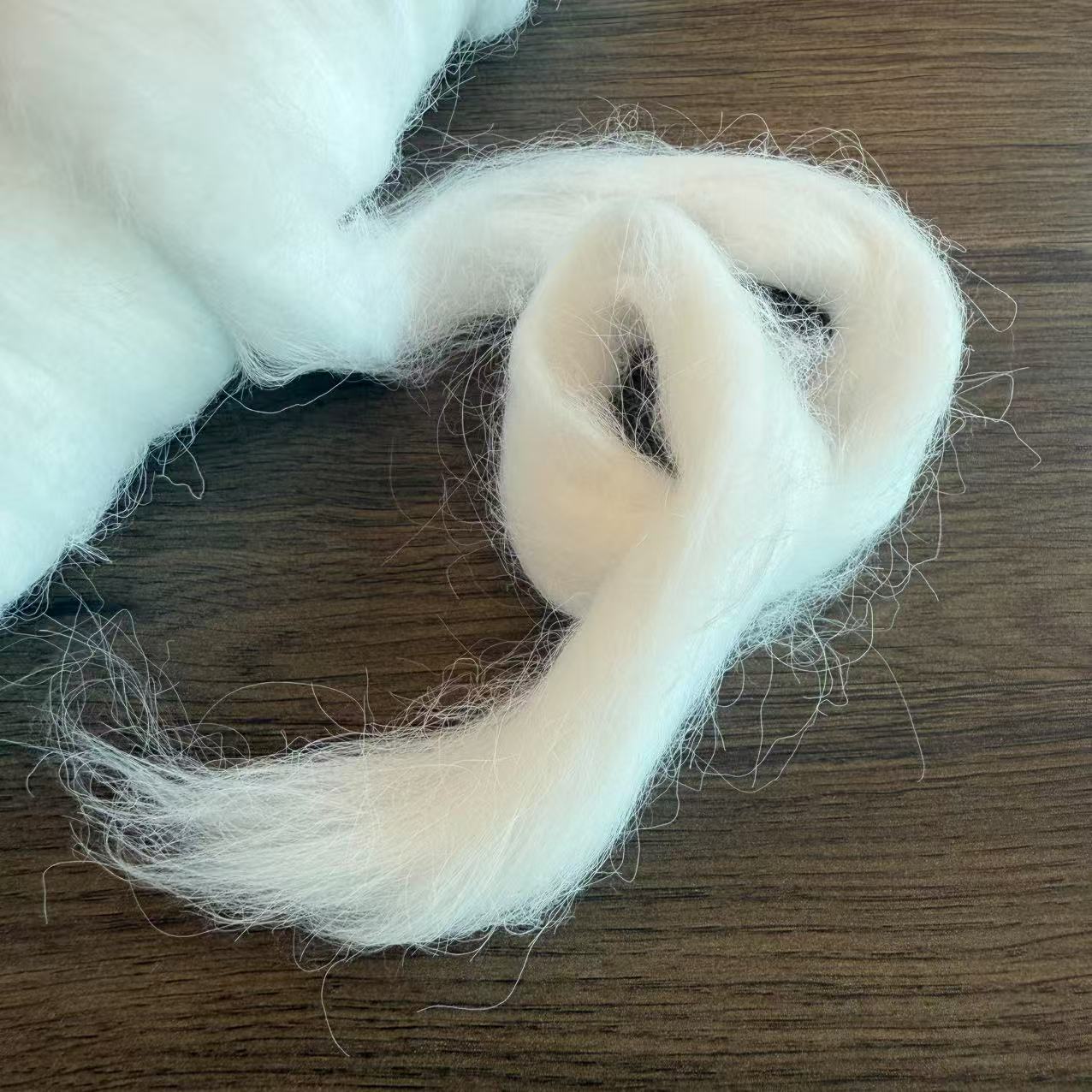
| 17D Angola type | Nylon 6,6 | Uncrimped fancy top | Potential input for specialty yarns, blending, and textile development |
The denier and length figures are presented as supplier specifications. “D” likely refers to denier, while the millimeter figures likely refer to fiber length, but the specification basis should be checked. Buyers should also ask whether the stated fineness applies to an individual filament, a fiber bundle, or another measurement convention.
What makes hollow fiber different?
A hollow fiber has an internal void rather than a fully solid cross-section. In textile applications, that geometry can influence bulk, weight, insulation behavior, resilience, and the way fibers occupy space in a yarn or nonwoven structure. Those effects are not automatic; they depend on the actual void ratio, wall geometry, polymer grade, finish, and processing conditions.
The supplied Nylon 6 options are described as hollow fiber products, including a 7D × 130 mm crimped version and a 17D × 98 mm uncrimped version. The crimped option may be considered where loft, recovery, or a fuller handle is desired. The uncrimped option may be easier to evaluate for applications that require a straighter, more regular feedstock. Neither assumption should replace a trial run. Fiber opening, draft stability, yarn evenness, and breakage must be assessed on the buyer’s equipment.
Crimped, uncrimped, and Angola-type construction
Crimped fiber
Crimp introduces bends or waves along the fiber. In a top or loose bundle, this can increase apparent volume and alter cohesion during handling. It may be useful for bulky yarns, filling-like structures, or products where softness and loft are important. The amount and form of crimp are not supplied, so buyers should request the crimp specification and a representative sample.
Uncrimped fiber
Uncrimped fibers are straighter and may suit processes that favor a more uniform feed path. The 17D × 98 mm Nylon 6 product and the 17D Nylon 6,6 Angola type product are both described as uncrimped. Their similar denier designation does not mean they will process identically. Polymer family, length, finish, filament arrangement, and bundle formation can all change performance.
Angola type tops
Angola type tops appear to be a product or style designation in the supplied information. They should not be treated as angora fiber unless the supplier explicitly confirms that meaning. The listed Nylon 6,6 version is a white, soft-looking fiber bundle described as uncrimped and intended for yarn spinning, blending, knitted or woven textiles, and specialty material development.
Selection criteria for buyers
Start with the end product rather than the appearance of the sample. A bulky novelty yarn, a smooth knitted fabric, a blended yarn, and a nonwoven component may require different top constructions.
- Polymer: Confirm whether the product is PA6 or PA66, and request the relevant grade information.
- Linear density: Verify what the 7D or 17D designation measures and ask for acceptable variation.
- Fiber length: Confirm whether 98 mm or 130 mm is a cut length, staple length, or another supplier-defined dimension.
- Cross-section: For hollow products, request a technical description of the hollow geometry and consistency.
- Crimp: Ask for crimp level, crimp stability, and whether the construction is mechanically or thermally formed.
- Finish: Confirm lubricant or oil content, antistatic treatment, dyeability, and compatibility with downstream finishing.
- Package: Clarify whether the material is supplied as a bale, sliver, roving, tow, or another bundle format.
The available product information states a one-bale minimum order of 248 kg for the Nylon 6,6 17D uncrimped product, with free samples and stock stated as ready for shipment. These points should be reconfirmed for the current order, along with packaging, inventory, and shipment timing.
Common purchasing mistakes
One frequent mistake is comparing denier alone. Two 17D products can behave differently if their polymer, length, finish, or bundle structure differs. Another is assuming that hollow fiber automatically delivers better insulation or softness. Those outcomes depend on the final yarn architecture and fabric construction.
It is also risky to approve material from a loose visual sample without checking contamination, moisture condition, oil content, and package behavior. A sample may look clean and consistent while still requiring adjustments to carding, drafting, twisting, or spinning settings. Request a technical data sheet and retain an approved reference sample for incoming inspection.
Why consider Ningbo Sinopec Fiber Co., Ltd.?
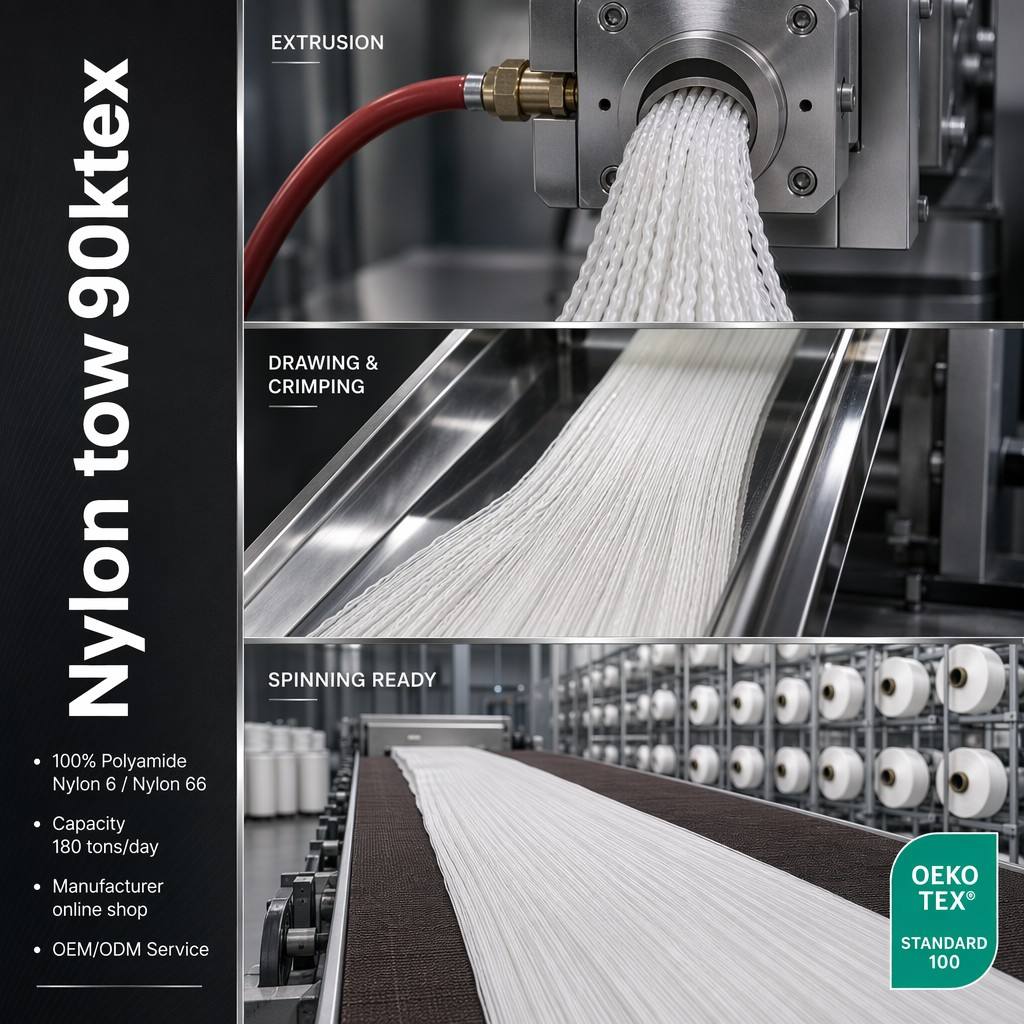
Ningbo Sinopec Fiber Co., Ltd. was founded in 1996 and specializes in nylon fiber manufacturing. The company reports 150 employees, including 20 engineers, with a 50,000-square-meter factory and 20,000 square meters of production space. Its stated daily output is 100–150 tons, primarily covering PA6 and PA66 polyamide nylon fibers. For buyers seeking a long-term supply relationship, these are useful starting points for a qualification discussion, but product-specific capacity, quality documentation, and customization scope still need to be confirmed.
FAQ
Are nylon fancy tops finished yarn?
No. The supplied products appear to be fiber bundles or tops intended for further spinning, blending, filling, or textile processing.
What is the difference between Nylon 6 and Nylon 6,6?
They are different polyamide polymer families with different molecular structures and processing characteristics. The correct choice depends on the required thermal, mechanical, dyeing, and end-use properties, which should be validated through supplier documentation and trials.
Can the listed tops be used for yarn spinning?
That is a stated or likely application, particularly for the 17D Nylon 6,6 product. Actual suitability depends on fiber length, cohesion, finish, equipment, blend ratio, and yarn design.
Next step for qualification
Before issuing a production purchase order, request samples of the crimped and uncrimped options, the complete specification, package details, and any available test data. Run a controlled trial using the intended spinning or textile process, then compare bulk, handling, yarn evenness, breakage, dye response, and final fabric appearance. That evidence will make the choice between hollow, crimped, uncrimped, and Angola type constructions considerably more reliable.