Why buyers still ask about nylon tow tops 90ktex
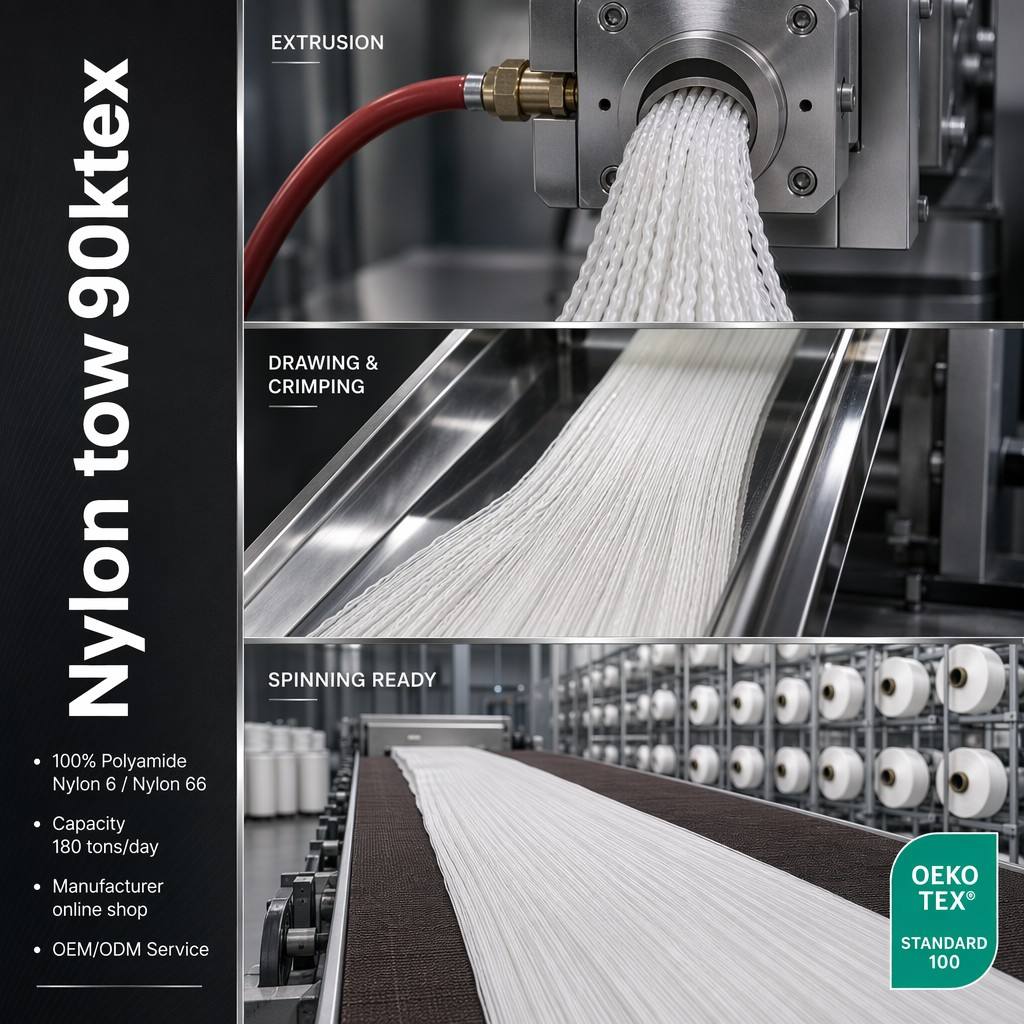
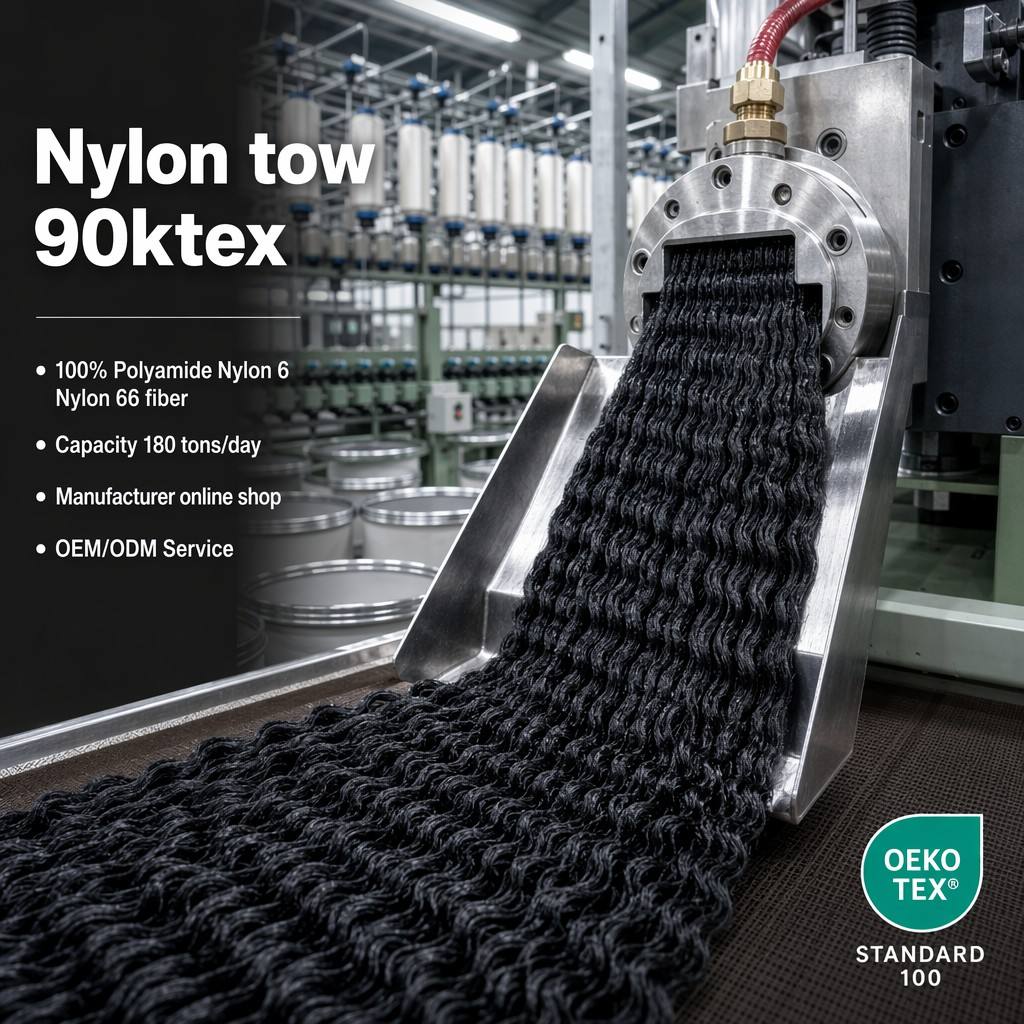
Nylon tow tops 90ktex sit in that practical middle ground many sourcing teams eventually have to think about: not a finished textile, not a branded end product, but an intermediate fiber form that can make or break downstream consistency. If you are dealing with spinning, web formation, nonwoven processing, filtration media, or another continuous production line, the way the fiber is supplied matters almost as much as the polymer itself. A tow that feeds cleanly and behaves predictably saves far more trouble than a nominally cheaper lot that jams, sheds, or varies from batch to batch.
For engineers and procurement teams, the real decision is usually less about the phrase itself and more about what the supply format promises in production. A 90k tex fiber tow implies a substantial continuous bundle, and buyers typically care about how that bundle opens, spreads, and integrates into the next step. That is why people compare 90ktex nylon tow, nylon fiber tow, and nylon tow tops as if they were interchangeable; in practice, the feeding behavior and process fit are what matter.
What the 90ktex format suggests in production
In simple terms, tex is a linear density measurement. A 90k tex fiber bundle is heavy in the context of textile intermediates, which usually points to a large continuous tow intended for industrial handling rather than small-batch specialty use. That can be useful when a plant wants steady throughput, fewer interruptions, and better control over downstream opening or cutting.
Nylon tow tops are often discussed alongside nylon fiber top or high tenacity nylon fiber because buyers are trying to match performance to process. High tenacity is attractive when the fiber must survive handling, tension, or repetitive transfer without breaking down too early. But it is worth being careful here: a supplier’s description and a machine’s behavior are not the same thing. A tow that looks suitable on paper can still behave badly on a perforated table, a spreader, or an inclined conveyor if the preparation is off.
Why the handling system matters as much as the fiber
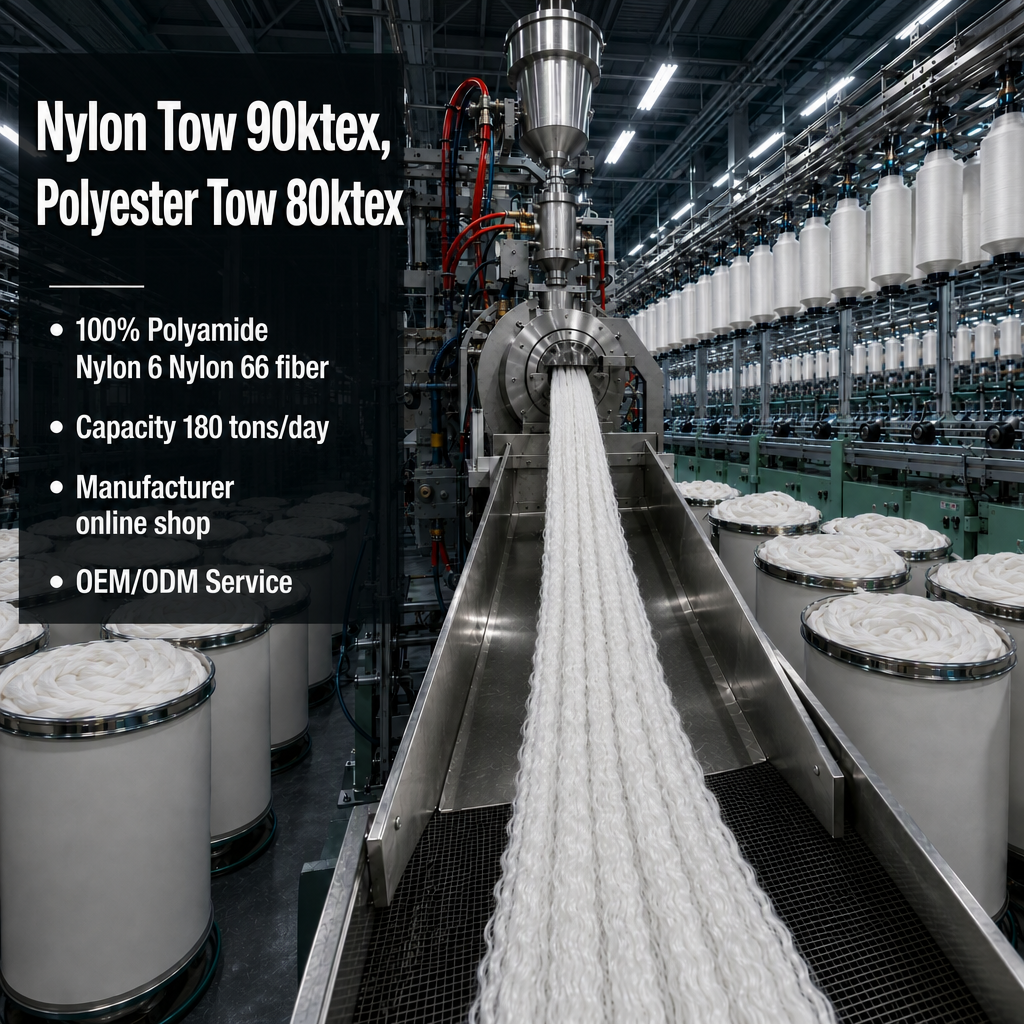
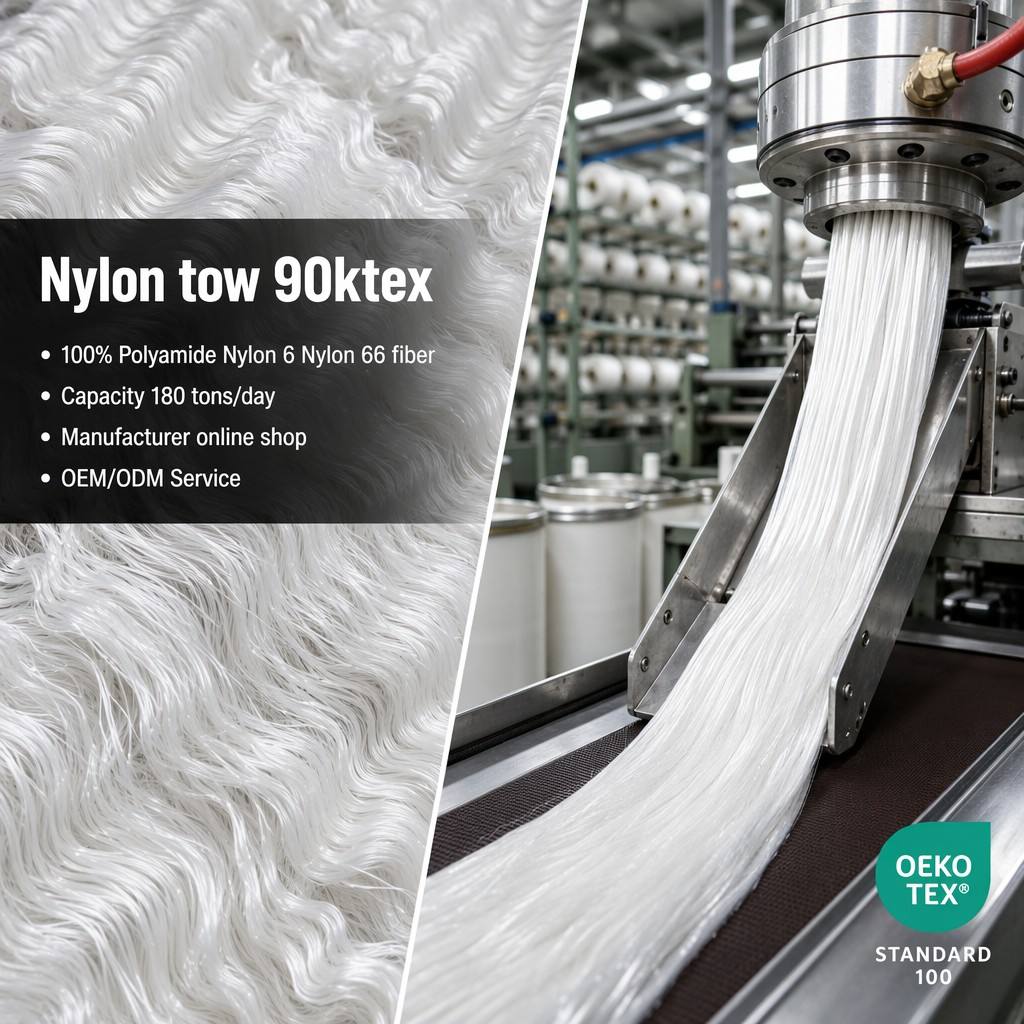
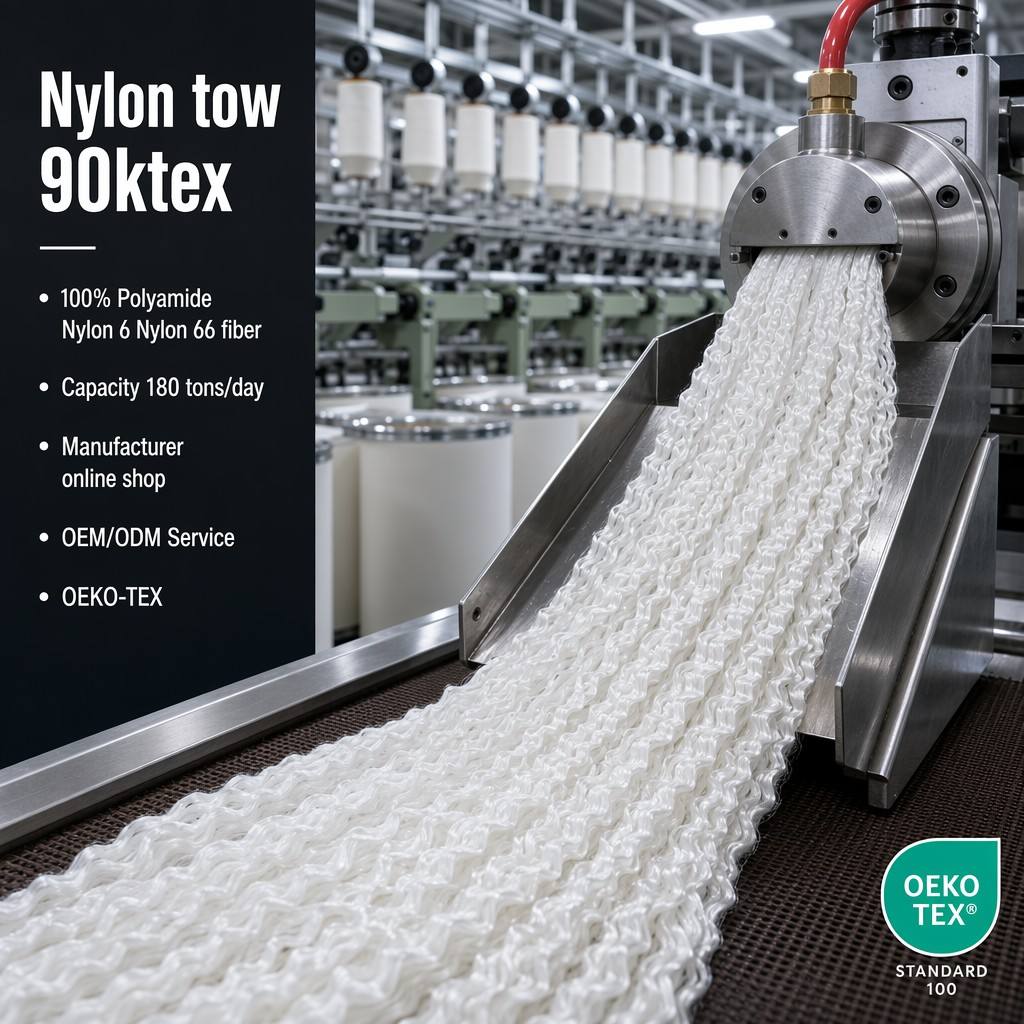
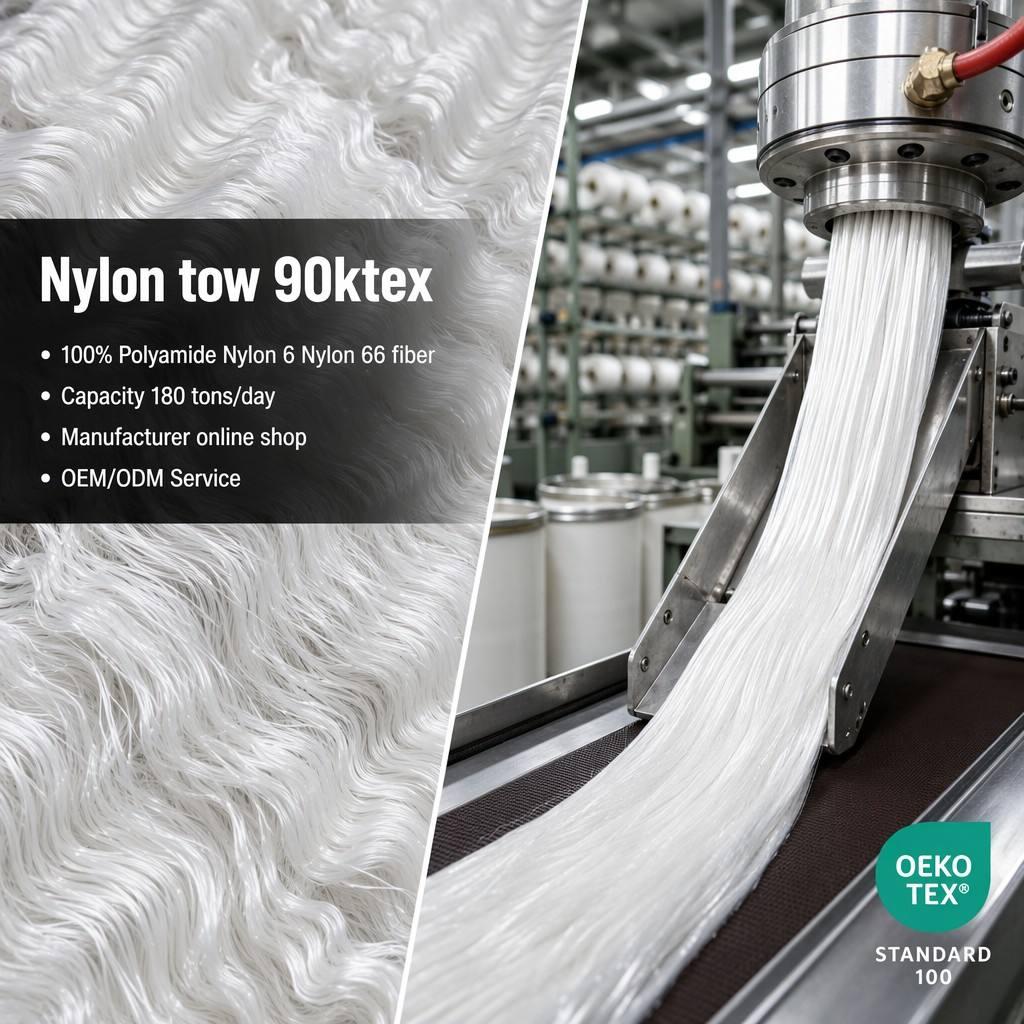
The supplied product images point to industrial continuous processing: a white fibrous or web-like material being moved across a perforated working surface and along an inclined conveyor system. That kind of setup is a reminder that upstream material quality and machine design are linked. Even a well-made nylon fiber tow can be difficult to process if the line lacks proper tension control, airflow management, or consistent feed geometry.
Buyers sourcing nylon tows for continuous processing should think about:
- how the bundle opens or spreads before the next operation
- whether the material feeds consistently at speed
- how much lint, fuzz, or fragmentation appears during handling
- whether the line needs perforated tables, air support, or guided transfer
These are not small details. They determine whether a line runs smoothly or needs constant operator intervention.
How to compare suppliers without overcomplicating it
A practical buyer comparison for nylon tow tops 90ktex should start with process fit, not marketing language. Ask for the format that best matches your line: tow, opened tow, tow top, or another prepared fiber state. Then check whether the supplier can support the polymer family you need. Ningbo Sinopec Fiber Co., Ltd., for example, states that it specializes in nylon fiber manufacturing and primarily produces PA6 and PA66 polyamide nylon fibers, with a 50,000 square meter factory, 20,000 square meters of production space, 150 employees, and a daily output of 100-150 tons. Those are useful indicators of scale, especially for buyers planning long-term supply rather than one-off trial orders.
Scale alone is not enough, of course. But in continuous manufacturing, consistency tends to matter more than a flashy sample.
Questions worth asking before you commit
What is the exact tow format being supplied?
How does it behave in opening, spreading, or transfer?
Is the nylon base PA6 or PA66, and which one better matches your end use?
What inspection or process controls are in place for batch consistency?
Can the supplier support repeat orders with stable specifications over time?
Common mistakes in sourcing nylon tow
One common mistake is treating all nylon fiber tow products as functionally identical. Another is focusing only on the polymer family and ignoring the handling path. If your line uses conveying, web spreading, or an intermediate processing bed, the material’s physical behavior can matter more than a datasheet headline.
A second mistake is buying for the target product only and forgetting the process in between. Many plants discover that the material is acceptable in the finished application but awkward to feed, compact, or transfer. That is where downtime creeps in.
When a buyer should move from trial to supply
If your production line can run a continuous material cleanly, and your supplier can repeat the same bundle behavior lot after lot, then you are in the territory where a longer-term sourcing relationship makes sense. For buyers working with nylon tow tops 90ktex, the best next step is usually a technical sample review followed by a process trial on the actual line, not a paper-only approval.
Ningbo Sinopec Fiber Co., Ltd. says it welcomes inquiries for long-term partnerships, which is the right kind of signal for buyers who need continuity. Before you place volume, ask for the format details your plant actually needs and test them on your own equipment. That is still the fastest way to separate a workable industrial fiber supply from a frustrating one.