Why buyers look for nylon fiber tow 90ktex in the first place
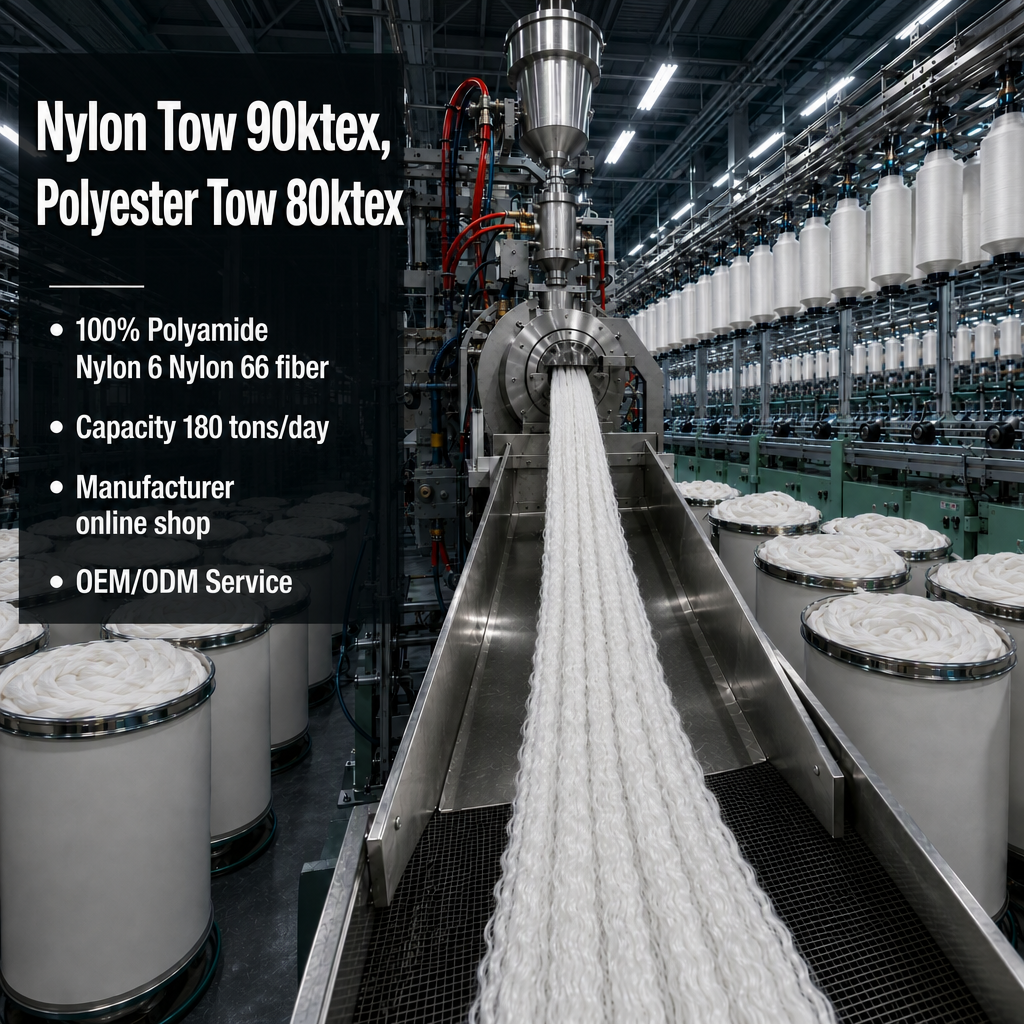
When sourcing nylon fiber tow 90ktex, most buyers are not shopping for a finished textile. They are looking for a stable upstream feedstock that can be converted into staple fiber, spun into downstream yarns, or used in other industrial fiber processing steps. In other words, the real question is not just “what is the material?” but “will this tow run consistently on my line, and will it fit the end product I need?”
That matters because tow is a process material. Small differences in polymer type, bundle uniformity, moisture handling, and line stability can create real headaches later: uneven cutting, inconsistent staple quality, or production interruptions that are far more expensive than the fiber itself. For buyers comparing nylon tow 90ktex against polyester tow 90ktex, the decision usually comes down to processing behavior, downstream performance, and how the supplier controls lot-to-lot consistency.
What 90 ktex means, and why it is worth checking carefully
“ktex” is a mass-per-length unit used for textile bundles. In practical terms, 90ktex fiber tow indicates a substantial tow size suited to bulk conversion and industrial processing. It is not a decorative spec. It tells engineers and sourcing teams something about throughput, handling, and the scale of the bundle that will move through cutters, crimping equipment, or other conversion machinery.
That said, ktex alone does not tell the whole story. Two tows with the same nominal linear density can behave differently if the filament count, spin finish, crimp level, or polymer grade varies. A buyer comparing polyester fiber tow 90ktex with a nylon option should ask for process-relevant details, not just a number on a brochure.
Typical structure and manufacturing context
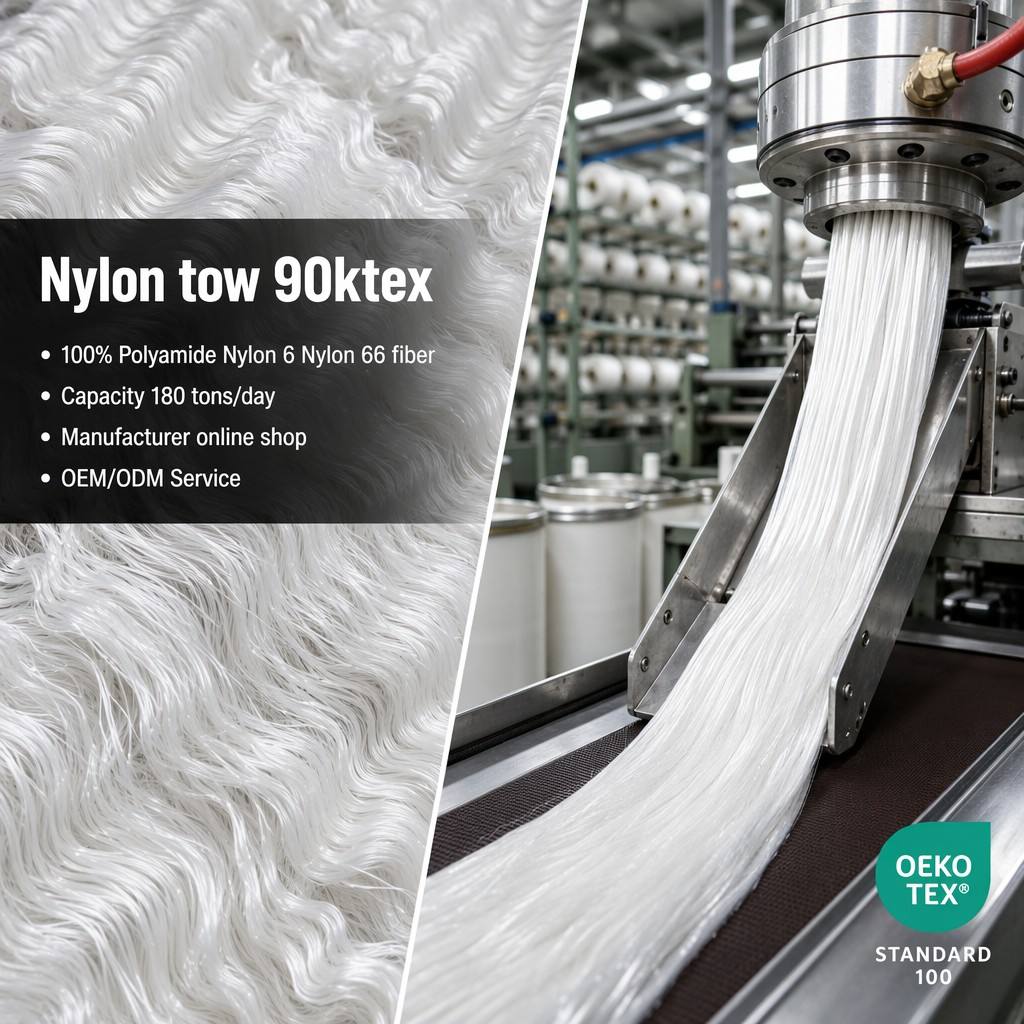
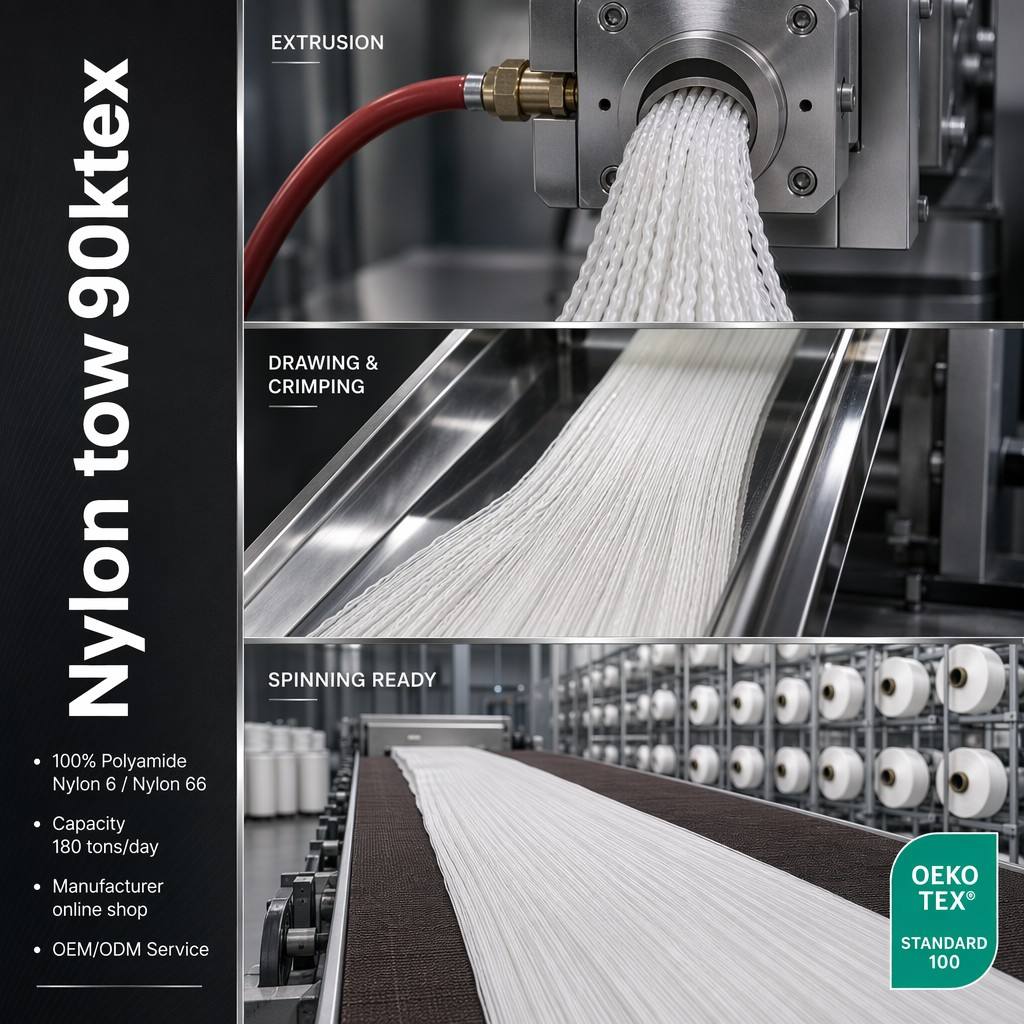
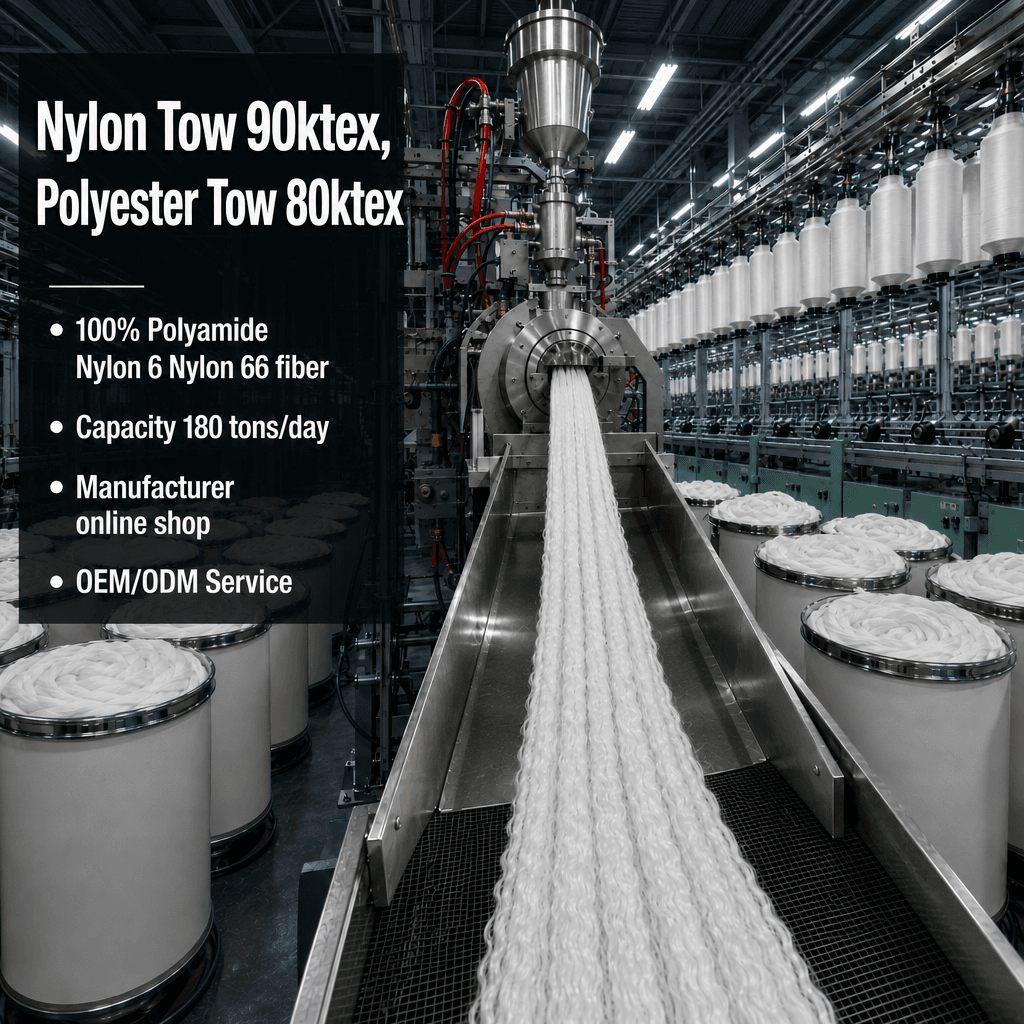
The product described here is a synthetic fiber tow: a continuous bundle of filaments with a soft, rope-like appearance. The visible plant information suggests a melt-spinning or fiber extrusion line, which is the common route for man-made filament tow. That is a reasonable inference, though it should be treated as probable rather than guaranteed from the image alone.
Ningbo Sinopec Fiber Co., Ltd. states that it specializes in nylon fiber manufacturing, with production focused on PA6 and PA66 polyamide nylon fibers. The company says it was founded in 1996, employs 150 people including 20 engineers, and operates a factory of 50,000 square meters with 20,000 square meters of production space. It also states a daily output of 100-150 tons. For buyers, that kind of scale can matter as much as the product name, because a tow supplier must usually support repeat orders and long production runs, not one-off purchases.
Nylon vs. polyester tow: the practical buyer view
In many factories, the choice between nylon polyester fiber tow 90ktex variants comes down to the end-use target and the way the line is set up. Nylon, especially PA6 or PA66, is often selected when toughness, resilience, and process response are important. Polyester tow is commonly considered when dimensional stability, chemical resistance, or cost balance are higher priorities. That is a broad generalization, but it is a useful one for early-stage sourcing discussions.
If your downstream process is sensitive to melt behavior, heat, or cutting consistency, do not assume the two materials are interchangeable. Even when tow size is similar, nylon and polyester can behave differently in conversion. A cautious buyer will compare both the material and the intended processing route before locking in a spec.
Good questions to ask before you place an order
Ask whether the tow is 100% polyamide, whether it is PA6 or PA66, and whether the run is intended for staple fiber conversion or another industrial use. If you need a fiber tow 90ktex supplier, also ask for the supplier’s normal production range, packaging method, and how they handle order consistency across lots. Those are the details that help prevent surprises after the first truckload arrives.
Selection criteria that matter more than a brochure spec
For sourcing managers, the main evaluation points are usually straightforward:
First, polymer type. Nylon 6 and nylon 66 are not the same, and the choice should match the downstream process.
Second, tow uniformity. A clean, even bundle is easier to process than one that sheds, knots, or varies visibly in density.
Third, supplier capability. A manufacturer with real spinning capacity and engineering support is often better positioned to help with OEM/ODM work than a trading-only source.
Fourth, communication. It sounds basic, but many fiber supply issues begin with vague specification language. If the sample and the shipment do not match the same description, the problem usually becomes expensive fast.
Common mistakes buyers make with tow supply
One common mistake is focusing on price alone. Tow is a processing input, so a lower price can easily be offset by line instability or higher waste. Another mistake is treating nylon and polyester as near substitutes without checking the behavior of the conversion equipment. A third is skipping the discussion of end use. Staple fiber feedstock, industrial yarn inputs, and other conversion routes do not always tolerate the same bundle characteristics.
There is also a practical caution here: the image and product text mention both nylon and polyester variants, so a buyer should confirm exactly which material is being quoted. It is not enough to assume the pictured line corresponds to the item on the order.
Who this product is best suited for
This type of tow is most relevant to textile processors, fiber converters, and industrial buyers who need a bulk continuous-filament feedstock. If your operation cuts, crimps, spins, or otherwise converts synthetic fiber, a nylon tow 90ktex specification may be a sensible starting point. If you are still comparing options, a polyester tow 90ktex quote can help you benchmark process behavior and cost structure before making a final material choice.
FAQ for sourcing teams
Is 90 ktex the same as filament count?
No. ktex describes linear density of the tow bundle. Filament count is a separate detail and can affect downstream processing.
Can nylon tow and polyester tow be used interchangeably?
Not safely by default. They may look similar on paper, but their processing and performance characteristics can differ enough to affect production.
What should I request from a supplier?
At minimum, confirm material grade, tow size, intended application, packaging, and whether the supplier can support OEM/ODM requirements. If the application is sensitive, ask for more process details before approving the order.
Next step for buyers
If you are evaluating nylon fiber tow 90ktex for production use, the most efficient next step is to request a clear specification sheet and a sample that matches the intended material grade. Ningbo Sinopec Fiber Co., Ltd. positions itself as a nylon fiber manufacturer with PA6 and PA66 capability, which makes it a relevant starting point for long-term sourcing discussions. For industrial fiber buyers, that combination of product focus and manufacturing scale is usually more useful than a generic catalogue claim.