Why nylon fiber for paper machine clothing still matters
When buyers talk about nylon fiber for paper machine clothing, they are usually trying to solve a very practical problem: how to build a technical textile that can keep its shape, run steadily, and survive the mechanical punishment of paper production. In paper mills, clothing is not just a consumable. It affects drainage, sheet formation, runnability, and the headaches that come with shutdowns no one wanted in the first place.
That is why the raw fiber choice deserves more attention than it often gets. A nylon-based staple fiber can be used in paper machine clothing structures and related industrial fabrics where crimp, hand, and consistency matter. The right fiber does not make a machine perfect, of course, but it can help a fabric builder achieve the balance they need between structure and processing behavior. For sourcing teams, that means the decision is less about buying “a fiber” and more about selecting a material that fits a downstream textile design.
What this product data actually tells a buyer
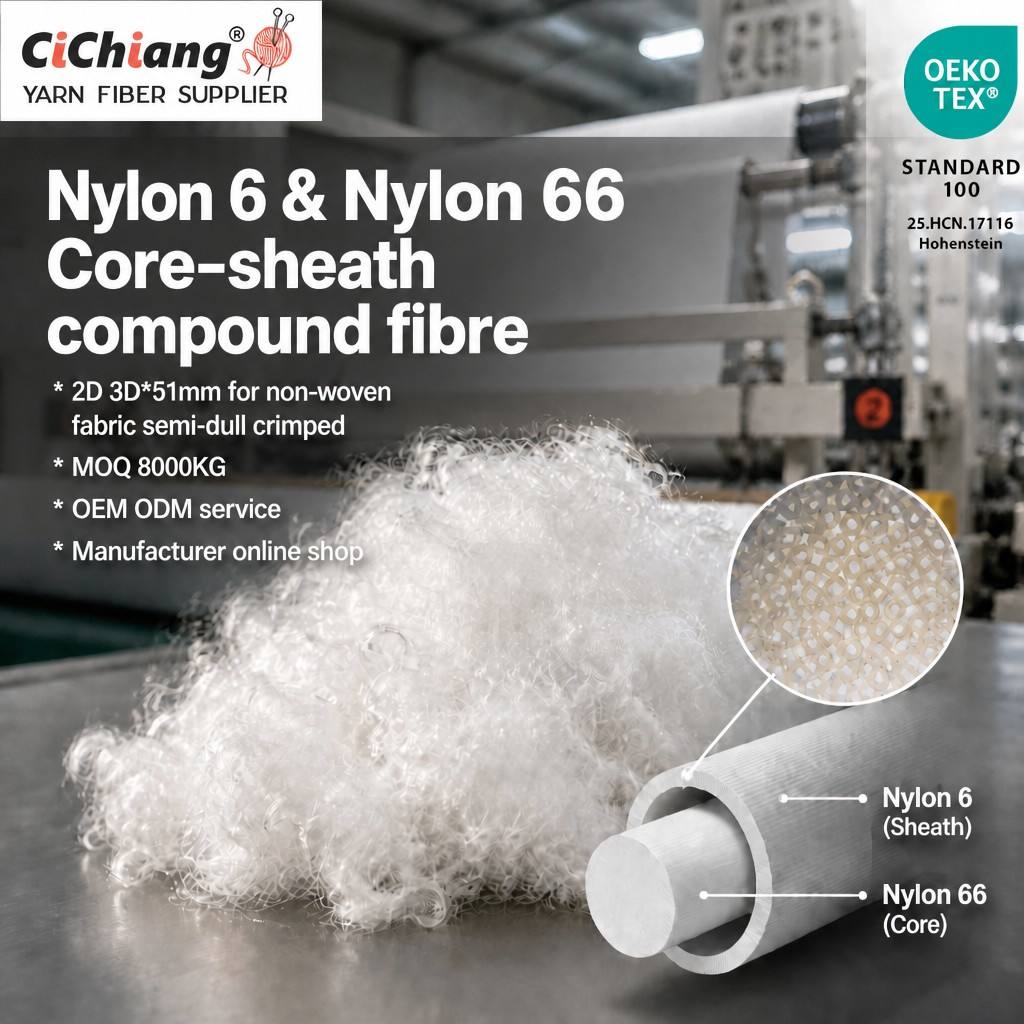
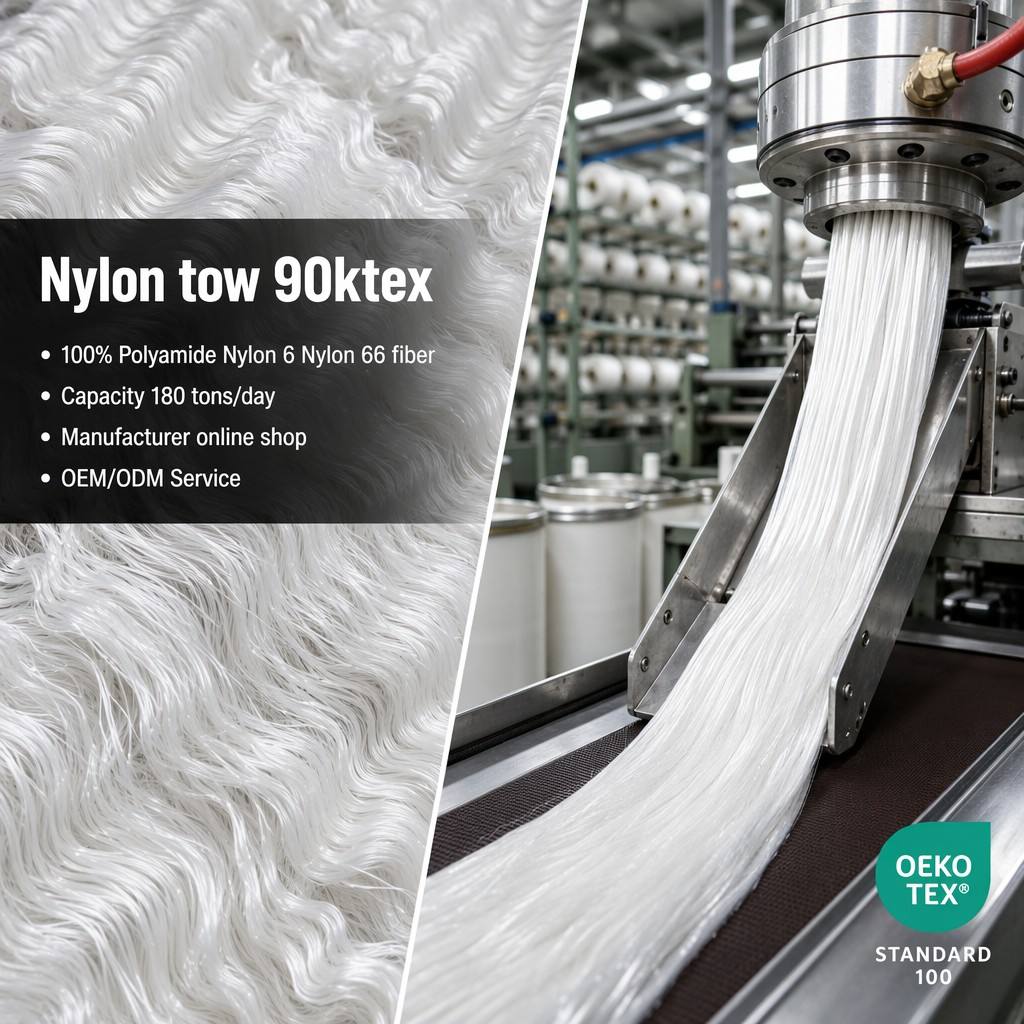
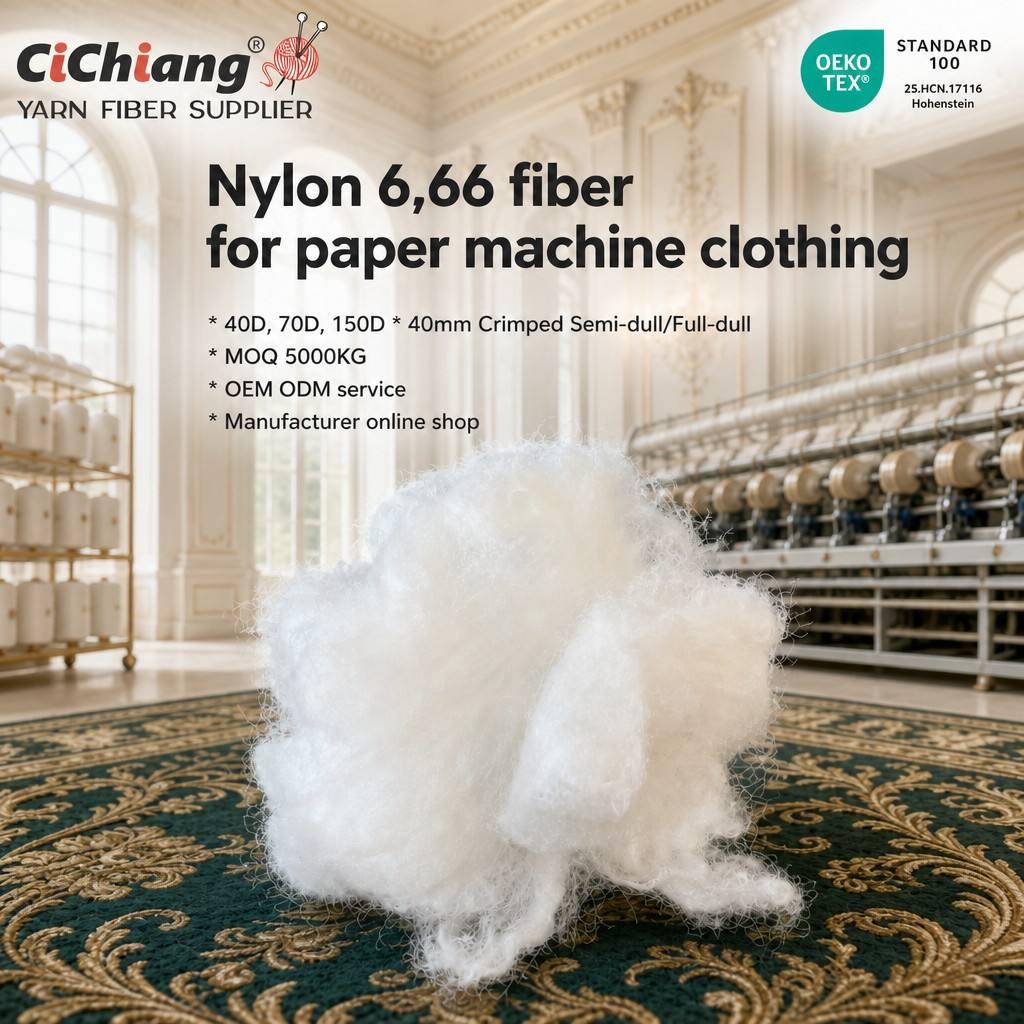
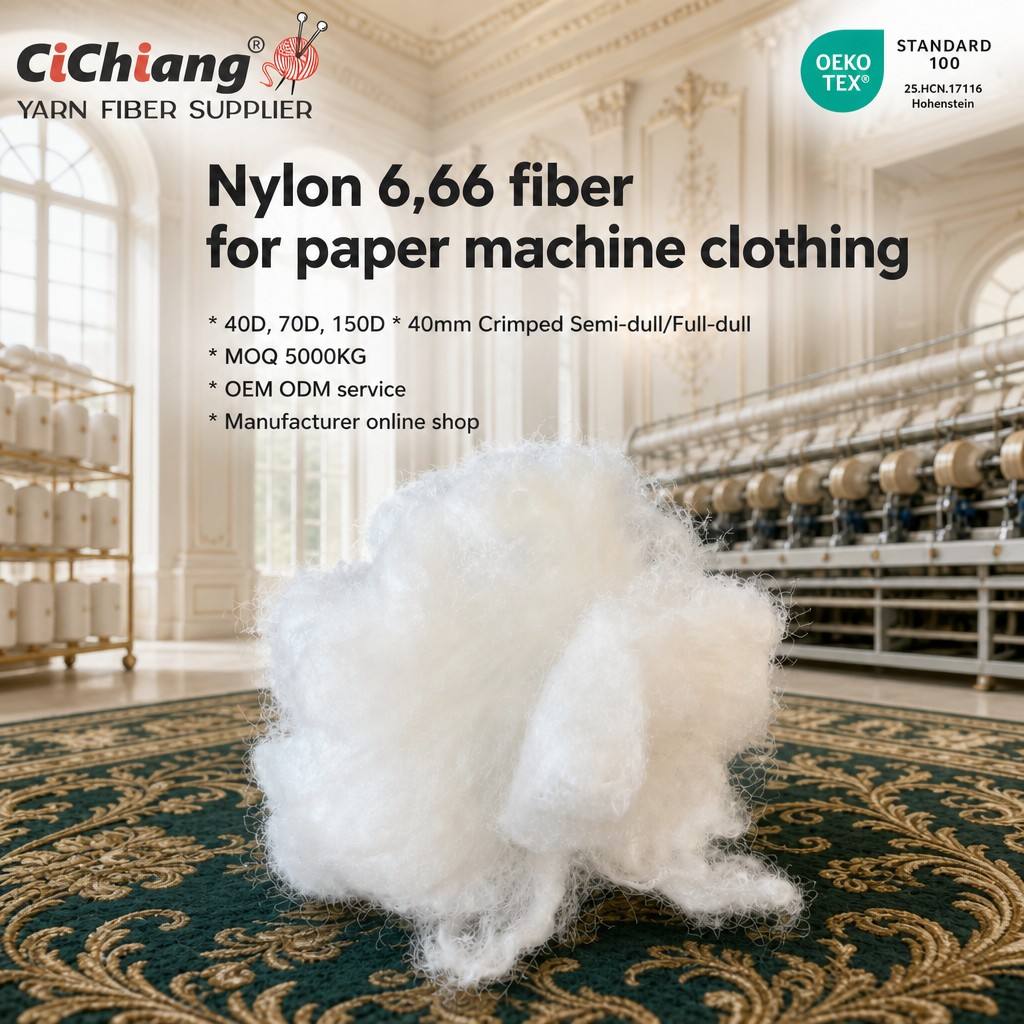
The available product information points to a nylon 6,66 staple fiber for industrial textile use, especially paper machine clothing applications. The visible form is a white, fluffy, crimped staple-like mass, with semi-dull or full-dull finish options shown. Listed denier options include 40D, 70D, and 150D, and the fiber length is stated as 40 mm. Those details are useful because they hint at how the fiber is intended to behave during textile processing.
In plain terms, crimped staple fiber tends to provide more bulk and better cohesion in certain textile structures than a smoother, flatter fiber would. That can matter in clothing construction, where uniform forming and stable textile performance are valued. The information also shows OEM/ODM service and a MOQ of 5000 kg, which tells you this is aimed at industrial purchasing rather than small-batch experimentation.
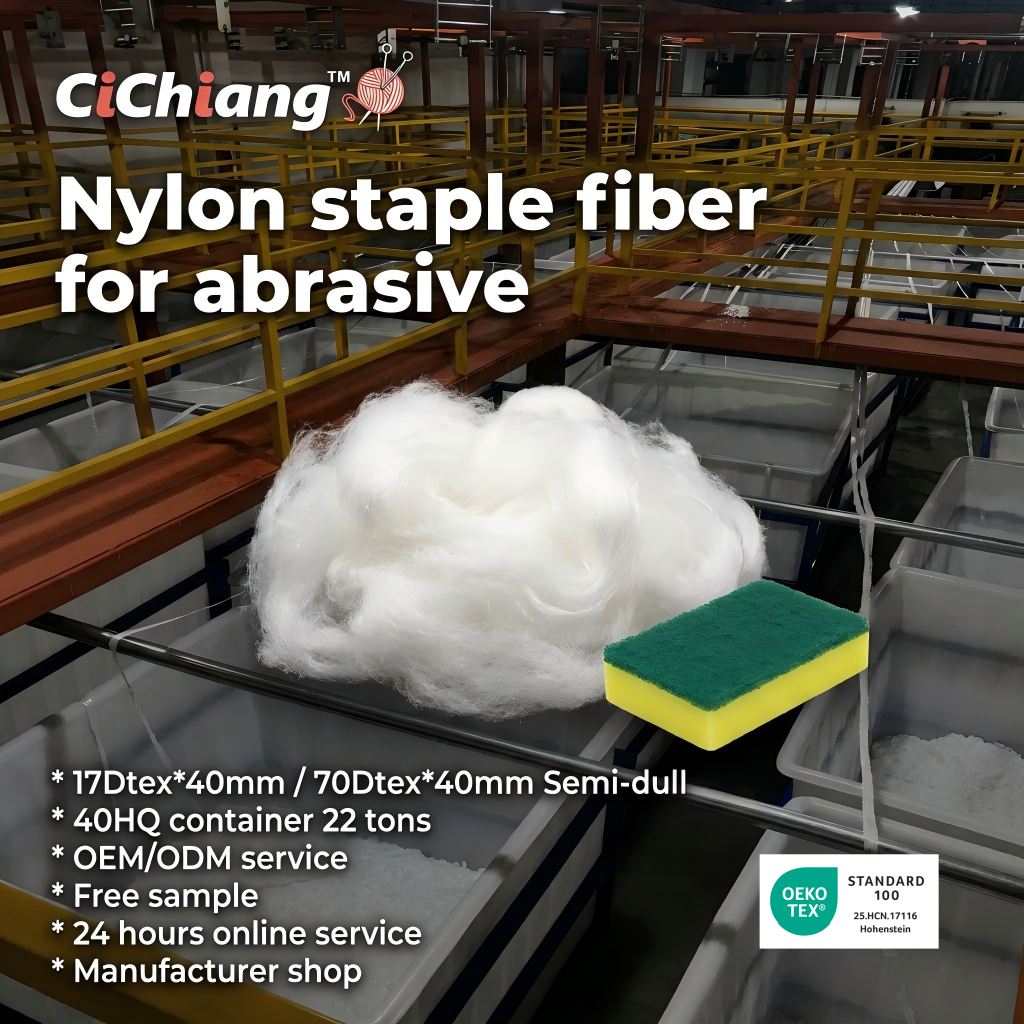
One more note that buyers should not ignore: OEKO-TEX Standard 100 is shown in the supplied material, with a label referencing 25.HCN.17116 Hohenstein. If compliance status matters to your program, verify scope and validity directly rather than assuming every shipment or every SKU is covered in the same way.
How nylon fiber is used in paper machine clothing and related industrial textiles
Paper machine clothing is a broad category, and the fiber choice depends on the textile layer being built. Nylon fiber may be used as part of structures that support forming, pressing, drying, or related industrial fabric designs. The exact end product is not specified here, so it is safer to think in terms of raw-material supply for technical textile conversion rather than a finished felt or belt.
For readers comparing options, the related terms often overlap in search and in procurement discussions:
nylon fiber felts, nylon felting for paper machines, nylon fiber screen fabric, paper machine clothing nylon filament, nylon monofilament for paper machine, and nylon fiber dryer fabric.
Some of those phrases describe finished constructions, while others describe the material type. That distinction matters. A monofilament and a staple fiber are not interchangeable just because they both sit under the nylon umbrella. Process engineers will care about how the fiber feeds, crimps, bonds, and ultimately survives in the finished textile.
Selection criteria that matter more than brochure language
Fiber form and denier
The listed 40D, 70D, and 150D options suggest different handling and build characteristics. Finer denier is usually chosen when a manufacturer wants a lighter, more delicate structure; coarser denier can support bulkier textile behavior. But the right answer depends on the clothing design, not on denier alone.
Crimp and cut length
A 40 mm crimped staple fiber can improve cohesion in certain nonwoven or woven-like structures. Still, crimp is one of those properties that looks simple on paper and becomes very real on the production floor. Too little, and the web may not build well. Too much, and processing can become less predictable. Buyers should ask how the crimp is controlled, not just whether it exists.
Finish and appearance
Semi-dull and full-dull finishes may be selected for appearance or process reasons. In industrial textiles, finish can affect how the fiber behaves in downstream manufacturing and how the final textile looks under light. It is not usually the headline item, but it can be a quiet source of mismatch if buyers skip the discussion.
What sourcing teams should ask before placing an order
The biggest mistake is treating nylon fiber supply like a commodity purchase with no technical follow-up. That is how buyers end up with material that looks similar but behaves differently in production.
Ask whether the denier, length, crimp, and dullness can all be supplied in the same specification set, or whether they vary by order. Ask for the exact nylon type, because nylon 6 and nylon 66 are not the same animal in processing or performance. Ask how the fiber is packed and whether the supplier can support repeatability across lots. For paper machine clothing, consistency is often more valuable than an impressive one-time sample.
Ningbo Sinopec Fiber Co., Ltd., founded in 1996, brings a useful manufacturing profile to this conversation: 150 employees, including 20 engineers, a 50,000 square meter factory, and 20,000 square meters of production space. The company states a daily output of 100-150 tons and focuses mainly on PA6 and PA66 polyamide nylon fibers. For long-term buyers, that kind of scale can matter, especially if the buying plan is built around stable supply rather than a one-off project.
A practical buyer’s checklist
Before you move from inquiry to sample approval, keep the conversation grounded in application. What machine clothing structure is being built? Which downstream process will use the fiber? Is the priority stability, bulk, surface feel, or certification support? These answers shape the right specification more than generic product labels do.
If your team is comparing nylon fiber for paper machine clothing with other technical textile materials, ask for samples, data sheets, and a clear statement of what can be customized through OEM/ODM service. A good supplier should be able to speak plainly about what is standard and what is made to order.
Next step for engineers and buyers
If you are evaluating nylon fiber for industrial textile or paper machine clothing use, the best next step is a technical inquiry tied to your actual end application. Share the target structure, preferred denier, fiber length, and finish, then confirm whether the supplier can support matching lots consistently. That is the kind of detail that saves time later, when the fabric line is already running and no one wants to discover a spec mismatch the hard way.
For projects that need a nylon 6,66 staple fiber source, especially in 40D, 70D, or 150D and 40 mm crimped formats, Ningbo Sinopec Fiber Co., Ltd. appears positioned as a long-term industrial supplier. The real decision, as always, is not just whether the fiber exists, but whether it fits the cloth you are trying to build.