Why nylon tow tops 90ktex still matter in bulk fiber production
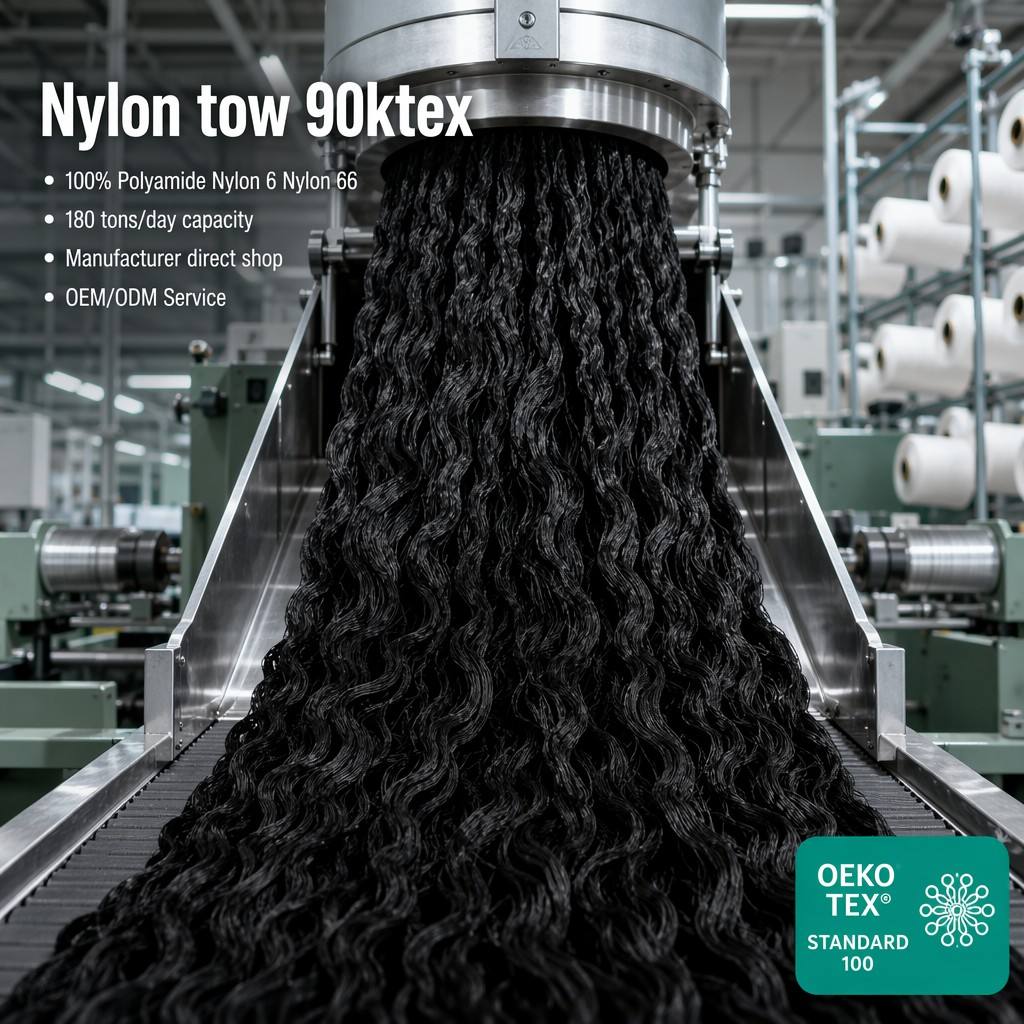
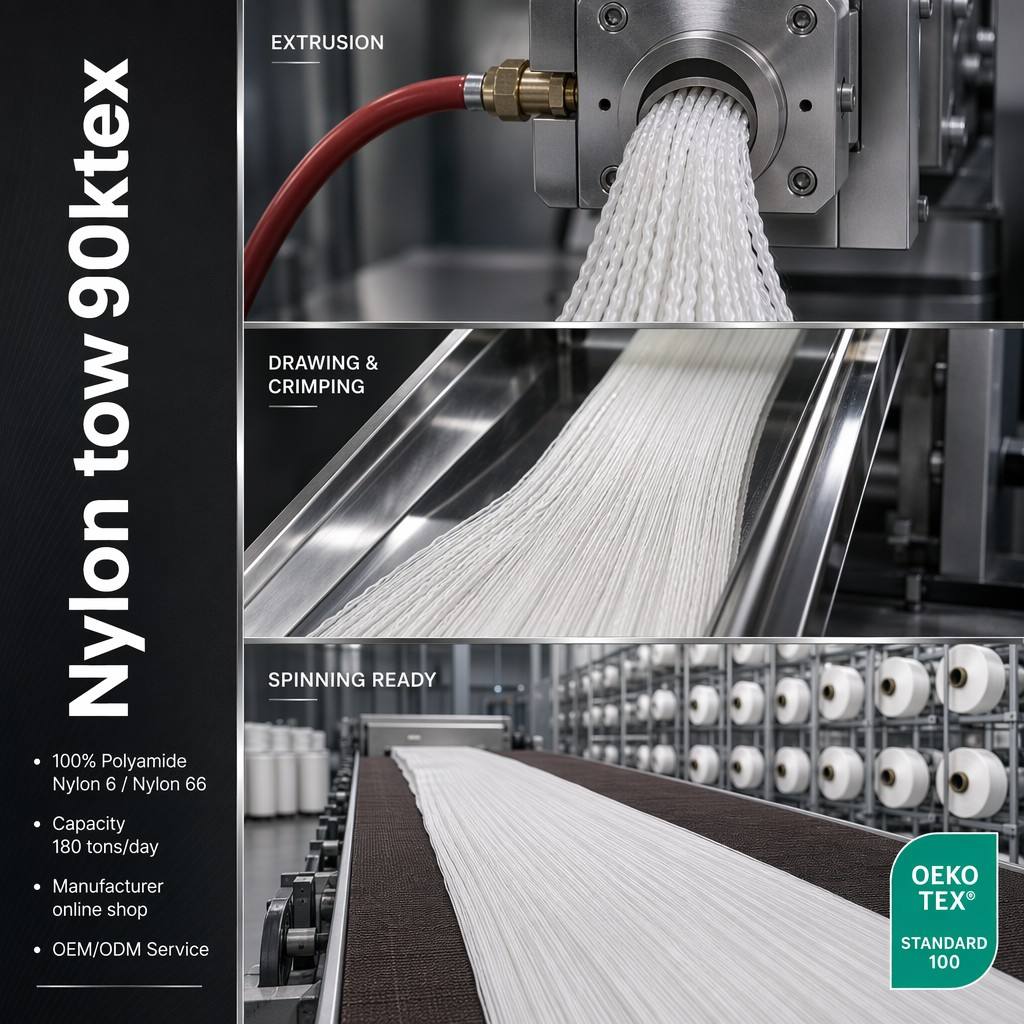
When buyers search for nylon tow tops 90ktex, they are usually not looking for a flashy specialty product. They are trying to solve a practical production problem: how to move, handle, and convert a high-volume nylon fiber feedstock without losing consistency. In nylon processing, the tow stage sits at an awkward but important point between polymer output and finished fiber products. Get it wrong, and downstream operations feel it immediately.
That is why 90ktex nylon tow, and the related handling of nylon fiber tow, matters to sourcing managers and production engineers alike. The material has to travel cleanly through extrusion, drawing, crimping, cutting, winding, or web-forming steps, depending on the final product. It also has to behave predictably on the line. Loose bundles that snag, uneven feed, or poor collection can create waste faster than many teams expect.
What 90ktex means in practical terms
In broad terms, 90ktex describes a linear density level for a fiber bundle. The exact interpretation depends on the product and how the supplier defines the tow, but the number signals a substantial bulk fiber format rather than a small lab-scale sample. For buyers comparing nylon tow tops, that matters because linear density affects how the material is fed, gathered, and converted.
For example, a higher-bulk bundle may suit continuous industrial processing, while lighter tow formats may be easier to split or open for certain textile or nonwoven applications. The right choice depends less on the number alone and more on what comes after it: carding, chopping, drafting, texturing, or direct conversion into a web.
Where nylon tow is used in plant operations
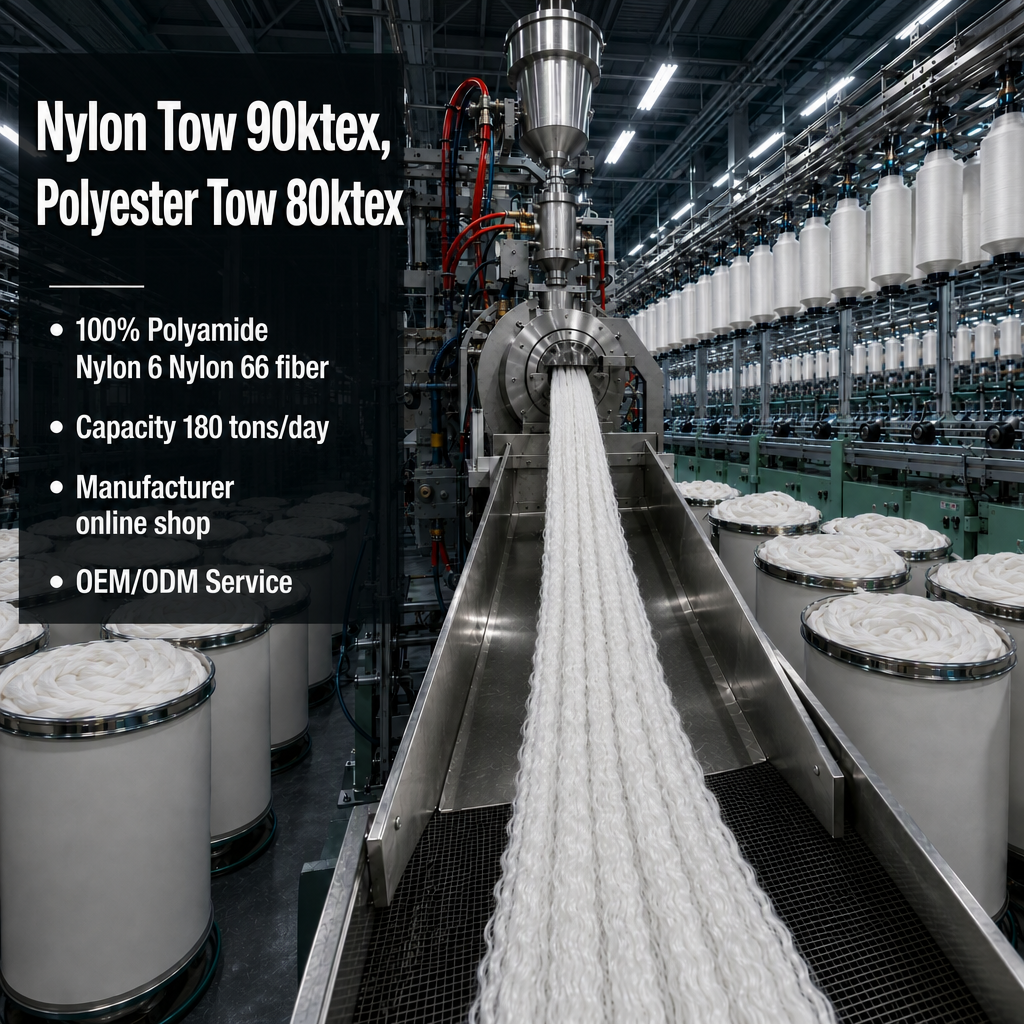
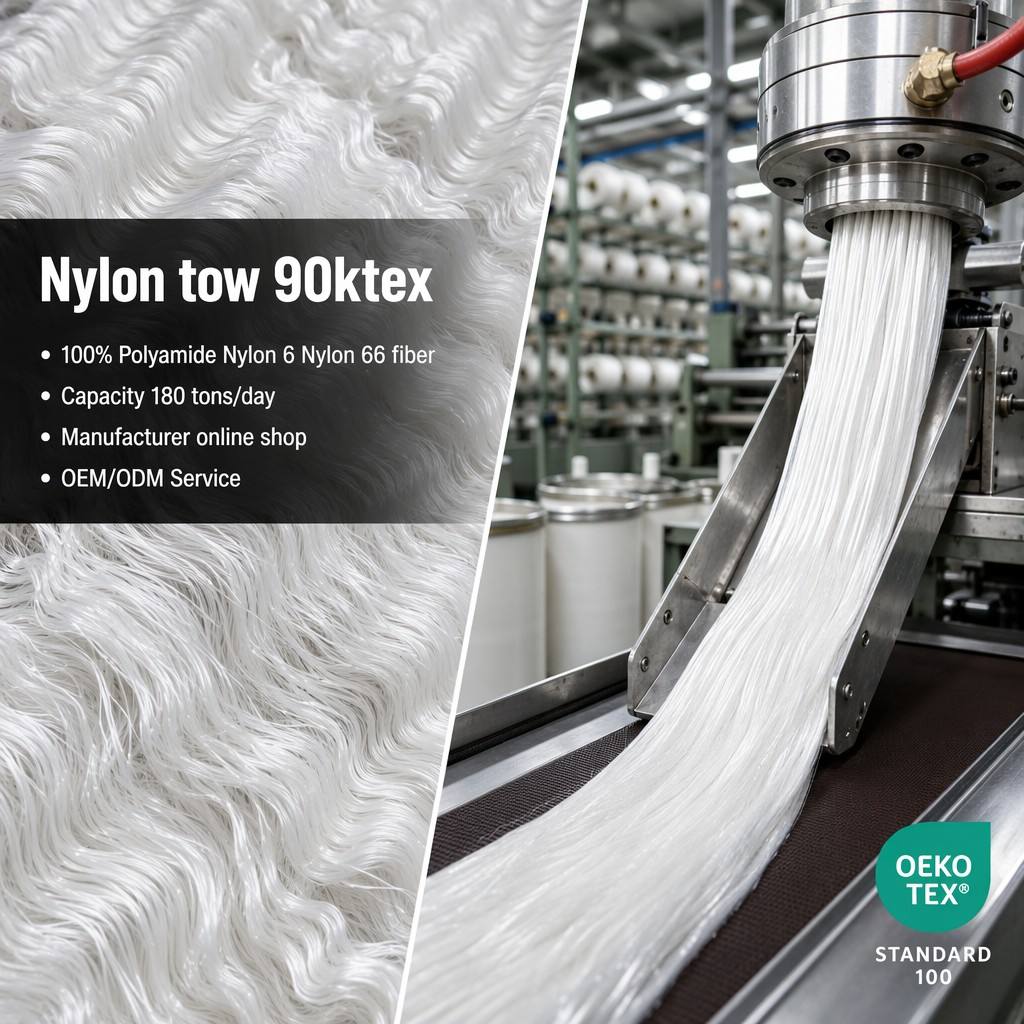
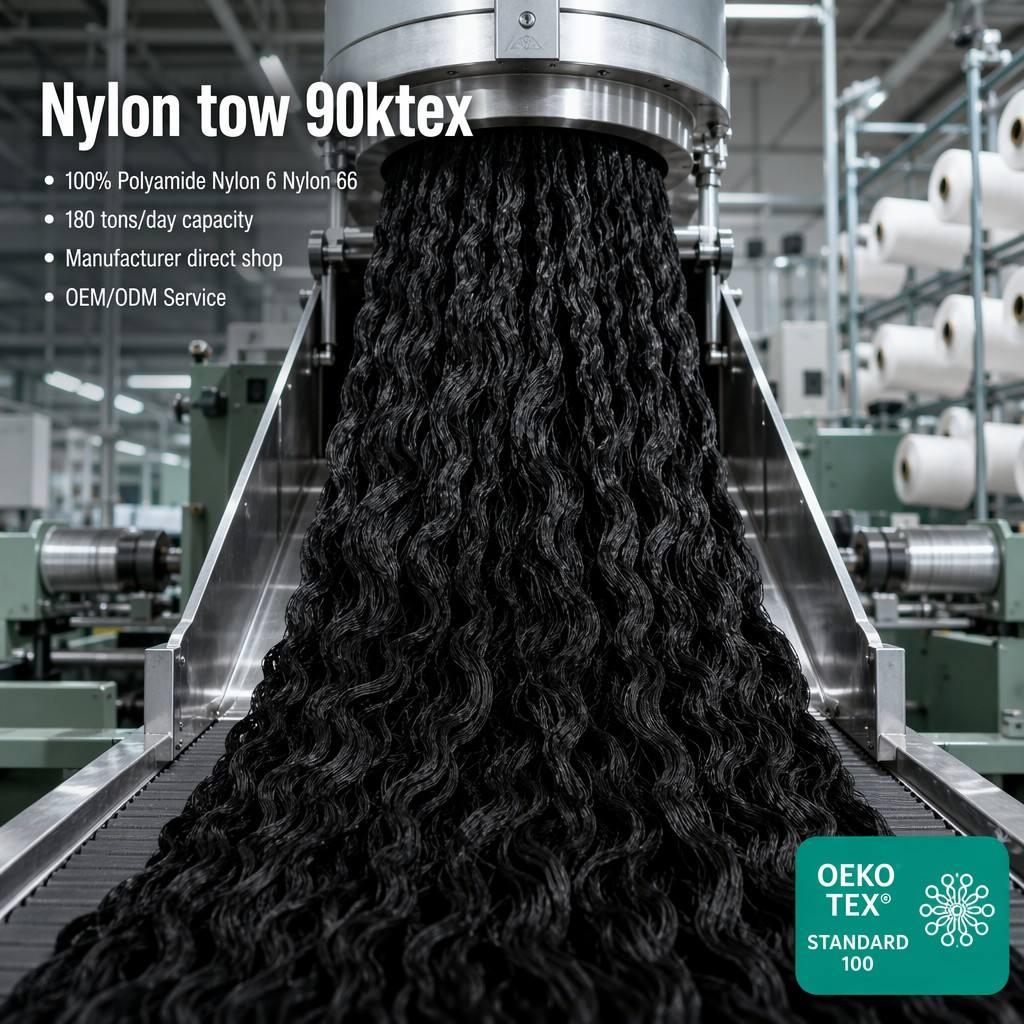
Based on the kind of bulk fiber handling equipment commonly seen in manufacturing lines, nylon tow can move through a number of downstream uses. It may be prepared for textile manufacturing, insulation products, stuffing or fill material, filtration media, or nonwoven processing. It can also be fed into lines that form corrugated or pleated web structures, especially when the target product needs surface texture or a more open structure.
From a buyer’s point of view, the key question is not simply “Is this nylon?” but “Can this tow be processed consistently on our equipment?” A strong-sounding specification means very little if the material bridges in hoppers, wraps on rollers, or produces irregular web formation.
Key selection points for nylon tow tops 90ktex
1. Feed consistency
Continuous feed length and stable bulk handling are usually more valuable than a tidy datasheet. If the tow does not travel smoothly through the line, every downstream step becomes harder to control.
2. Fiber behavior under mechanical handling
Nylon fiber tow can be handled in loose clumps, crimped bundles, or more organized strands depending on the process. Buyers should ask how the material behaves during opening, gathering, and conveyance. This is especially important if the line uses an inclined conveyor or roll-to-roll web section.
3. Match with the intended end product
A supplier may describe a material as high tenacity nylon fiber, but the final conversion route still decides whether it is suitable for filtration, packaging inserts, cushioning, or industrial sheet goods. The same fiber family can behave differently once it is formed into tow tops, web, or a pleated strip.
PA6 and PA66 nylon fibers: the useful distinction
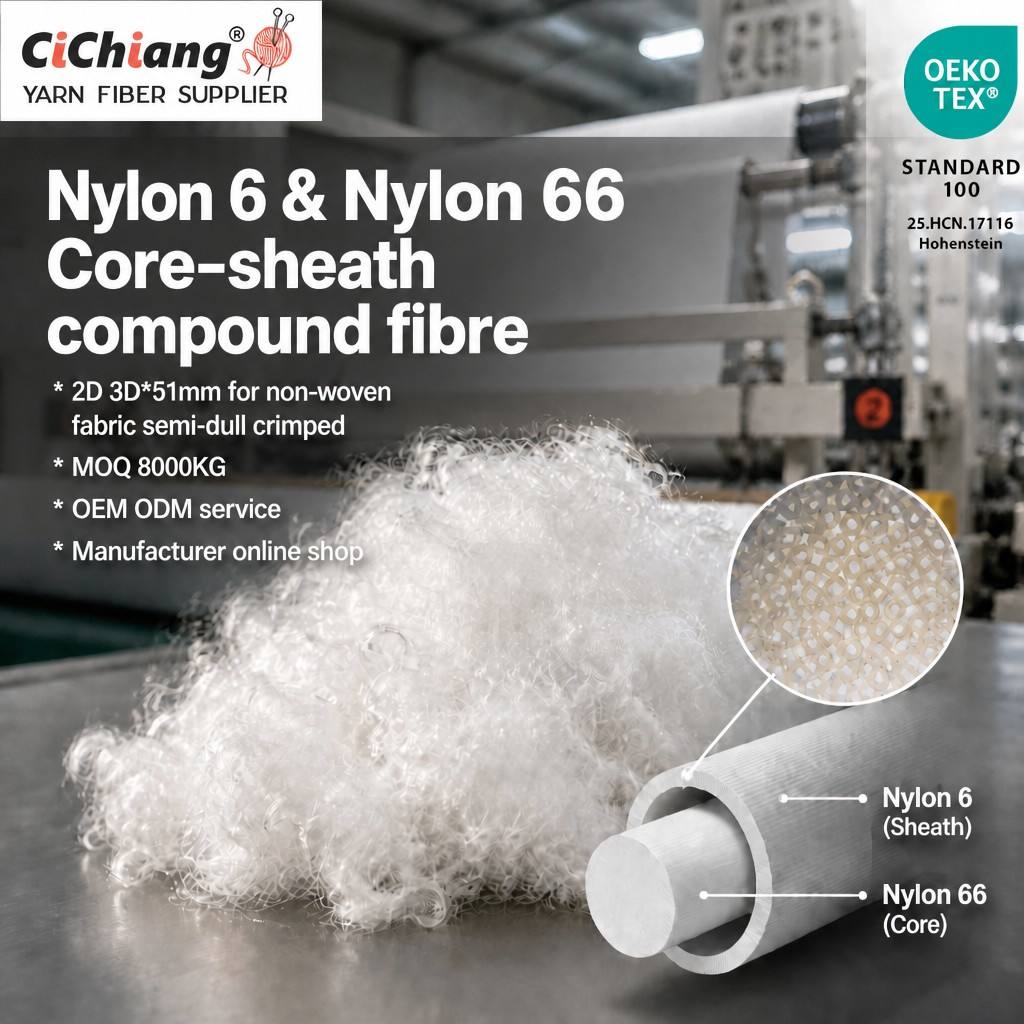
Ningbo Sinopec Fiber Co., Ltd., founded in 1996, focuses on nylon fiber manufacturing, primarily PA6 and PA66 polyamide nylon fibers. That distinction matters because PA6 and PA66 are both widely used, but they are not interchangeable in every application. Buyers often choose based on the balance they need between processability, durability, and the behavior demanded by the end product.
The company reports a 50,000-square-meter factory, 20,000 square meters of production space, 150 employees, and 20 engineers, with a daily output of 100 to 150 tons. Those figures suggest a supplier built for ongoing industrial supply rather than small specialty runs, which is relevant if a buyer needs repeatable volume for long-term production planning.
Common mistakes buyers make
One frequent mistake is treating all nylon fiber tow as if it were the same. Another is focusing only on the headline linear density and ignoring how the material enters the line. A 90ktex tow that sounds ideal on paper may still underperform if the web formation step needs a different crimp profile, bundle openness, or feed behavior.
A second mistake is assuming the downstream machine will “sort it out.” It usually will not. If the line is set up for a different tow geometry or a narrower process window, the fiber will expose that mismatch quickly. It is better to ask awkward questions before ordering than to discover the problem at full production speed.
Buyer questions worth asking before sourcing
Can the supplier explain how the tow is intended to be handled on an industrial line? Is the material meant for direct feed, opening, texturing, or web formation? Is the product positioned as nylon tow tops, nylon tow, or a broader nylon fiber tow format? And if the application is sensitive, what process history or handling guidance can the supplier provide without overpromising?
Those questions are especially useful when the material will pass through conveyor-based handling or a corrugating, pleating, or embossing stage. In those cases, the material’s movement matters as much as its nominal specification.
A practical next step
If you are comparing nylon tow tops 90ktex for industrial use, start with the process, not the brochure. Map the material path, the conversion step, and the final product requirement. Then ask for a sample or a process discussion that matches your actual line conditions. For buyers working with PA6 or PA66 supply, Ningbo Sinopec Fiber Co., Ltd. is positioned as a manufacturer worth contacting for long-term fiber sourcing discussions.
That is usually the fastest way to separate a workable tow specification from one that only looks good in a catalog.