Why buyers search for nylon tow tops 90ktex
When sourcing nylon tow tops 90ktex, engineers and product teams are usually trying to solve a very practical problem: how to get a stable, processable nylon fiber feedstock that performs consistently in downstream production. In real plants, the value is rarely in the name alone. It is in whether the tow opens cleanly, blends evenly, converts without unnecessary breakage, and matches the line speed the factory is already built around.
That is why this topic matters beyond the catalog description. A 90ktex specification points buyers toward a coarse, high-volume fiber form, often discussed alongside 90ktex nylon tow, nylon fiber tow, and nylon tows. For spinning, cutting, web forming, or composite-related handling, the wrong tow size can create waste quickly. Too fine and the process may be inefficient; too bulky and feeding can become uneven. The decision, in other words, is not just what the fiber is, but whether it is the right intermediate for the next machine in line.
What 90ktex means in practical terms
Tex is a linear density unit, so 90ktex describes a substantial fiber bundle by mass per length. In buyer conversations, that usually signals a heavy tow format rather than a delicate filament package. A product described as 90k tex fiber or high tenacity nylon fiber may be considered for applications where strength, process stability, and bulk handling matter more than a fine hand-feel.
For nylon in particular, the PA6 and PA66 families are the most familiar industrial references. Ningbo Sinopec Fiber Co., Ltd., founded in 1996, focuses on nylon fiber manufacturing and reports production of PA6 and PA66 polyamide nylon fibers from a 50,000-square-meter factory. The company states a daily output of 100-150 tons and employs 150 people, including 20 engineers. Those are useful scale indicators for buyers evaluating supply continuity, especially when a line depends on uninterrupted fiber feed.
Where nylon tow tops fit in a manufacturing line
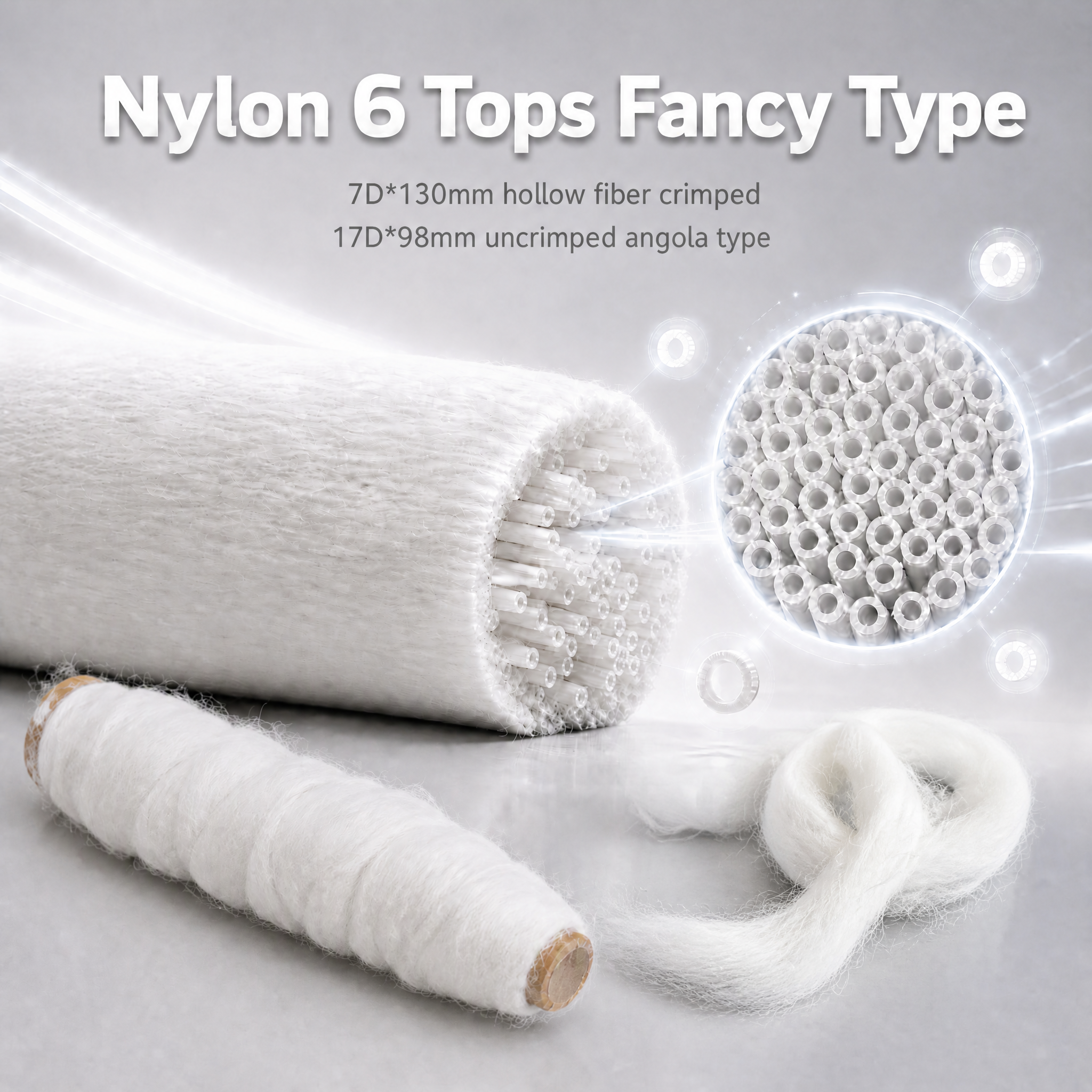
The term nylon tow tops is used loosely in some markets, and that is worth a small caution. Sometimes buyers mean tow prepared for opening or cutting; sometimes they refer to a top-form intermediate used before further processing. The exact meaning should be confirmed with the supplier, because the same phrase can cover different product states depending on the factory and the region.
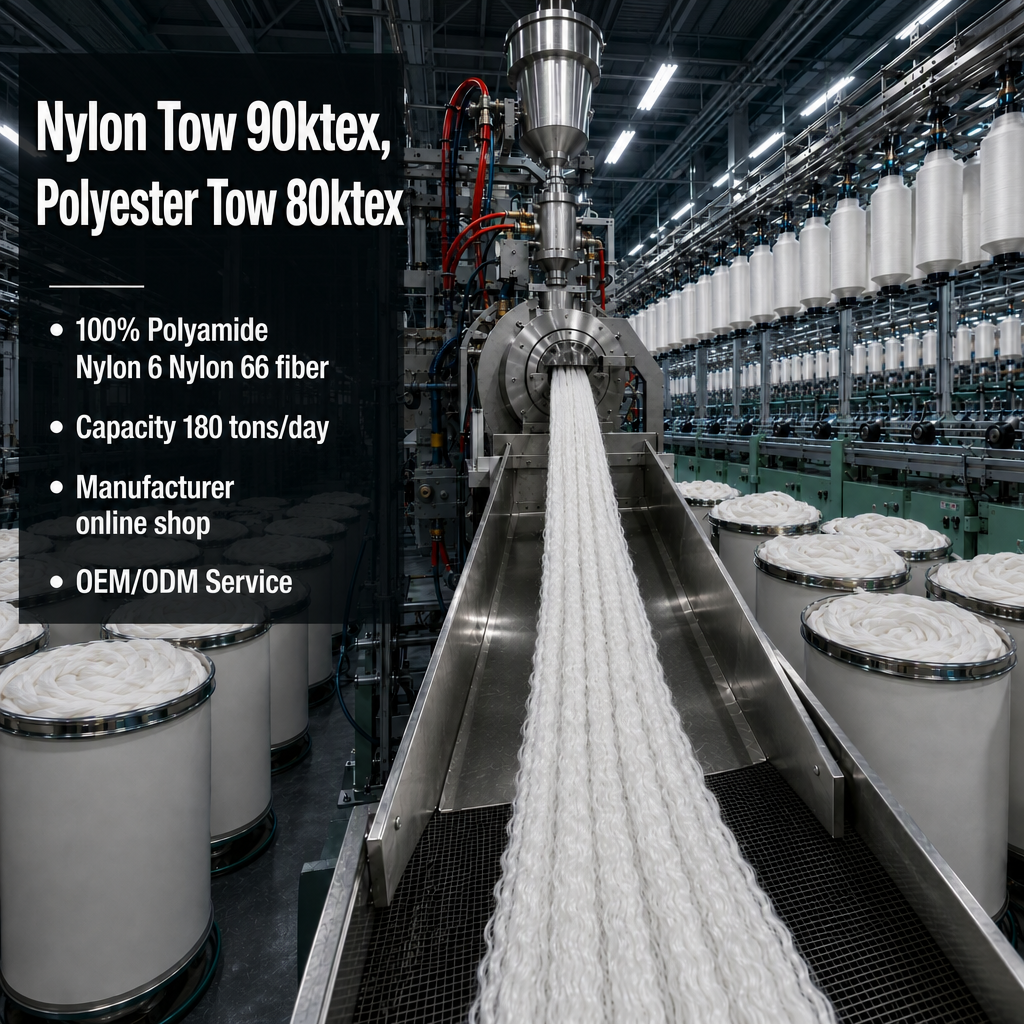
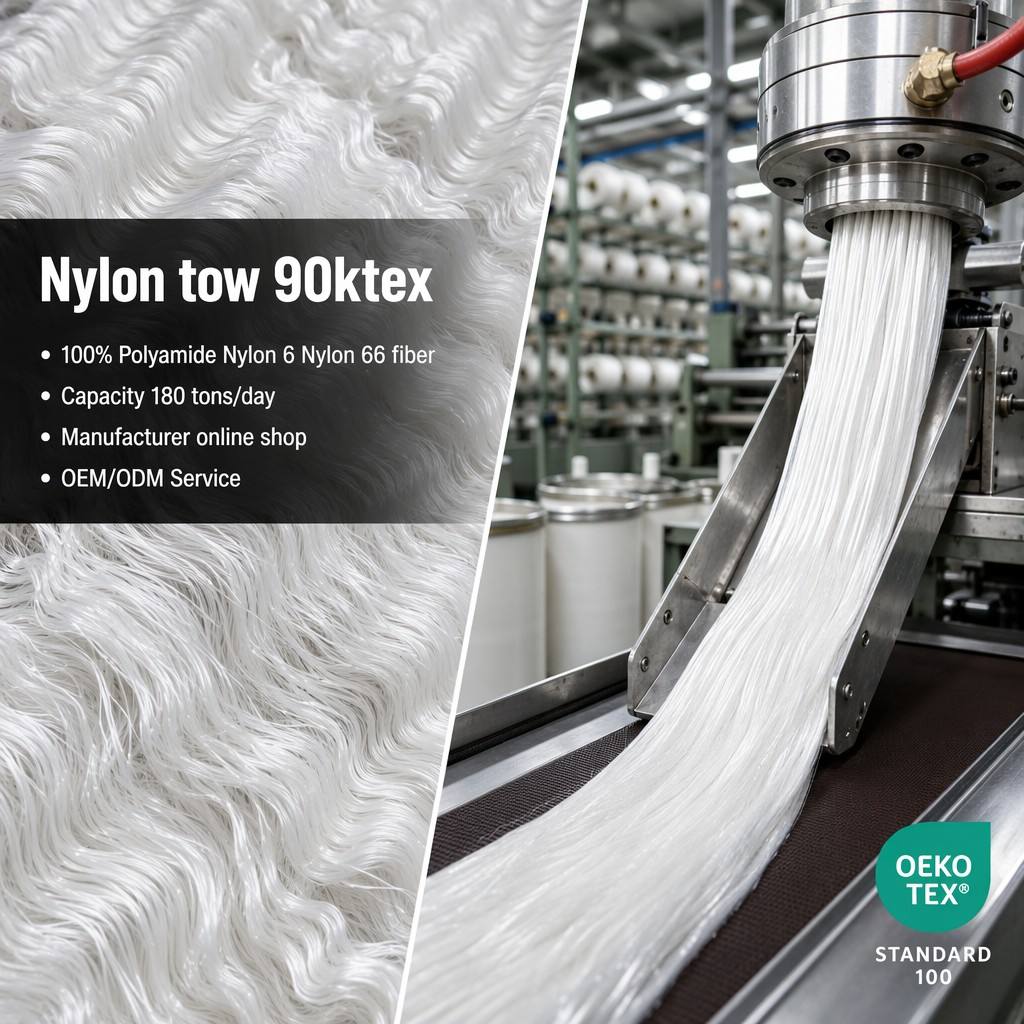
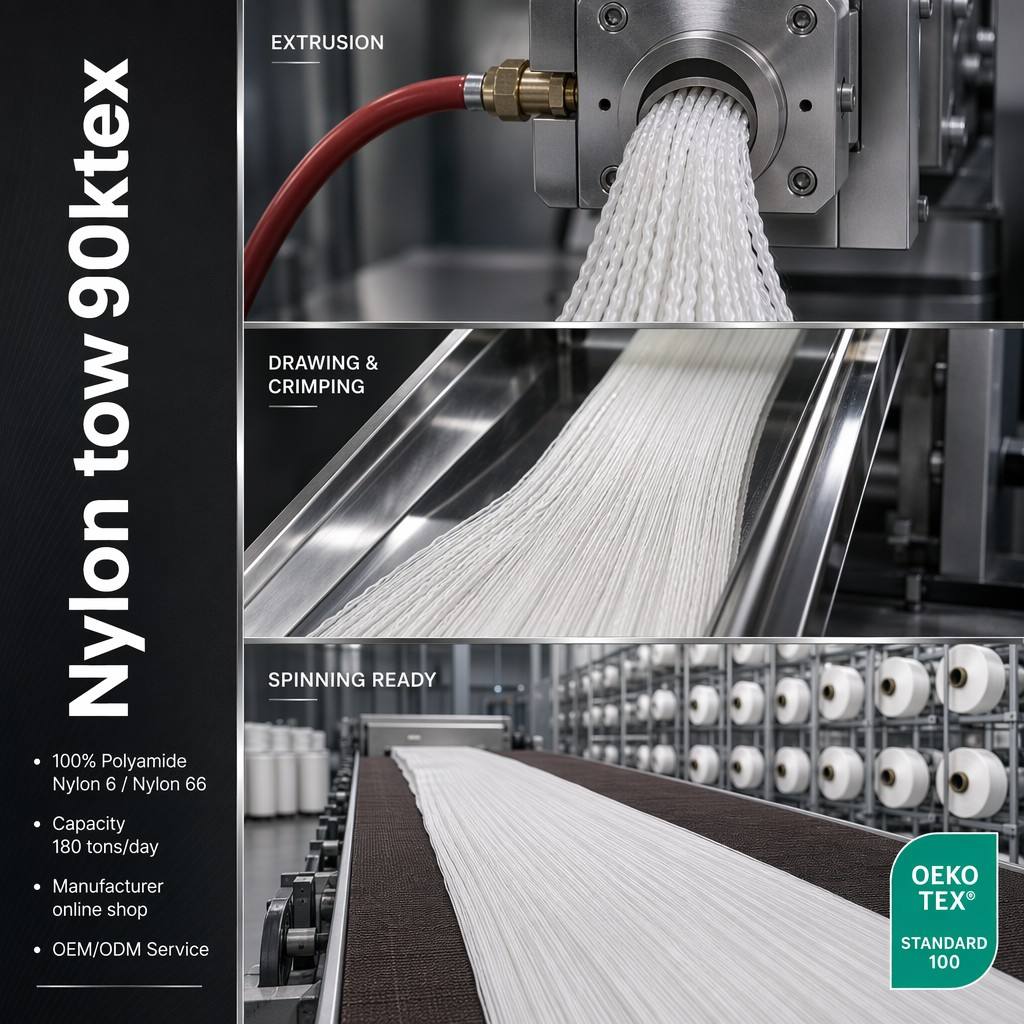
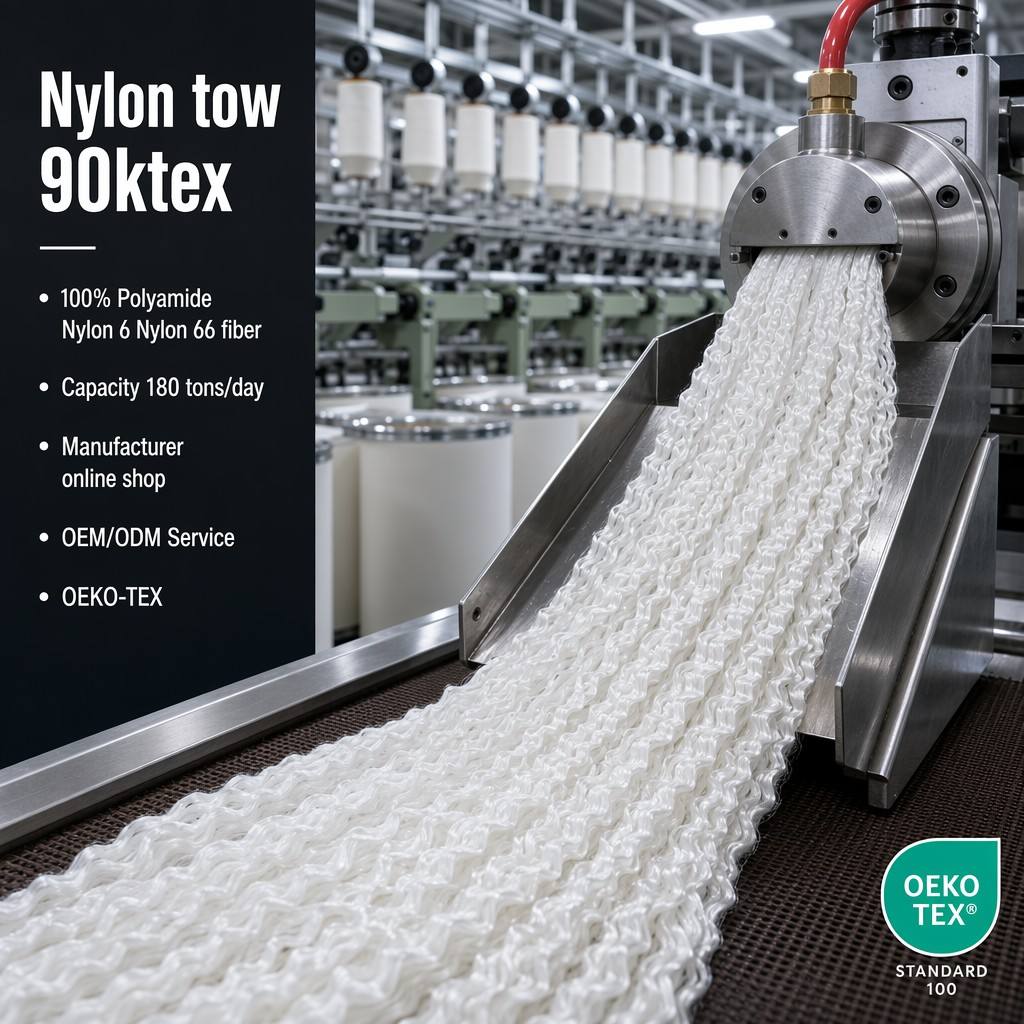
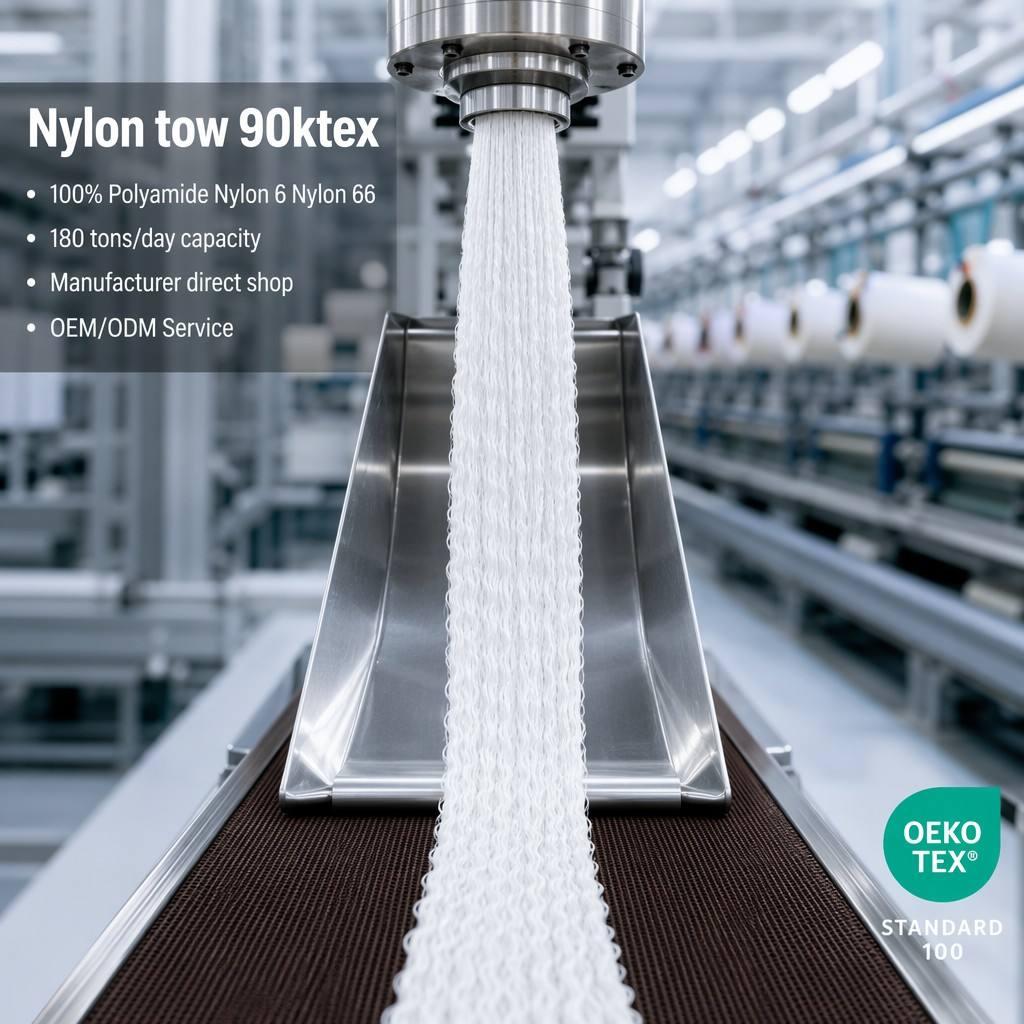
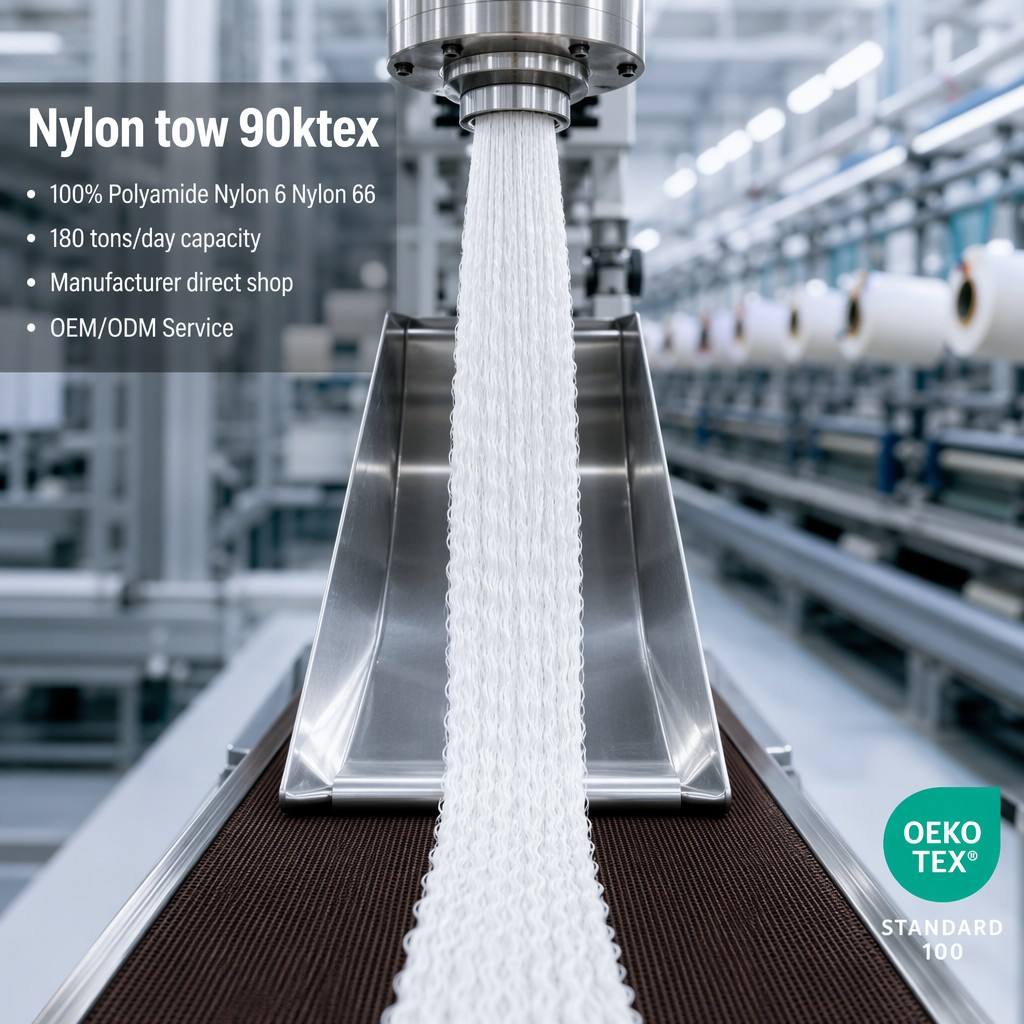
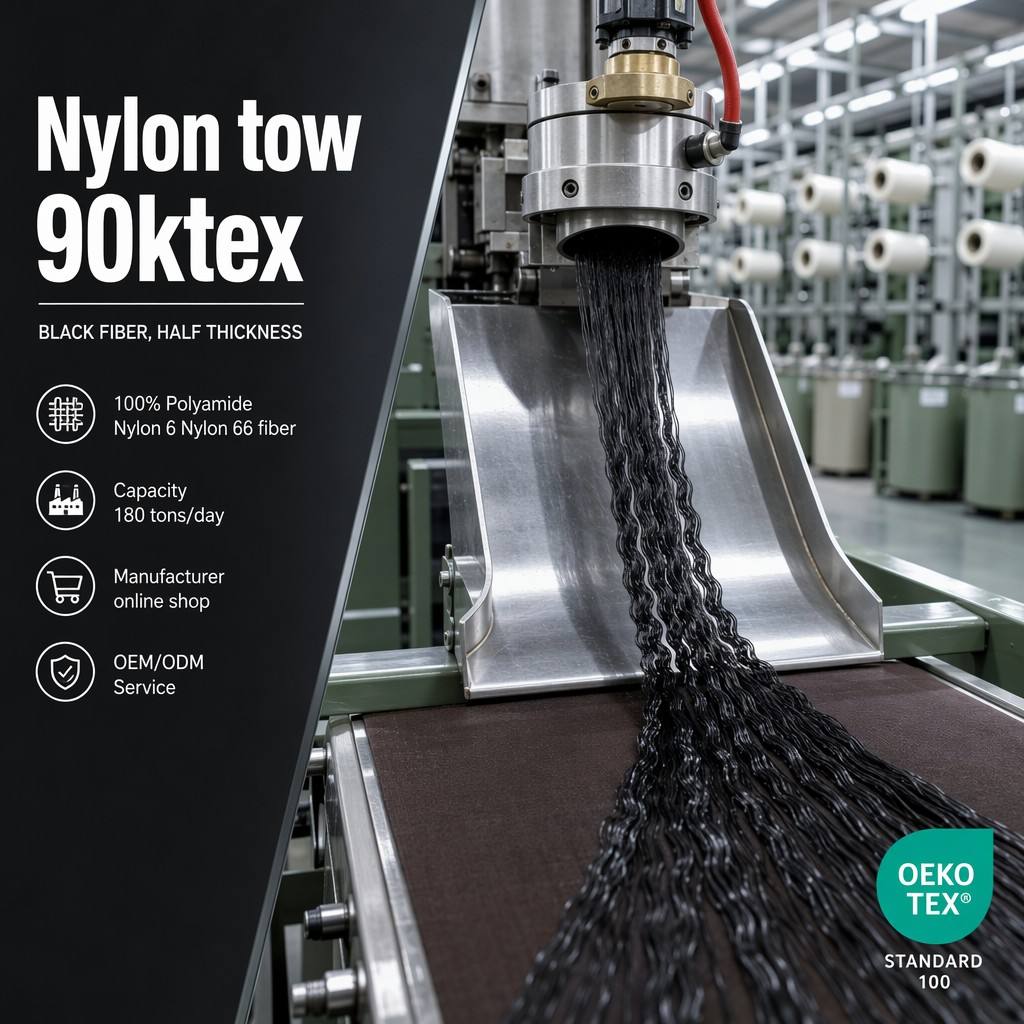
In practice, nylon tow may be fed into processes that create staple, nonwoven webs, reinforcement layers, padding, or other industrial fiber forms. The product information provided here also points to a continuous industrial web environment: a lightweight, white fibrous mass moving across a conveyor, a forming line handling bulky material, and, separately, a corrugated plastic sheet or board produced on an extrusion line. Those visuals are not proof of a specific final product, but they do reflect the kind of in-line handling equipment buyers often pair with nylon fiber operations.
How buyers usually compare nylon fiber tow options
Most sourcing teams end up comparing a short list of practical factors rather than arguing over marketing language. The key question is whether the tow is suited to the next step in production.
1. Fiber form and opening behavior
A tow that opens too aggressively can create fly and uneven distribution. A tow that resists opening can slow the line. If your process depends on clean drafting, uniform spreading, or controlled cutting, ask for a clear description of the tow structure, not just the name on the quote.
2. Tenacity and handling stability
High tenacity nylon fiber is often sought for its balance of strength and processability. That said, “high tenacity” should not be treated as a universal solution. It helps when the fiber must survive tension, conveying, or repeated mechanical handling, but it still needs to match the machine and end use.
3. Consistency from batch to batch
For industrial fiber, consistency can matter more than a single sample result. If one batch opens well and the next one behaves differently, the line will tell on you quickly. That is where a supplier with meaningful production scale can be helpful, provided they can also document the actual specifications that matter to your process.
Common mistakes when buying nylon tows
One common mistake is treating all nylon fiber tow as interchangeable. They are not. Another is assuming the same tow will work equally well in nonwoven forming, padding, and technical textile conversion. The downstream machine, the target bulk, and the final product geometry all matter.
A second mistake is overfocusing on the headline tex value while ignoring real handling behavior. A 90ktex nylon tow can still behave very differently depending on crimp, finish, cohesion, and how it is packed for transport. Buyers should also avoid assuming that a product shown in a factory image is the final spec. Images of conveyors, web lines, and extrusion equipment are useful clues, but they do not replace a written material description.
What to ask a supplier before placing an order
Before committing to nylon tow tops 90ktex, buyers should ask for the exact polymer grade, whether the fiber is intended for PA6 or PA66 use, and how the tow is presented for shipment. Ask how it is meant to be opened, cut, or converted. If your plant uses feeding or conveying equipment, ask whether the supplier has experience supporting continuous production rather than only small-batch sales.
It also helps to request the details that affect line setup: crimp characteristics, packing format, and any handling notes that may influence feeding. If those are not clear, the first trial run is where the cost shows up.
Buying takeaway for engineers and sourcing teams
If your project needs a heavy nylon fiber intermediate, nylon tow tops 90ktex is the kind of specification that deserves a process-first review. Think about what the next machine needs, not just what the fiber is called. Match the tow to opening, conveying, cutting, or web-forming behavior, then confirm the supplier can support stable industrial output.
Ningbo Sinopec Fiber Co., Ltd. positions itself as a nylon fiber manufacturer with established production capacity and a focus on PA6 and PA66 polyamide fibers. For buyers building long-term supply relationships, that is the right sort of profile to investigate further.
If you are comparing options, the next step is simple: request the full material description, the intended processing format, and a sample that reflects your actual line conditions, not a best-case brochure version.