Why buyers look at nylon tow tops 90ktex in the first place
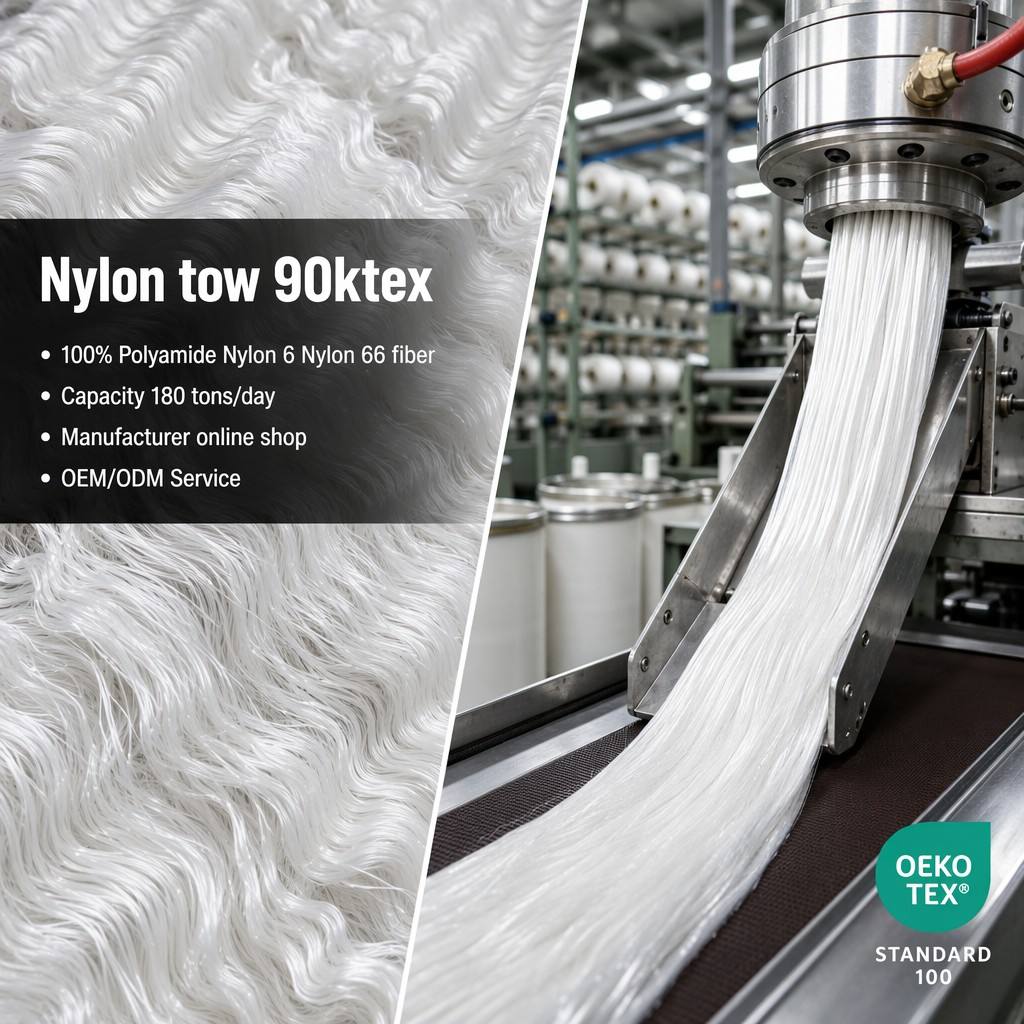
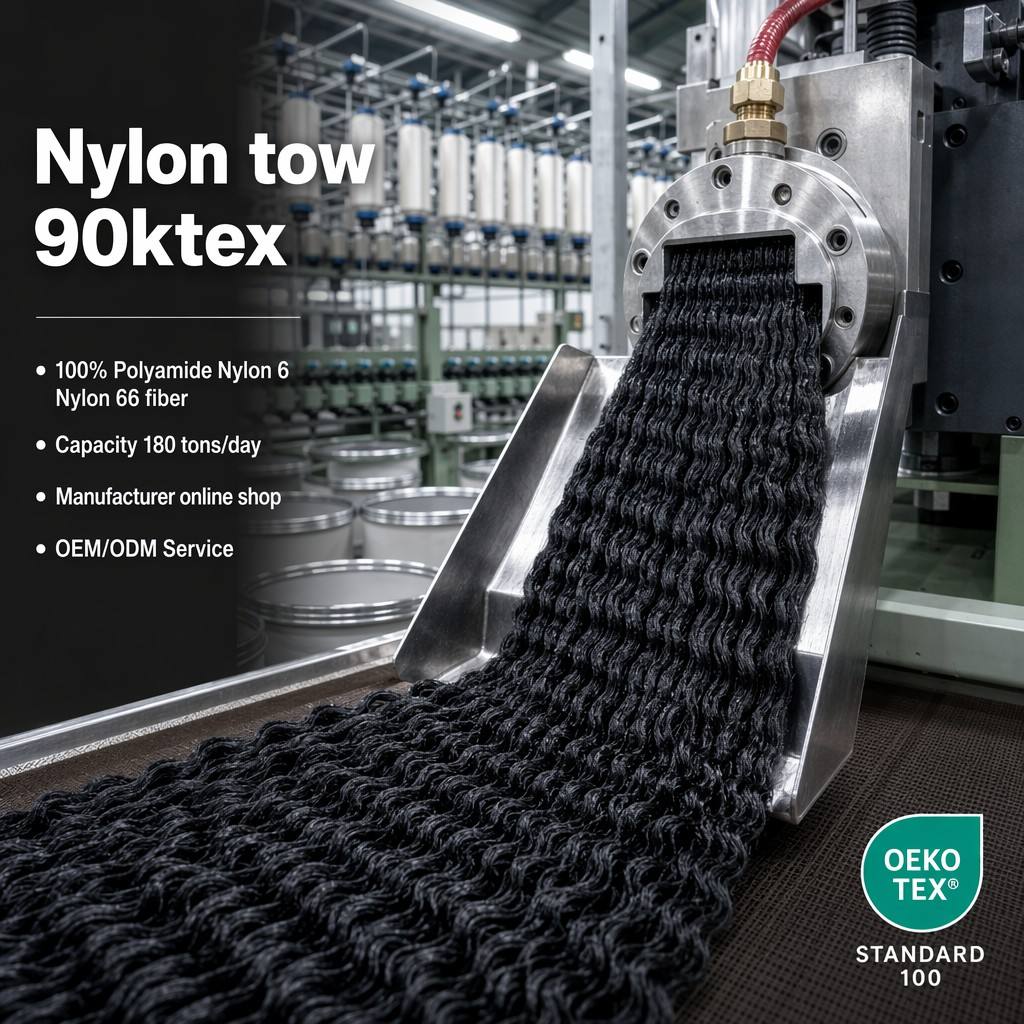
When sourcing nylon tow tops 90ktex, most engineers are not shopping for a headline number. They are trying to solve a production problem: how to feed a steady nylon stream into downstream conversion without creating breaks, uneven bulk, or wasted trimming. In practice, the decision usually sits somewhere between material performance and process stability. If the tow behaves well on the line, the rest of the operation gets easier. If it does not, every downstream step starts to feel expensive.
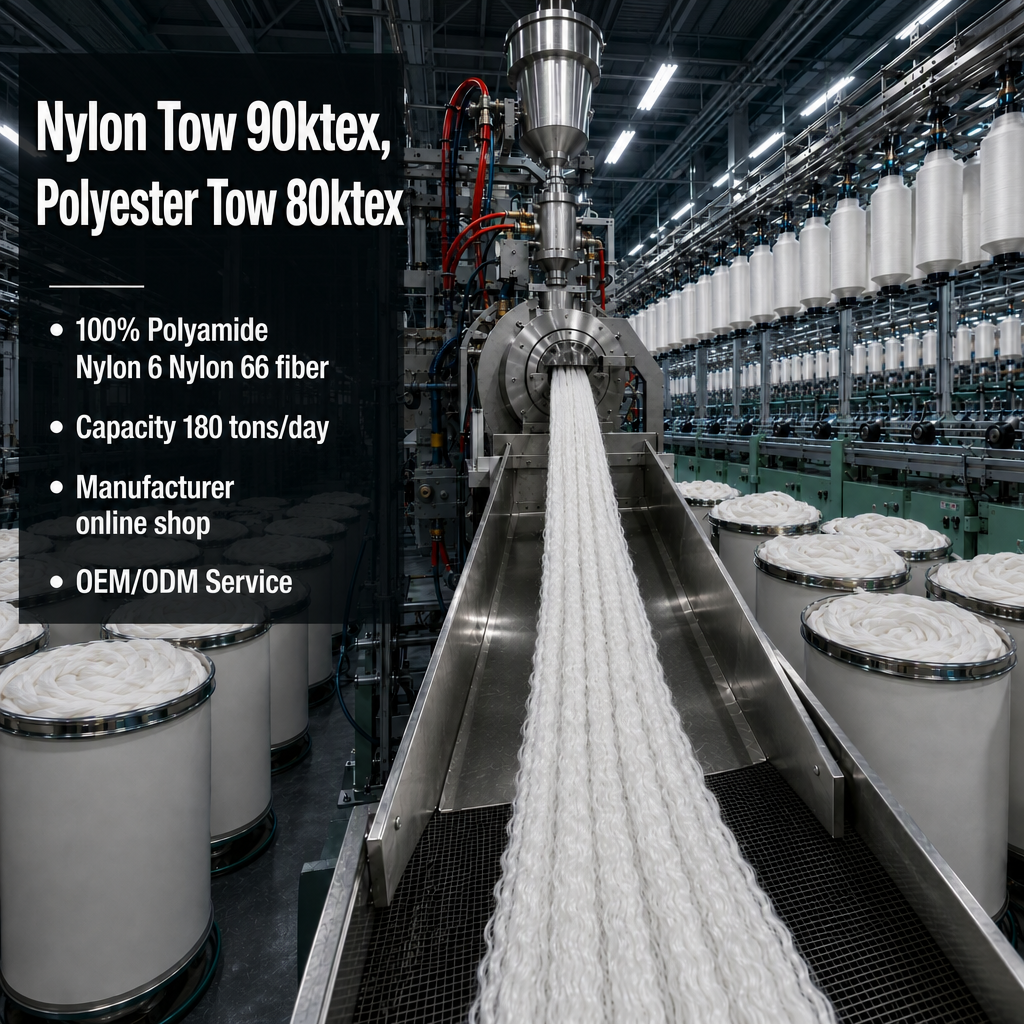
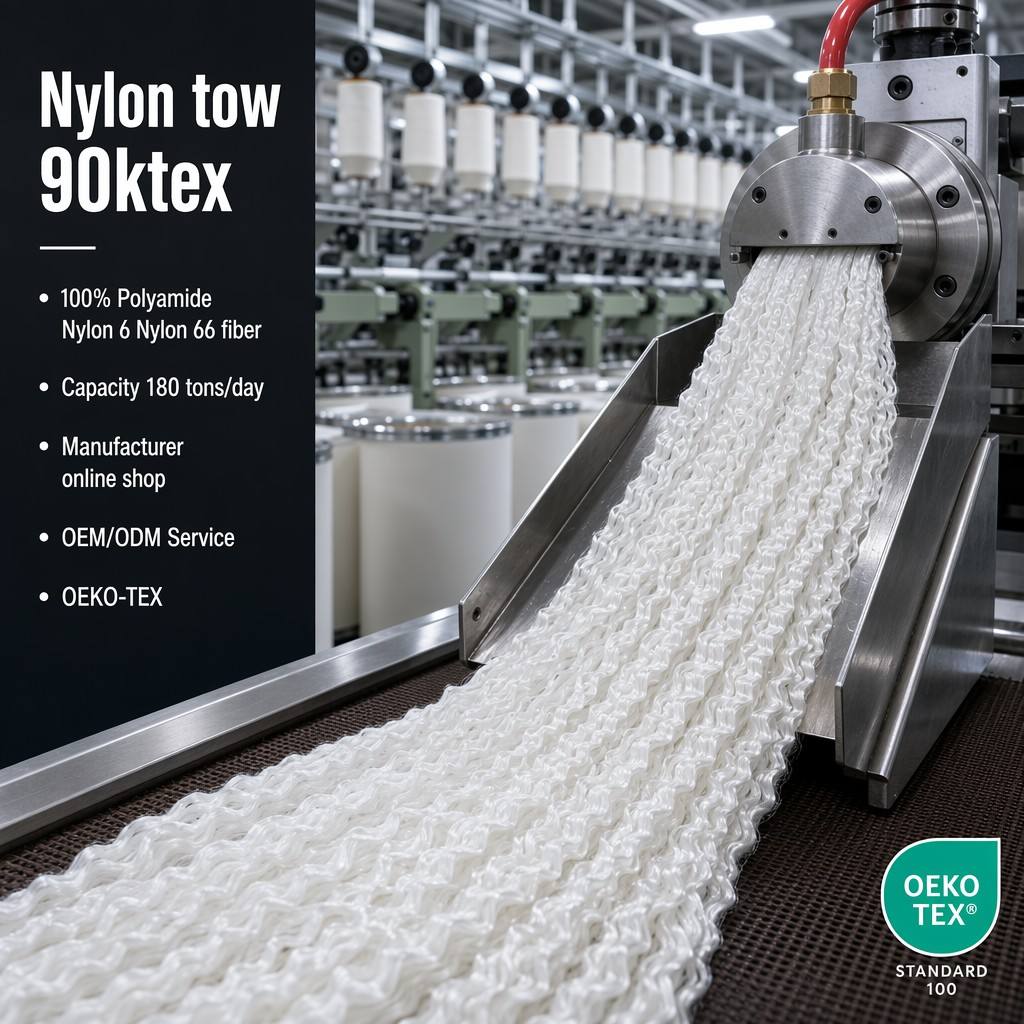
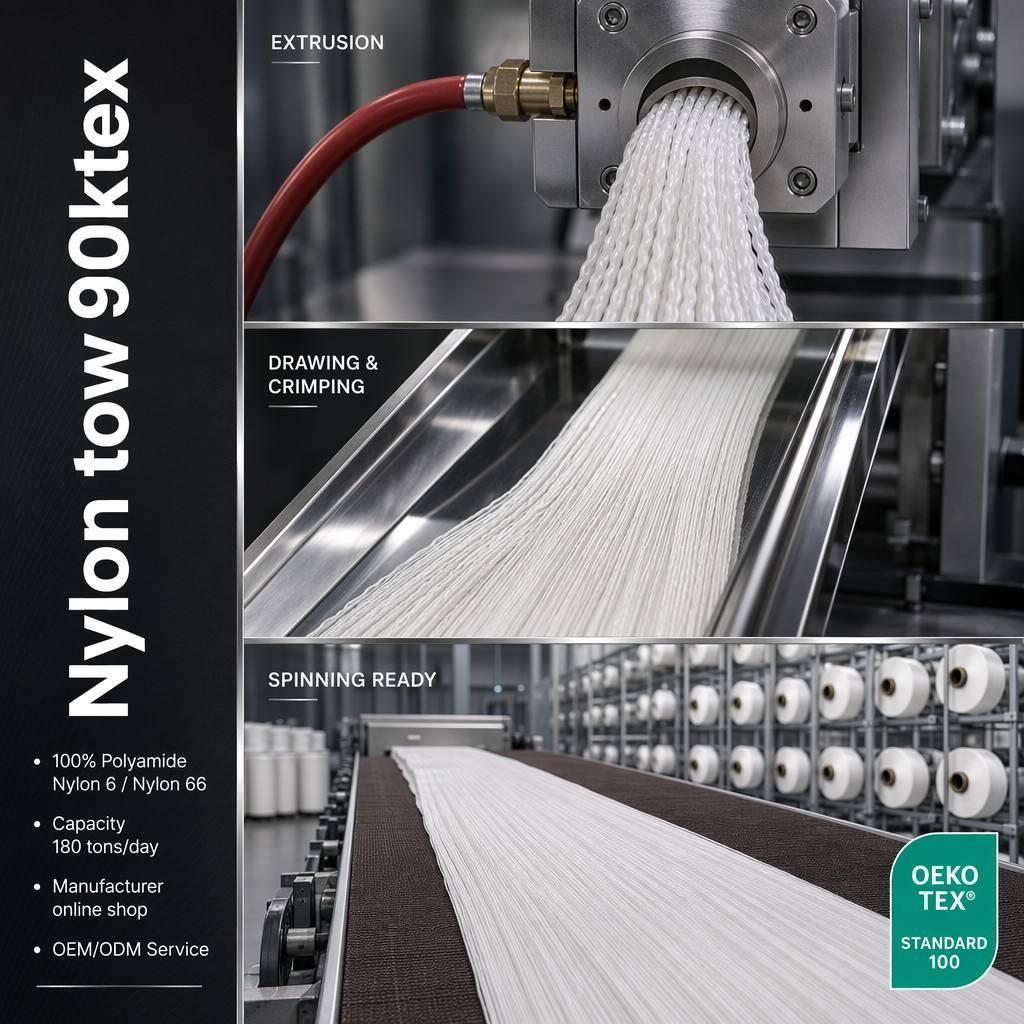
That is why this topic matters to sourcing managers and product teams. A 90ktex nylon tow is typically discussed as a bulk textile input, and buyers often want to know whether the tow format, denier-equivalent scale, and fiber structure are suitable for their line. The real question is not just what the material is called, but whether it can be handled consistently in the plant environment shown here: continuous feed, guided transfer, drying or sorting, and controlled movement through industrial equipment.
What the 90ktex format suggests
In textile language, tex describes mass per length. So when people refer to 90k tex fiber, they are pointing to a relatively large bundle format rather than a delicate lab-scale sample. In a plant setting, that usually means a tow intended for conversion, drawing, cutting, or other processing steps where volume and processability matter as much as raw fiber quality.
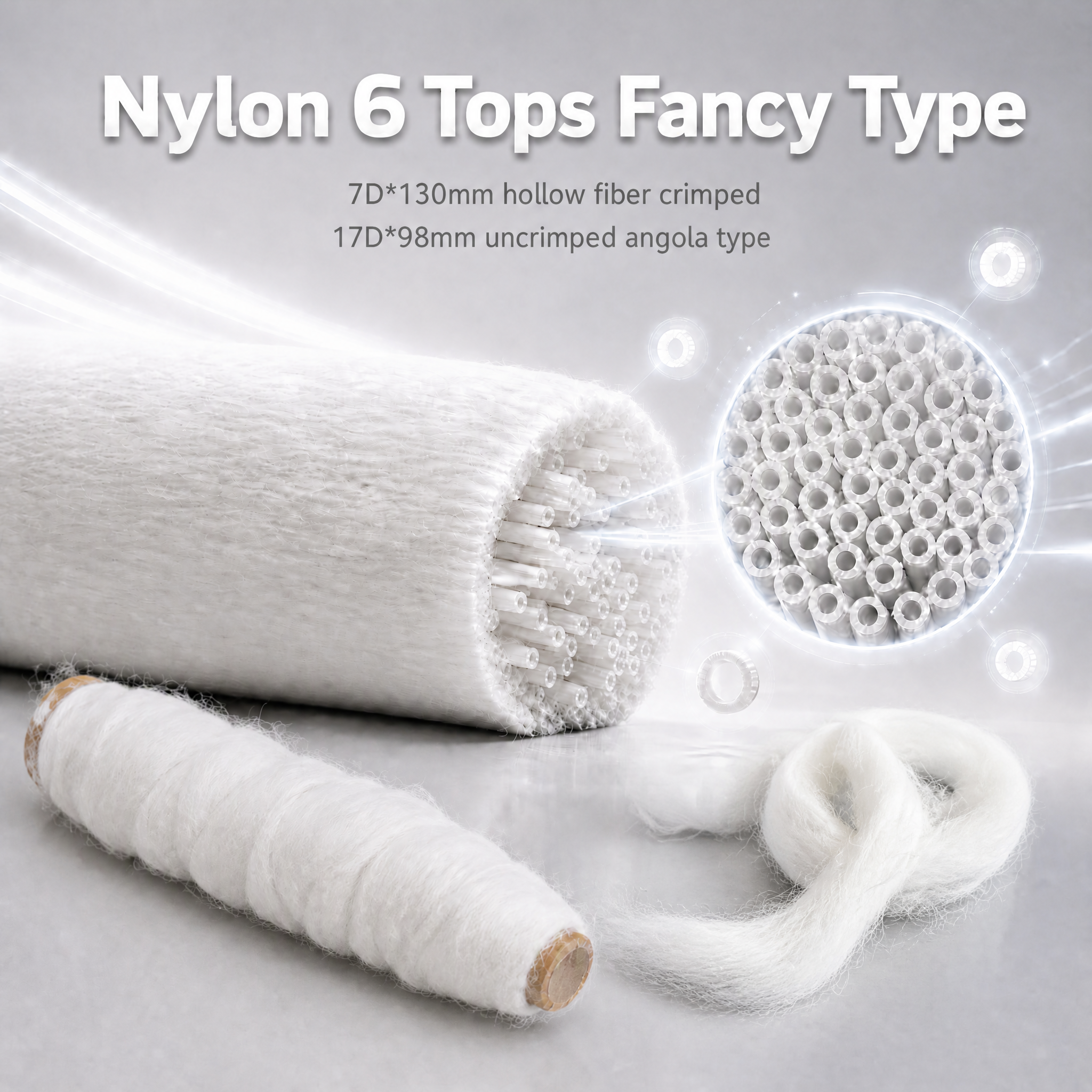
For buyers comparing nylon fiber tow options, the tow format offers a practical advantage: it can move through industrial handling systems in a more organized way than loose staple. That said, tow behavior is still influenced by crimp, filament count, polymer grade, and moisture condition. A tow that looks uniform on paper may still bridge, fluff, or tension unevenly if the line setup is not matched to it.
Where nylon tow tops fit in manufacturing
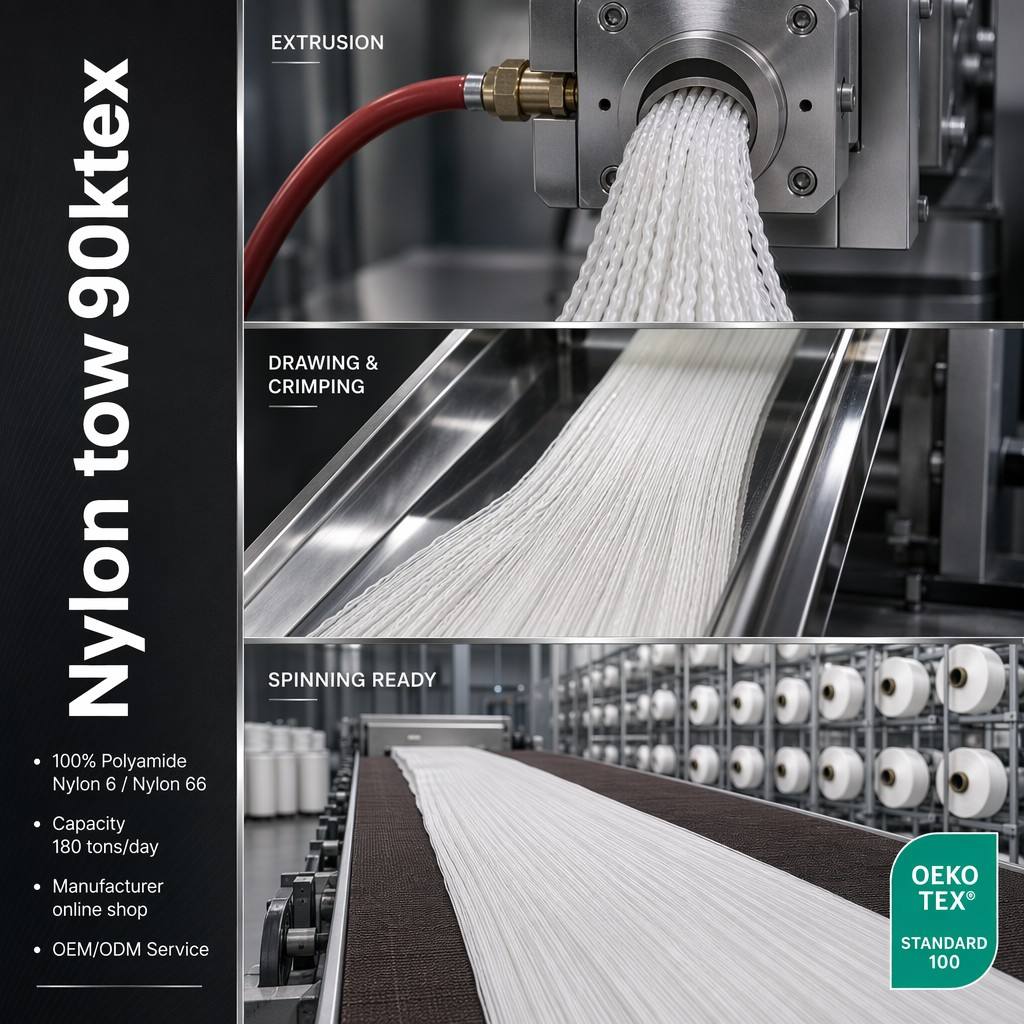
Nylon tow tops are generally used where a continuous nylon bundle must be opened, aligned, cleaned, dried, or prepared for the next conversion stage. The visual context provided here — conveyor transfer, guided flow, perforated working surface, and controlled movement of white fibrous material — matches the sort of handling environment where tow-like or web-like materials are managed before they become a finished input.
Depending on the plant, these materials may support downstream applications such as industrial filtration, absorbent products, reinforcement inputs, technical textiles, or other soft-material processing routes. The exact end use depends on the buyer’s line, and that should be confirmed early rather than assumed. A tow supplier and a converter often use similar words to describe slightly different realities.
Key selection points buyers should check
1. Consistency across the bundle
For any nylon tows purchase, consistency matters more than a nice sample photo. Uniform color, stable bundle formation, and predictable feed behavior reduce stoppages. If the tow is meant for continuous processing, a small variation in bulk can become a big variation on the line.
2. Process compatibility
Match the material to your equipment. An incline conveyor, suction table, drying belt, or sorting platform will each react differently to a soft nylon stream. The plant image suggests guided movement and airflow-assisted handling, which is often where loose fibers either behave well or start to scatter. Buyers should ask how the tow performs under tension, during transfer, and after any conditioning step.
3. Polymer grade and fiber form
The company profile here points to PA6 and PA66 production. That matters because nylon type influences heat response, toughness, and processing behavior. If the project calls for high tenacity nylon fiber, the buyer should confirm whether the supplied tow is designed for that service or whether a standard-grade product is being described too broadly. This is one of those places where a supplier’s shorthand can hide an important difference.
How to compare suppliers without overcomplicating it
Start with the basics: material grade, tow format, production stability, and whether the supplier can support long-term repeat orders. Ningbo Sinopec Fiber Co., Ltd. states that it was founded in 1996, employs 150 people including 20 engineers, and operates a 50,000-square-meter factory with 20,000 square meters of production space. It also reports a daily output of 100-150 tons, mainly in PA6 and PA66 polyamide nylon fibers. Those are meaningful scale indicators for buyers who need continuity rather than one-off supply.
Still, scale alone does not answer every sourcing question. Ask for the parameters that matter to your line: tow uniformity, packaging method, moisture handling, and how the product is delivered for downstream conversion. If your process depends on stable feeding, that conversation should happen before purchase, not after the first trial run.
Common mistakes in nylon tow procurement
One frequent mistake is treating all fiber tow as interchangeable. They are not. Another is focusing only on the headline tex value while ignoring how the bundle behaves in a real machine. A third is assuming the same product will perform identically across different plants. Conveyor geometry, airflow, humidity, and operator handling all change the result.
It also helps to avoid vague specifications. If you need nylon fiber top material for a particular conversion step, say so plainly. If the process depends on high-tenacity behavior, say that too. Buyers save time when the supplier sees the actual use case rather than a loose material label.
A practical buying takeaway
If you are evaluating nylon tow tops 90ktex for industrial processing, focus on three things: whether the tow suits your equipment, whether the nylon grade fits the end use, and whether the supplier can keep the material consistent from lot to lot. That is the difference between a sample that looks acceptable and a production input that behaves predictably.
For sourcing discussions, the next step is usually straightforward: share your target application, your line conditions, and the tow format you want to test. A supplier with PA6 and PA66 production experience should be able to respond with a practical recommendation instead of a generic catalog answer.