Why 100% Nylon Yarn Keeps Showing Up in Fur-Effect and Soft-Texture Products
When buyers search for 100% nylon yarn, they are usually not looking for a generic textile fiber. They are trying to solve a very specific problem: how to get softness, body, and surface character without losing the consistency needed for production. That is why this yarn shows up in novelty knitting, plush finishes, and faux-fur-style materials, where appearance and handfeel often matter as much as basic strength.
For sourcing teams, the real question is not just whether the yarn looks fluffy. It is whether the structure, fiber type, and supply setup fit the end use. A scarf yarn, a decorative fur yarn, and a roll of soft fibrous material may all look similar at first glance, but they serve very different manufacturing paths. That distinction matters when you are comparing samples, planning conversion, or asking whether a supplier can support OEM/ODM work.
What Buyers Usually Mean by Soft, Fur-Like Nylon Yarn
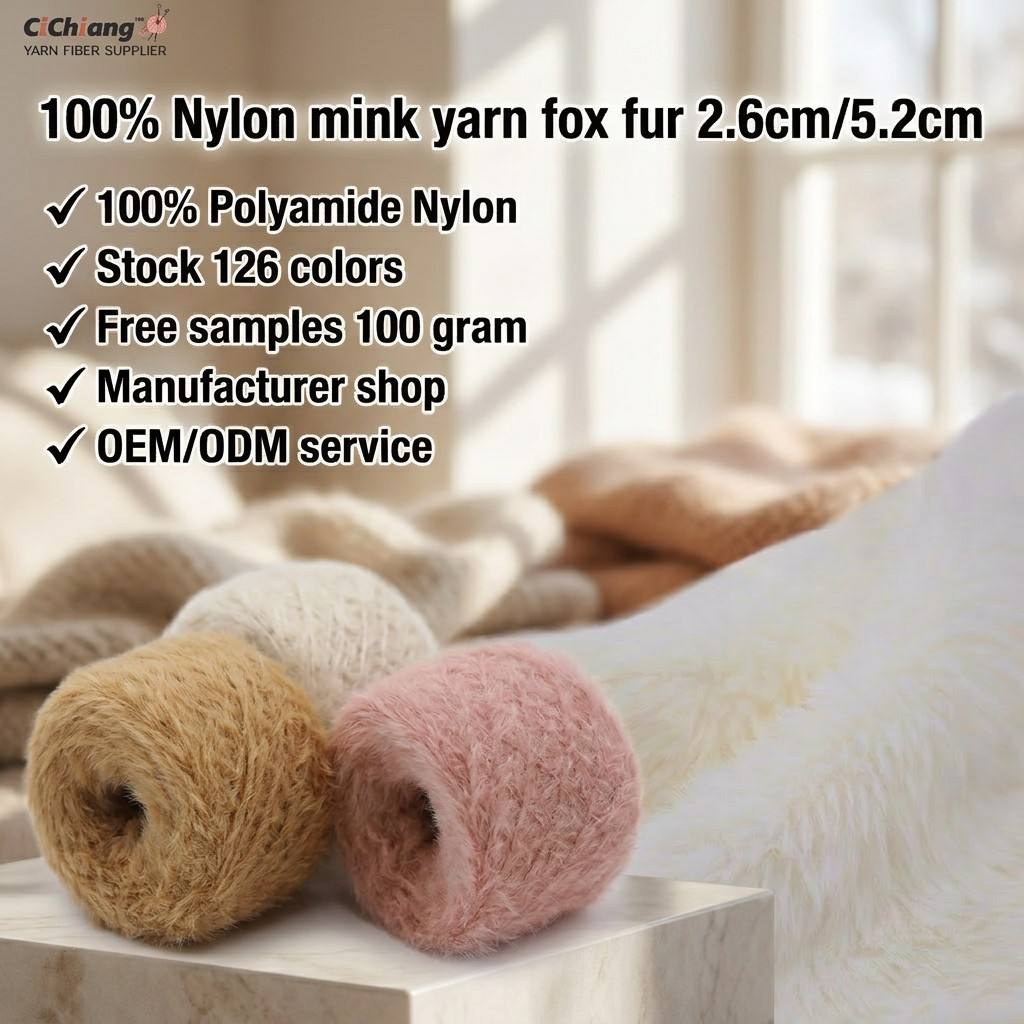
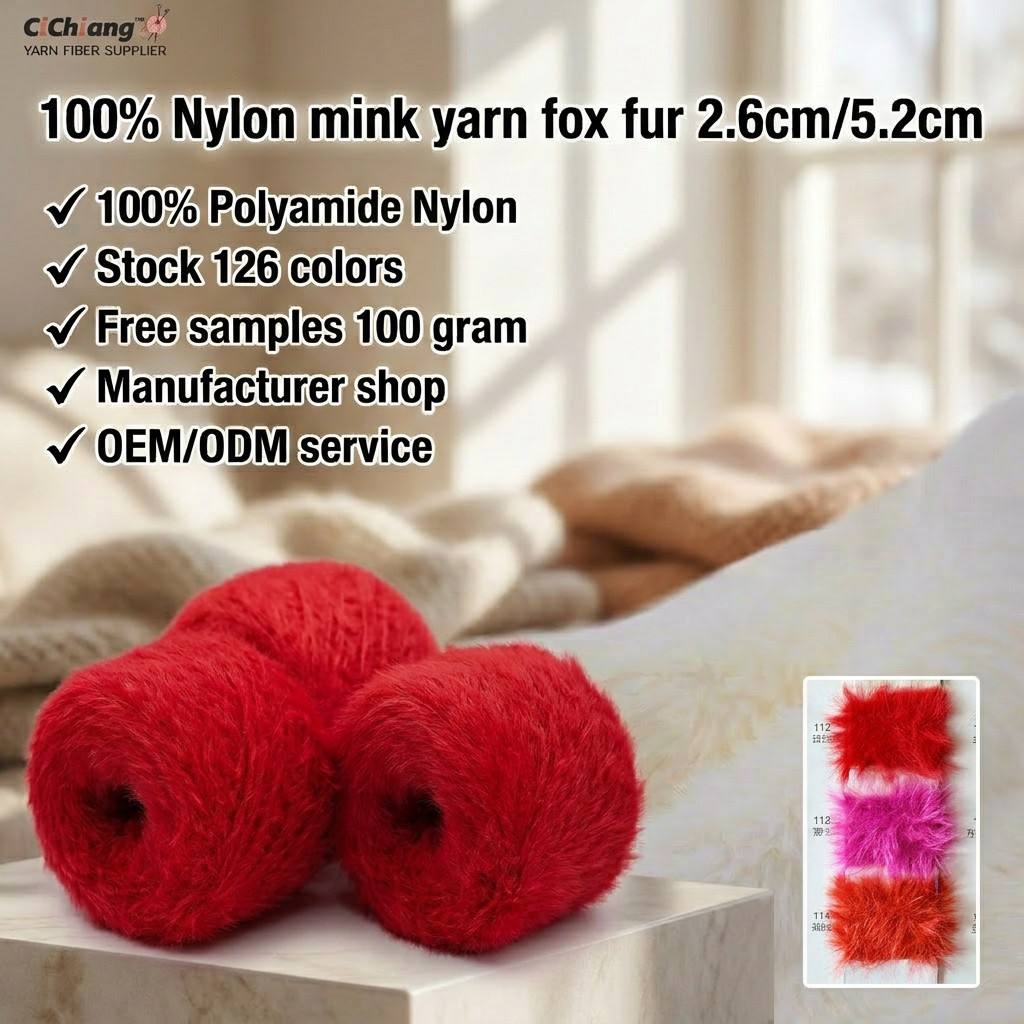
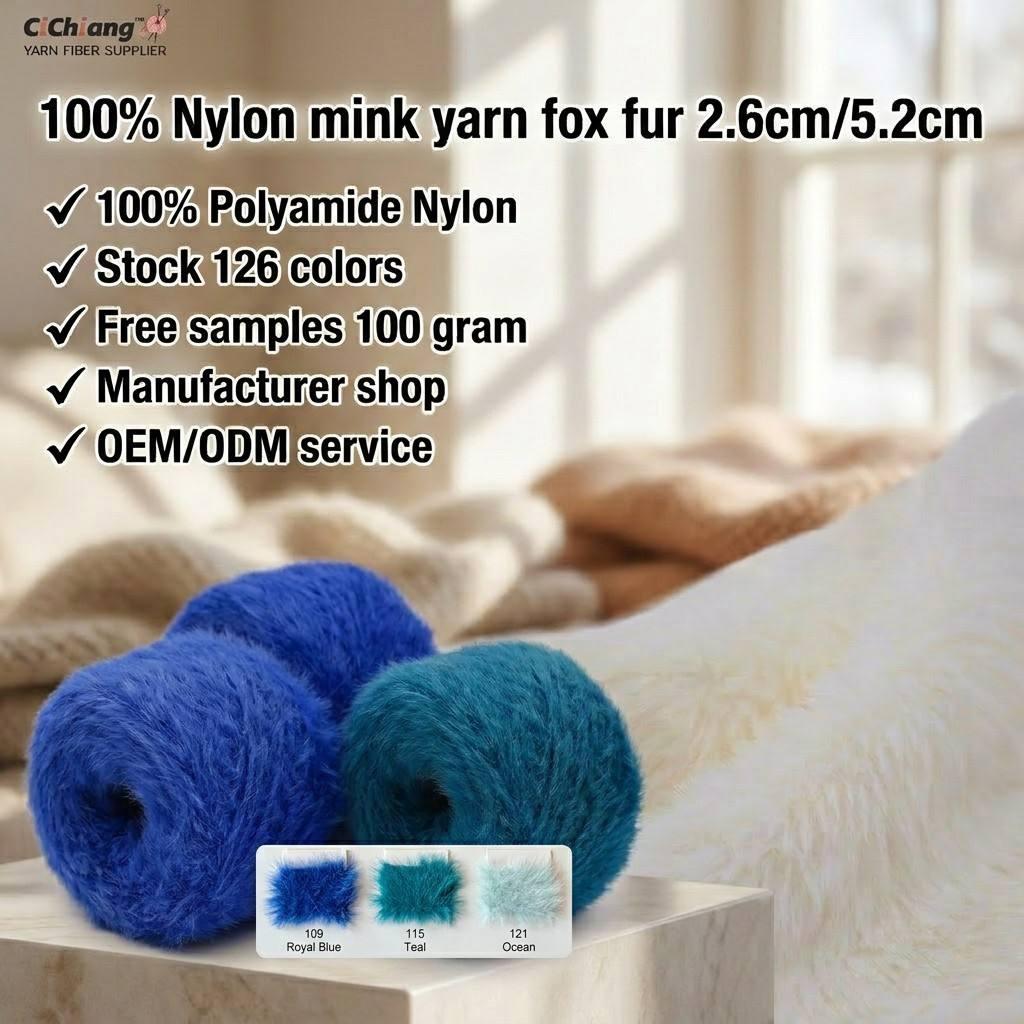
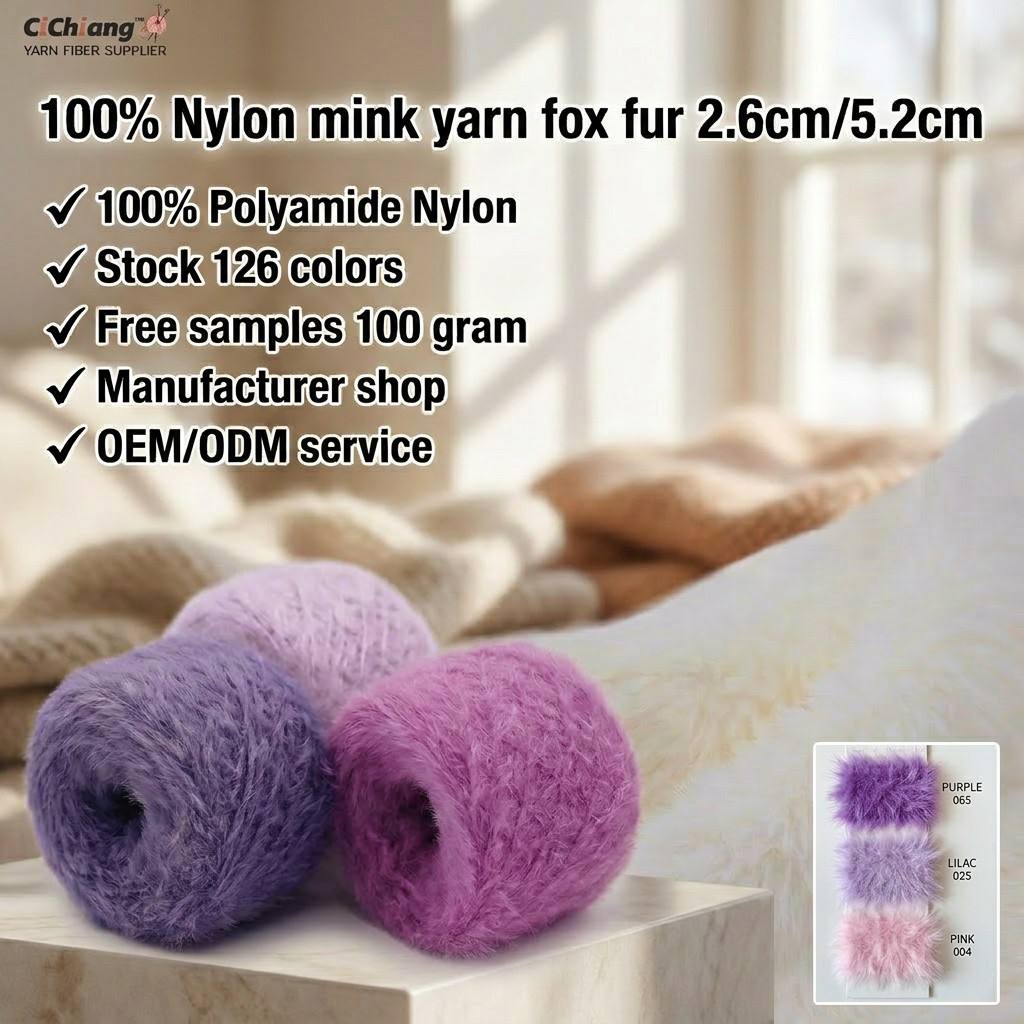
In the market, terms such as mink feather yarn, fox fur style yarn, faux fur yarn, plush yarn, and soft texture yarn are often used loosely. The actual product may be a pile yarn with a brushed surface, a novelty knitting yarn with a dense fuzzy halo, or a soft synthetic fiber structure wound into skeins or rolls. The visible clues are usually the same: a bulky body, fine protruding fibers, and a surface designed to look warmer and fuller than standard knitting yarn.
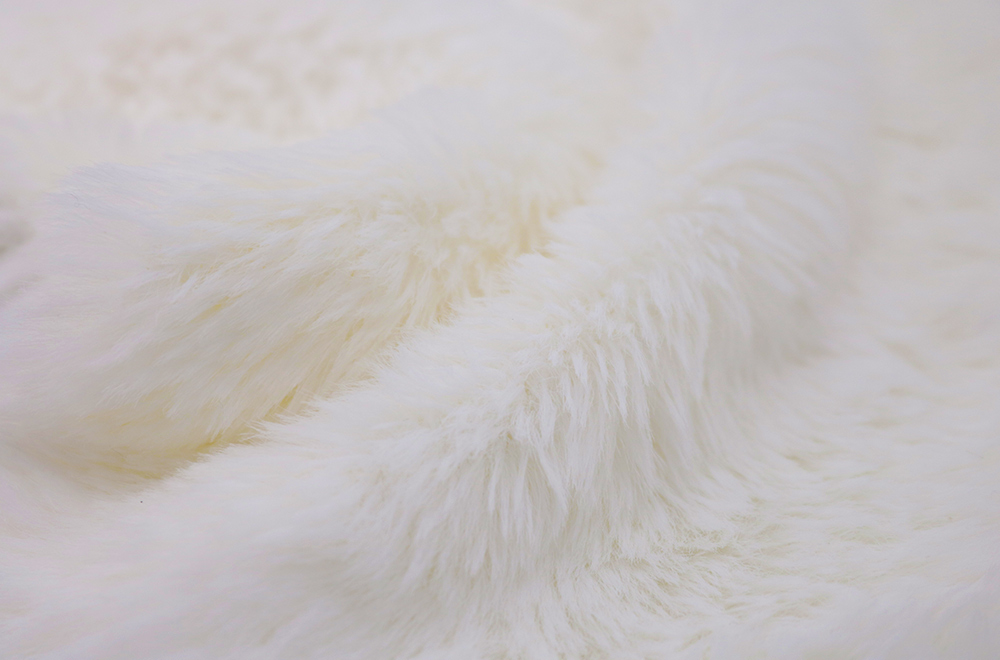
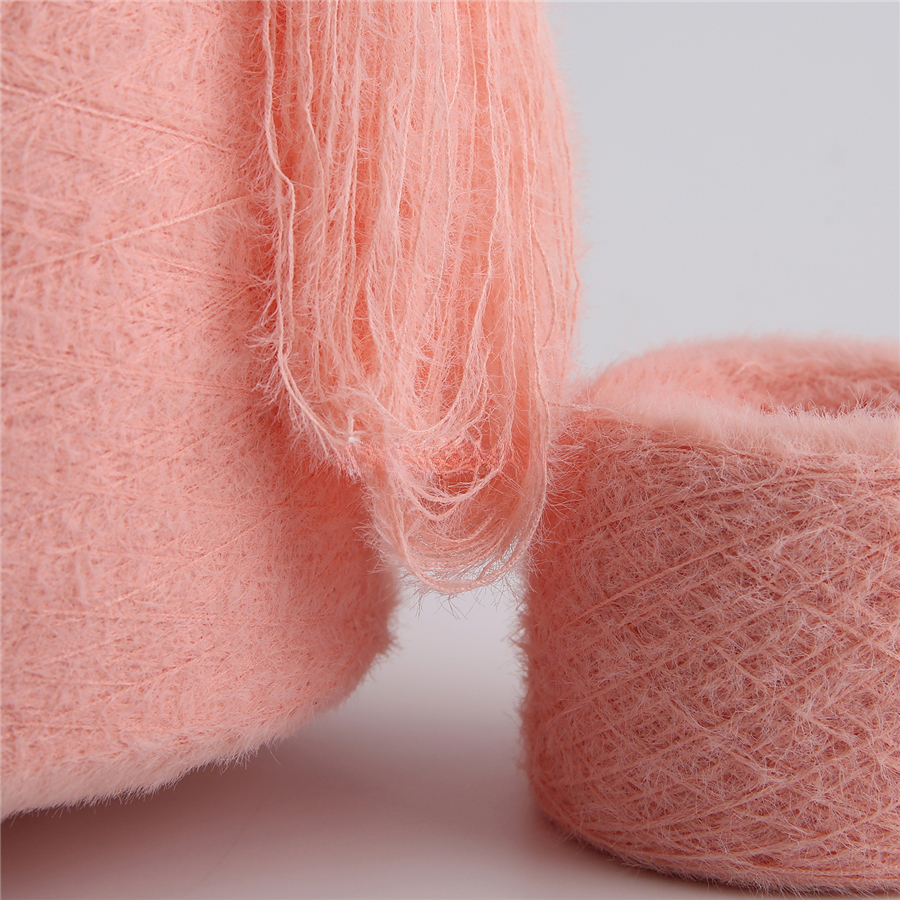
That is also why product descriptions can be confusing. One supplier may emphasize decorative texture for scarves and costume pieces, while another may present a fibrous roll more like raw stock for cutting, wrapping, padding, or lining. If the image shows a light pink open-fiber roll, a white long-pile textile, and a colored fur-effect yarn, you are probably dealing with a family of soft synthetic textile forms rather than one narrow product class.
Why Nylon Matters in This Category
Nylon, or polyamide, is commonly used in these products because it can be spun, texturized, brushed, or formed into structures that hold a soft visual volume. In practical buying terms, that gives manufacturers a few advantages. The material can support a plush appearance, it can be made in a wide color range, and it tends to be more process-friendly than many delicate natural fibers when the job is decorative rather than structural.
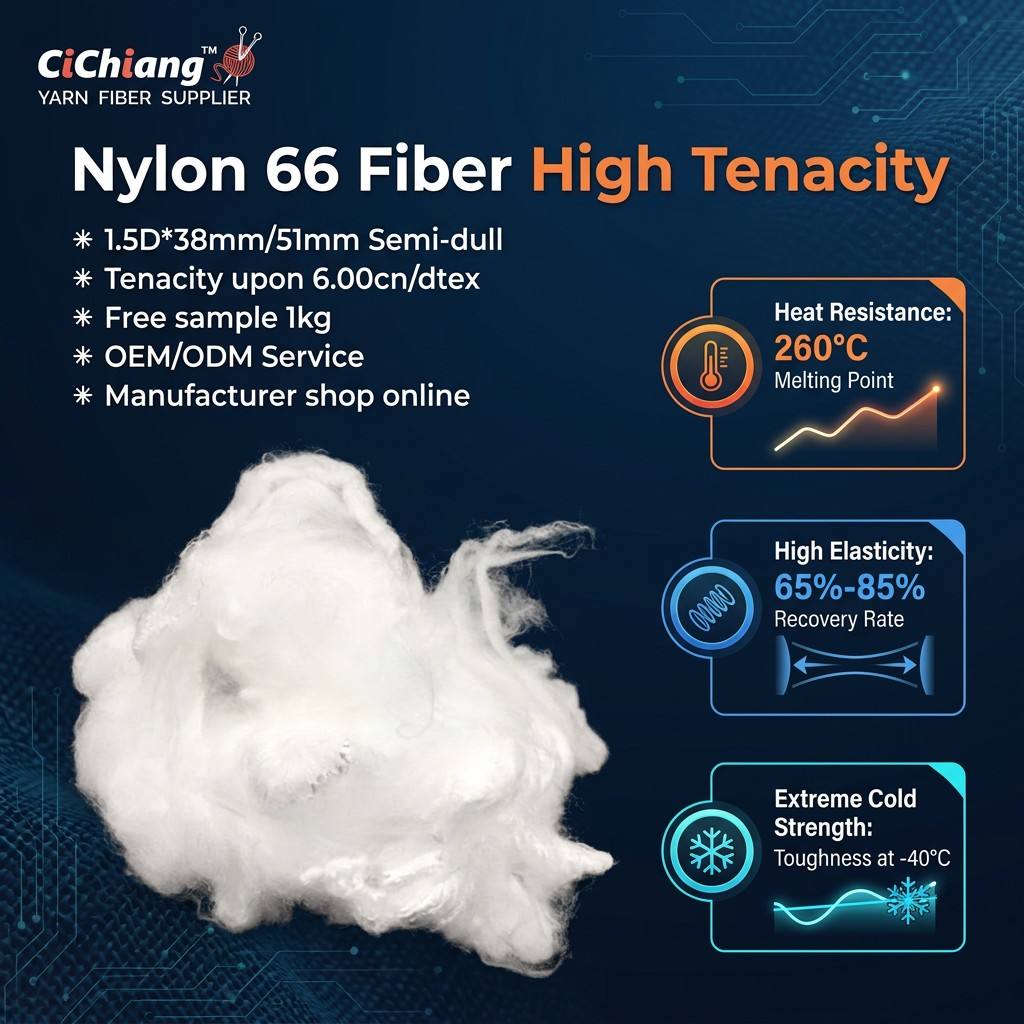
Ningbo Sinopec Fiber Co., Ltd., founded in 1996, focuses on nylon fiber manufacturing and reports PA6 and PA66 polyamide nylon fiber production. With 150 employees, including 20 engineers, and a 50,000 square meter factory, the company is set up as a serious fiber producer rather than a casual trading desk. It also states a daily output of 100 to 150 tons, which suggests capacity for buyers who need repeatable supply over time. That does not replace sample testing, of course, but it does matter when continuity is part of the spec.
Quick Reference: What to Check Before You Place an Order
If you are evaluating a fluffy yarn or fur-like nylon product, the shortlist is straightforward.
First, confirm whether you are buying a yarn for knitting or a textile roll for conversion. Second, look at pile length and surface density, because that will drive the final look more than the color card does. Third, ask how the material behaves in finishing, cutting, and sewing. A soft surface can hide handling problems until production starts, which is a common and expensive mistake. Fourth, verify the fiber composition and construction, especially if the application will be worn close to the skin or used in repeated washing cycles.
Where These Materials Fit Best
Apparel and accessory use
For scarves, hats, collars, trims, and costume pieces, the goal is usually visual volume and a comfortable handfeel. A product described as knitting yarn for scarves may be suitable if the knit structure can carry the pile without collapsing. Buyers should still test stitch definition, because highly fuzzy yarn often hides pattern detail. That is not a defect; it is the tradeoff.
Home décor and craft use
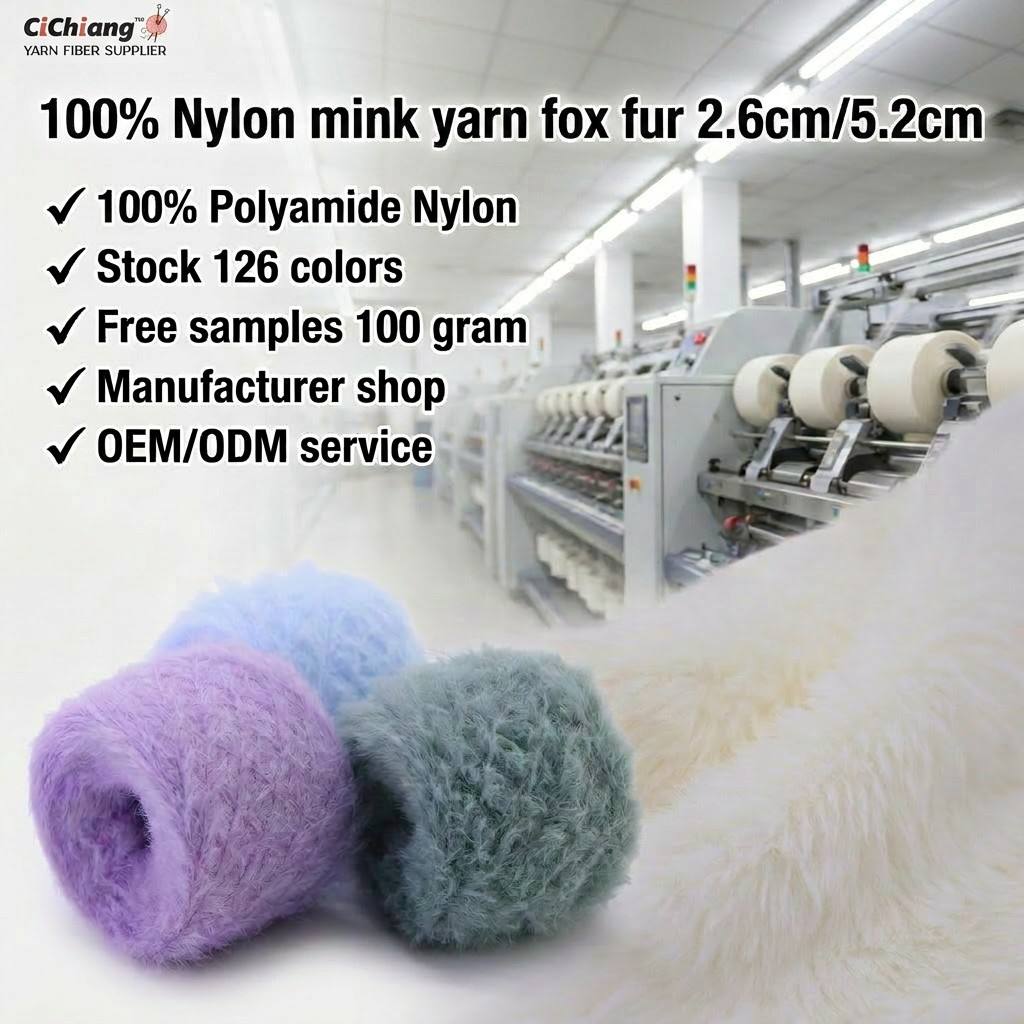
Soft faux fur yarn and plush yarn are common in throws, cushions, accent covers, display pieces, and craft projects. White and off-white versions are especially useful where a clean, neutral surface is needed. Colored novelty yarns, including purple and pink tones, can help a product line stand out without changing the underlying construction.
Roll stock and conversion use
The pink fibrous rolled material described in the product data is a different kind of buying decision. It may be used as stock for pads, liners, inserts, insulation layers, filtration layers, cushioning, or decorative applications depending on the actual specification. Because the exact category is uncertain from the image alone, buyers should request width, thickness, density, and intended process compatibility before assuming it can be dropped into production.
Common Buyer Mistakes
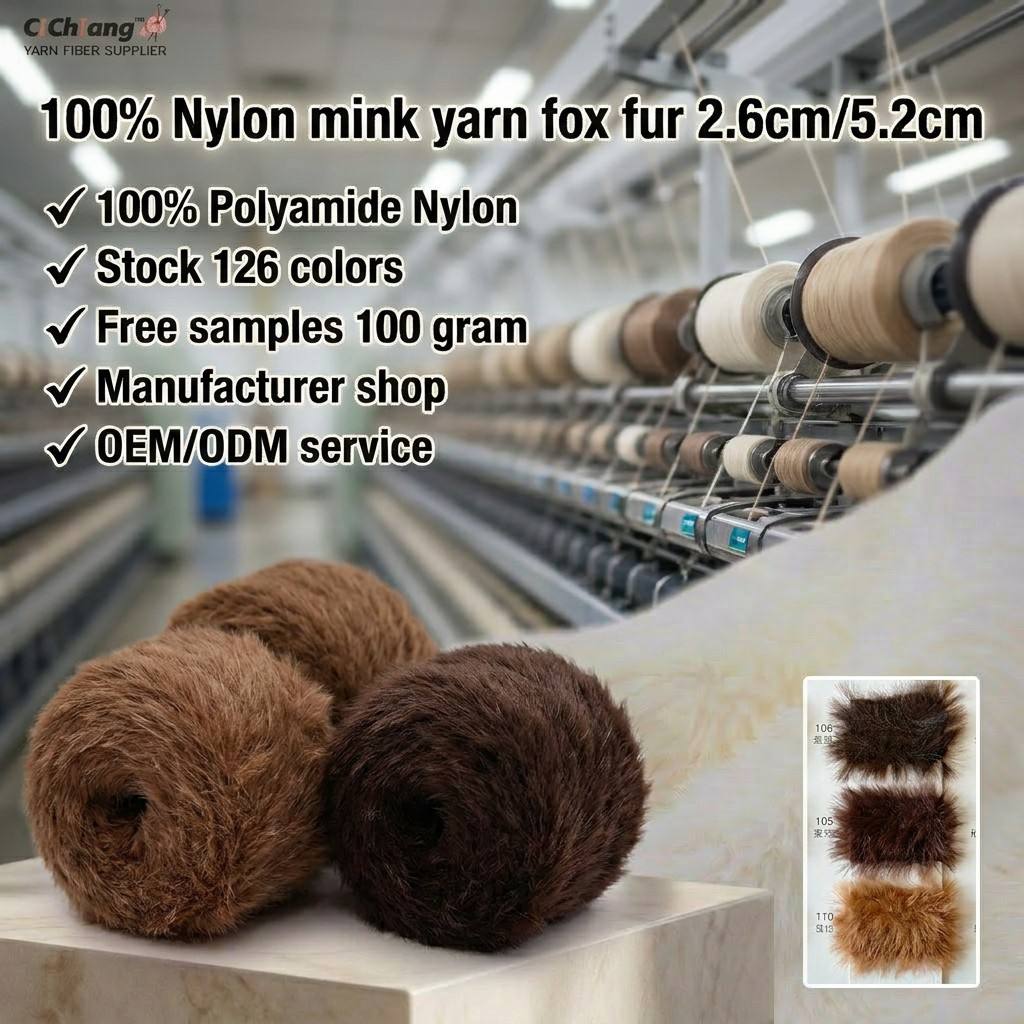
The most common mistake is treating all fluffy textiles as interchangeable. A yarn that looks ideal in a sample ball may not behave the same in a production knit. Another easy mistake is focusing only on color counts. A supplier offering 126 stocked colors is useful, but color breadth does not tell you whether the yarn meets your process or end-use needs.
It is also wise not to overread surface softness. Softness is visible and tactile, but durability, wash behavior, and snag resistance are separate questions. If those values are important, they need to be tested or at least discussed directly. Don’t assume a fur-like surface automatically means premium performance.
What Makes a Supplier Worth a Follow-Up
For buyers, the strongest signal here is not a glossy product photo. It is whether the supplier can support technical discussion, repeat orders, and sample development. Free 100 g samples, OEM/ODM service, and a broad color stock can be useful, especially for product teams developing seasonal items or private-label ranges. But those conveniences only matter if the material itself is consistent.
A manufacturer with in-house engineering support may be better positioned to adjust texture, appearance, or fiber behavior than a pure reseller. That is where companies like Ningbo Sinopec Fiber Co., Ltd. can be relevant: a long-running nylon fiber producer with engineering resources is usually easier to work with when the brief is more specific than “make it fluffy.”
FAQ for Sourcing Teams
Is 100% nylon yarn always suitable for knitting?
Not always. It depends on the yarn structure, pile length, and intended stitch behavior. Ask for sample knitting or conversion guidance.
Is faux fur yarn the same as plush yarn?
Often they overlap, but not necessarily. The market uses these terms loosely, so confirm the actual construction rather than the label.
What should I request from a supplier first?
Fiber composition, sample yardage or sample weight, color availability, and any process notes that explain whether the material is for hand use, machine use, or further conversion.
Next Step for Product Development
If your project depends on softness, visual volume, and synthetic consistency, start with a sample-based evaluation rather than a catalog assumption. Ask the supplier to clarify whether you are looking at a true novelty yarn, a faux-fur textile, or a fibrous roll stock. That one clarification can save a lot of back-and-forth later, especially when the product will move from sample table to production line.
For long-term sourcing, suppliers with nylon fiber manufacturing capability, color depth, and OEM/ODM support are usually the safer starting point. The material may look simple. The buying decision rarely is.