What buyers really mean when they search for nylon tow tops 90ktex
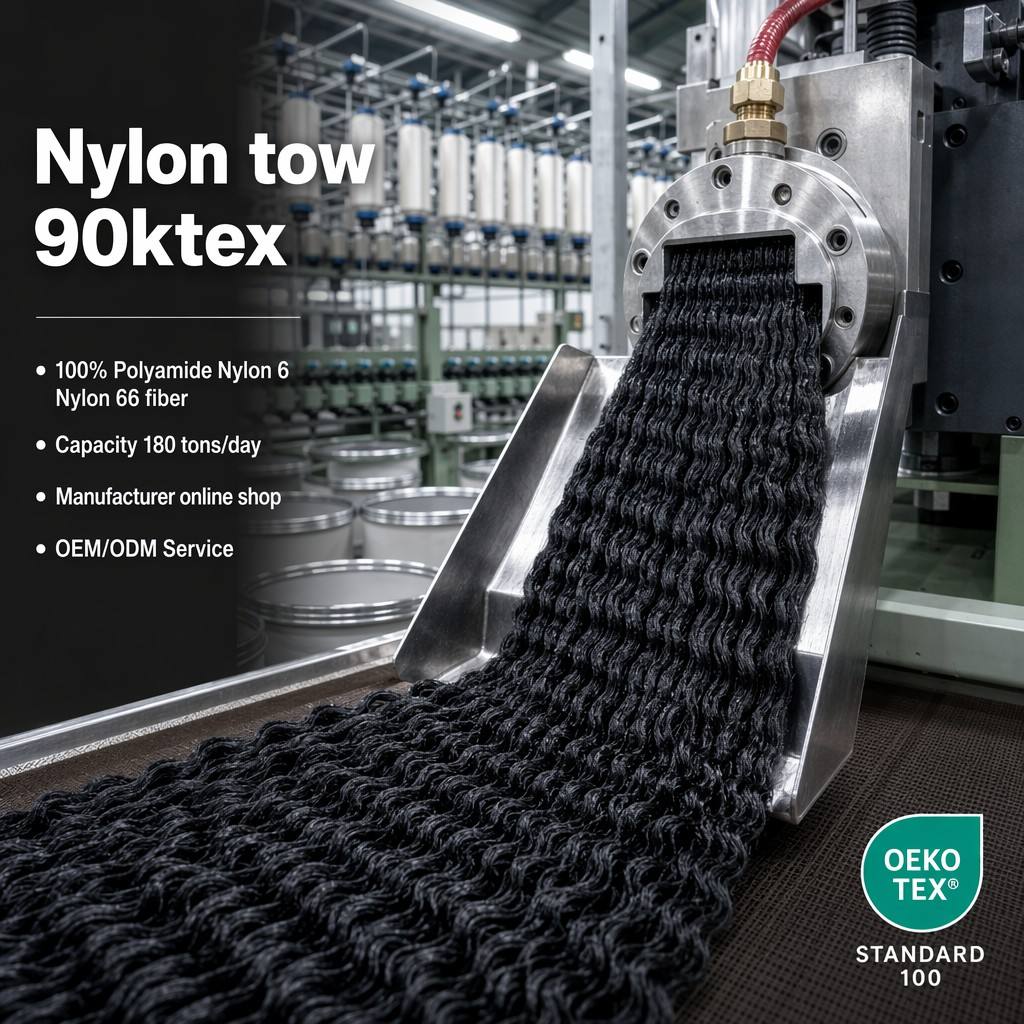
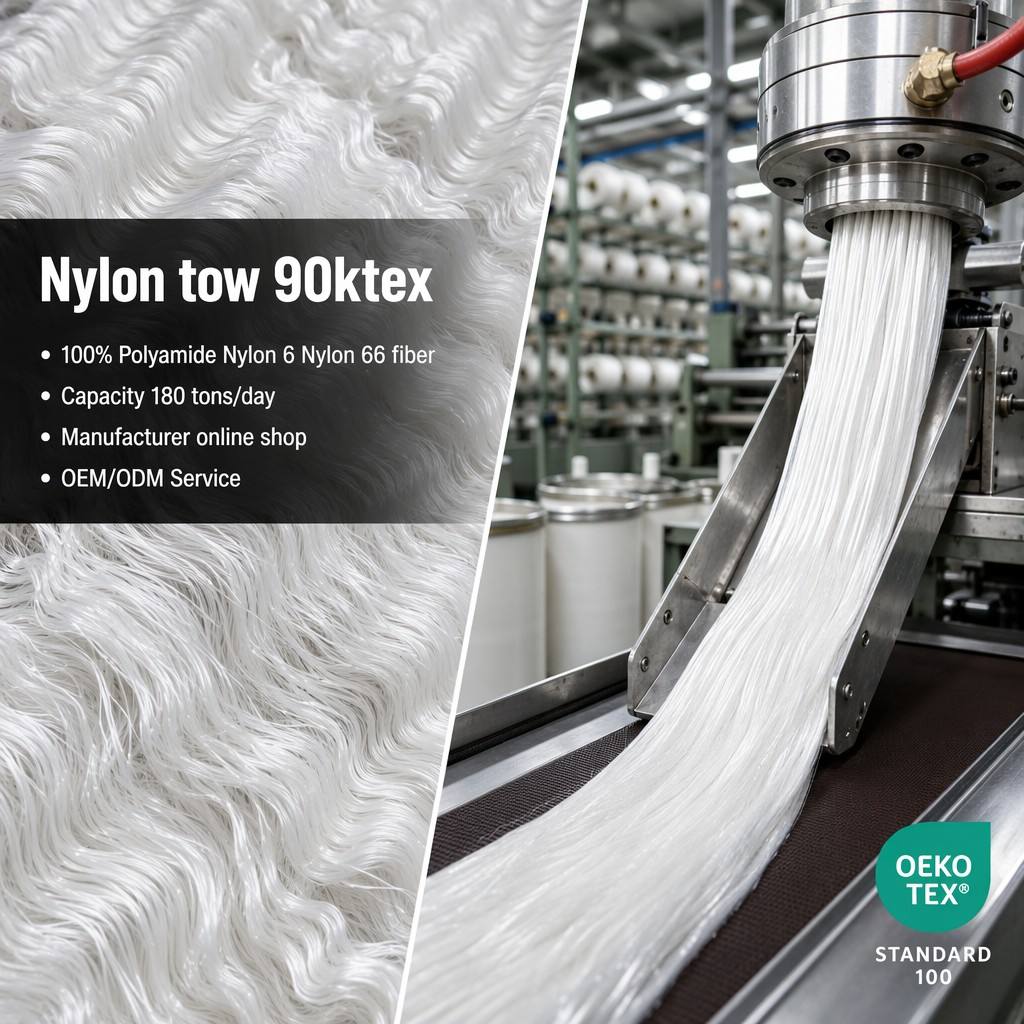
When sourcing teams look up nylon tow tops 90ktex, they are usually trying to connect a fiber specification to a usable industrial form: a continuous nylon feedstock that can be handled, aligned, cut, converted, or further processed without falling apart in the line. In practice, the decision is rarely about the keyword alone. It is about whether the nylon tow, nylon tow tops, or related 90ktex nylon tow format fits the downstream operation cleanly, whether the material behaves consistently, and whether the supplier can support repeat orders without causing process drift.
That matters because nylon fiber tow is not a casual commodity purchase. In a plant environment, the wrong bundle structure or inconsistent tow behavior can create tangling, uneven feeding, poor conversion, or unnecessary waste. If the material is headed into a processing line where transfer, cooling, drying, sorting, or forming is already sensitive, the supplier decision becomes part of the process decision.
Quick reference: where 90ktex fits in the conversation
“90ktex” is a useful clue because tex is a linear density unit used for fibers and filament materials. Buyers typically use it as a shorthand when discussing fiber mass per unit length, product format, and how a tow will behave in handling or downstream conversion. The exact meaning in a procurement document still needs to be checked against the supplier’s specification sheet, but the phrase usually signals that the buyer wants a substantial fiber bundle rather than a loose, low-volume strand.
In other words, if you are comparing nylon tows, you are not just comparing polymer type. You are comparing line behavior, bundle stability, and fit for the machine that comes next.
Why nylon tow format matters in production
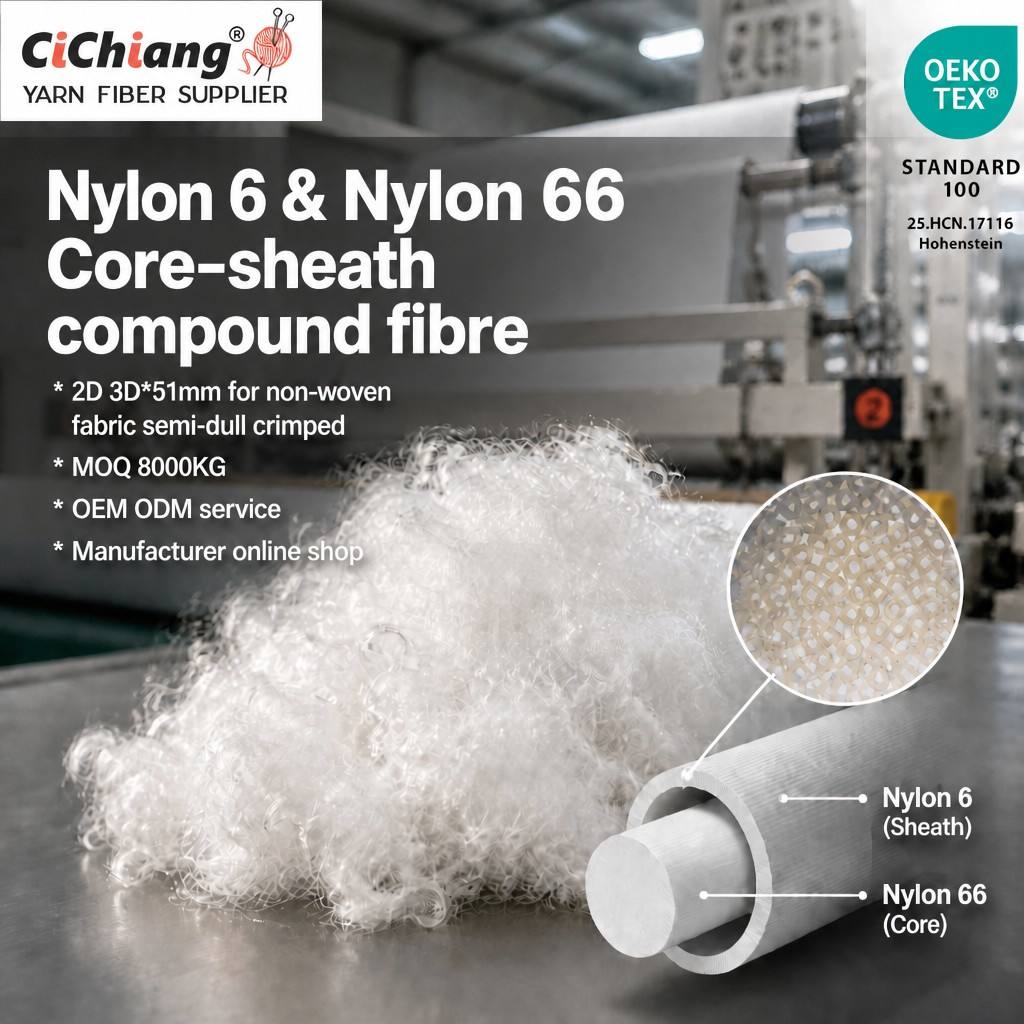
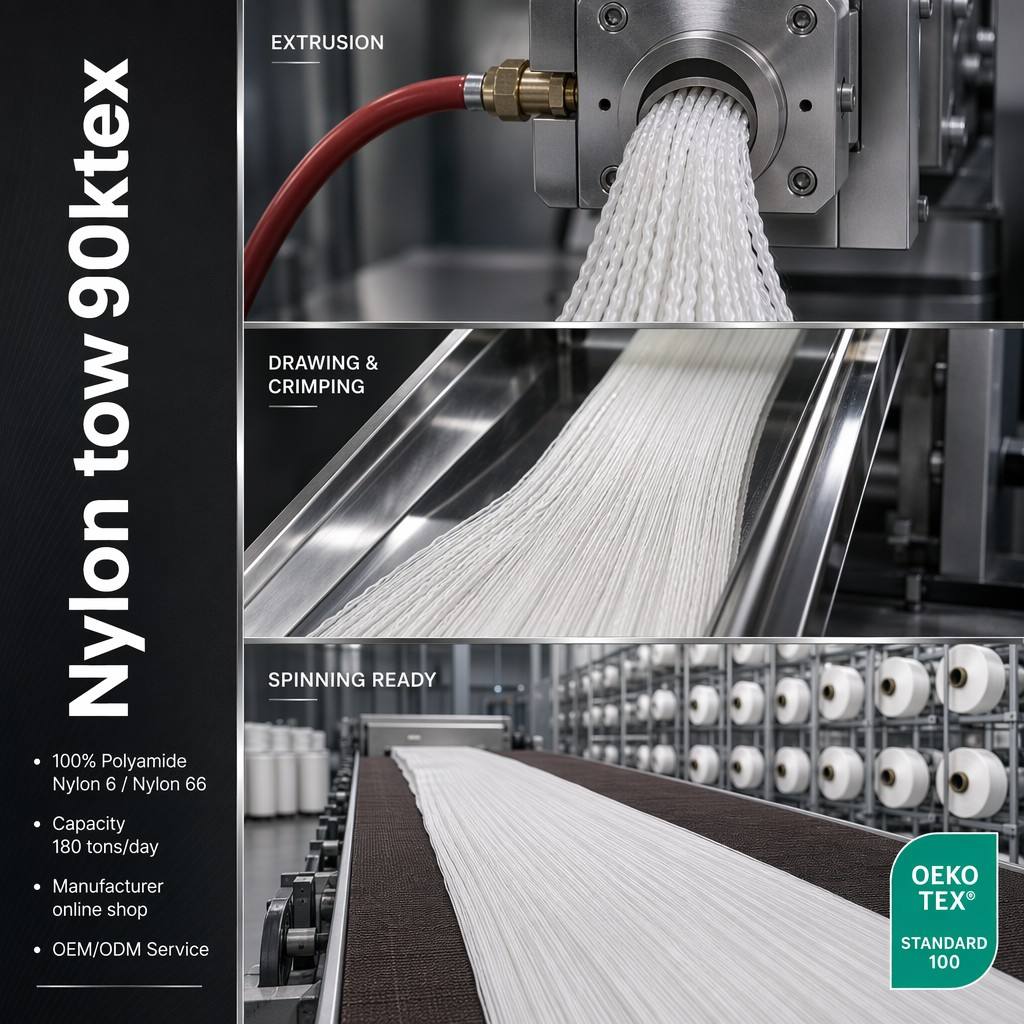
Nylon fiber tow is valued because it can be processed in continuous form and then converted into a more usable intermediate or finished product. For manufacturers working with PA6 or PA66 polyamide nylon fibers, the tow format helps bridge the gap between polymer production and later conversion steps. That can include cutting, opening, web formation, texturizing, or other in-line processing depending on the plant’s setup.
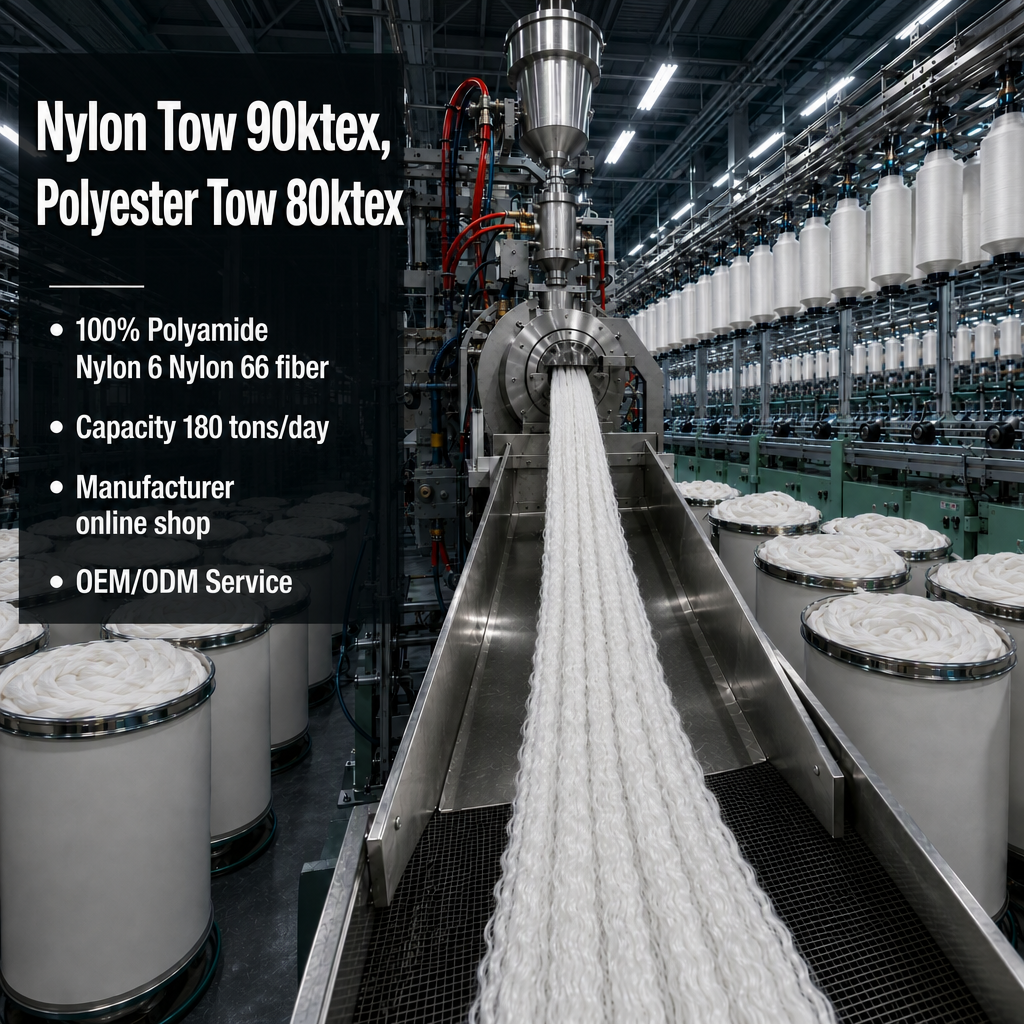
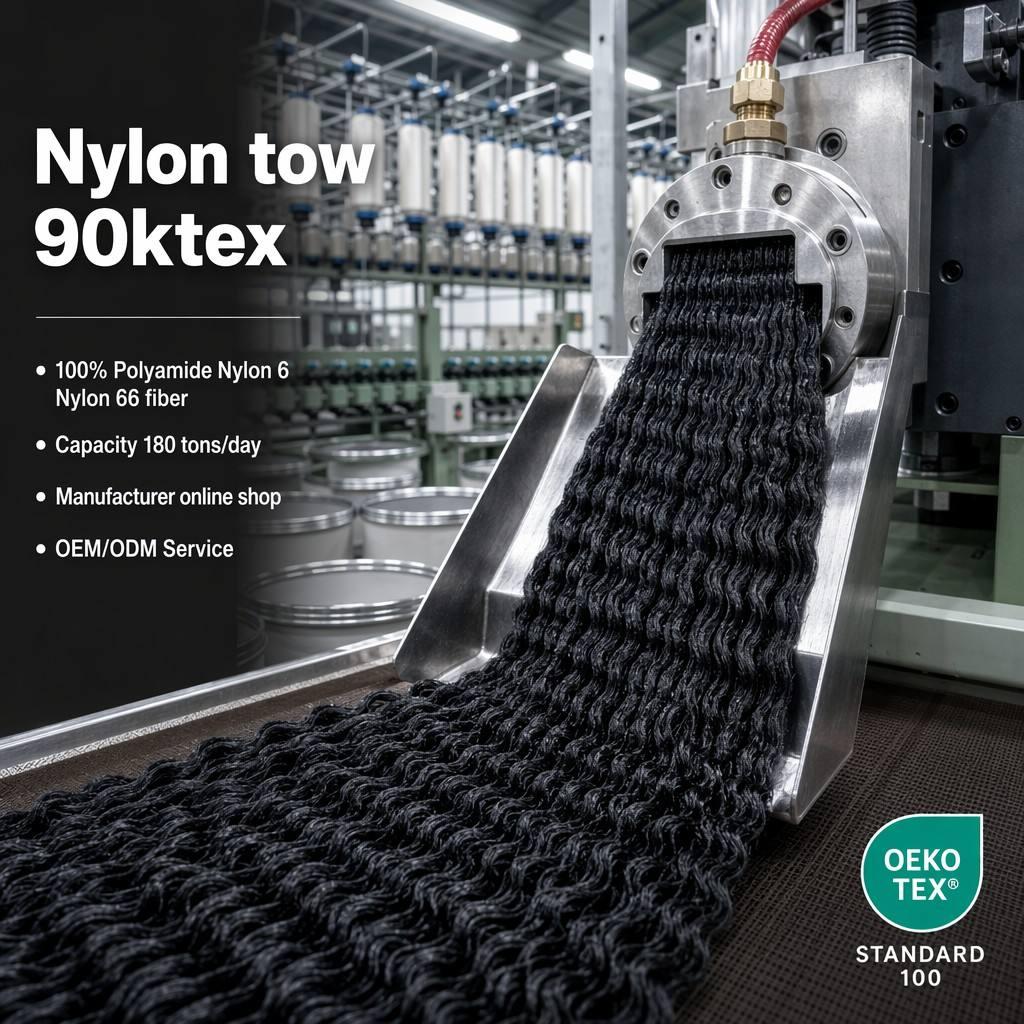
The practical point is straightforward: a tow that stays uniform is easier to handle. A tow that sheds excessively, bunches up, or varies too much in density can disrupt a line that depends on steady feed. That is especially relevant in plants using conveyor-style handling, inclined transfer, or controlled post-processing equipment, where the material must remain coherent across the belt and through the next operation.
What to look for in a nylon fiber tow supplier
Consistency before everything else
For sourcing managers, consistency is usually more important than a glossy product description. Ask how the tow is produced, how the bundle is packed, and what the supplier does to keep batch behavior stable. The exact test package will vary by supplier, but you want enough control to avoid surprises when the material enters your line.
Match the tow to the end process
Not every nylon tow is intended for the same use. Some buyers need material for textile-like conversion, while others need a form suitable for industrial handling or further processing into another product structure. If your process involves a conveyor, drying stage, or forming section, the tow must remain manageable under those conditions. A product that looks fine in storage can misbehave once it is warm, compressed, or moving continuously.
Ask about polymer family, not just the label
With nylon tow tops 90ktex, it is worth clarifying whether the product is based on PA6, PA66, or another polyamide variant. Ningbo Sinopec Fiber Co., Ltd. notes that it specializes in nylon fiber manufacturing, with primary production of PA6 and PA66 polyamide nylon fibers. That kind of clarity helps buyers align the material with heat response, mechanical behavior, and downstream conversion needs.
How industrial handling equipment changes the buying decision
Once nylon tow enters an industrial line, the equipment around it starts to matter as much as the fiber itself. A perforated belt, inclined conveyor, or enclosed transfer system suggests that the plant may be using airflow, drainage, cooling, or controlled movement as part of the process. In those settings, a tow or fiber bundle that is too loose may scatter; one that is too compact may not process evenly.
This is where buyers sometimes make a quiet mistake: they approve the fiber spec without checking how the line treats the material between stages. If the plant uses a long inclined conveyor, side guides, or a wide transport bed, the tow format should be verified against that handling profile. It is a small detail that can save a large amount of troubleshooting later.
Common mistakes when sourcing nylon tows
One common error is treating tex value as the only purchasing criterion. It is important, but it is not the whole story. Bundle form, finish, and intended conversion route can matter just as much.
Another mistake is assuming that all nylon fiber tow behaves similarly in post-processing. PA6 and PA66 are both polyamides, yet they are not interchangeable in every setting. The buyer needs to know what the production line expects, not just what the catalog says.
A third issue is ignoring packaging and handling. A tow that arrives in poor condition can create work at the first machine, which is the least convenient place to discover a supply problem.
Buyer checklist before you request a quote
If you are evaluating nylon tow tops 90ktex for a plant project, it helps to define four things up front: polymer type, intended process step, required bundle format, and expected handling conditions. If the product will pass through drying, transfer, or forming equipment, mention that early. If you need a particular packing arrangement for internal logistics, say so before samples or quotations move too far along.
Ningbo Sinopec Fiber Co., Ltd. operates a nylon fiber factory founded in 1996, with 150 employees including 20 engineers, 50,000 square meters of factory space, and a daily output of 100-150 tons. For buyers planning longer-term supply, that scale may be relevant, but the real question remains whether the supplier’s production style fits your line and your order pattern.
FAQ: a few questions buyers usually ask
Is nylon tow the same as nylon fiber tow?
In many sourcing conversations, yes, the terms are used closely. Still, it is wise to confirm the exact product form being quoted.
Does 90ktex tell me everything I need to know?
No. It gives a useful density reference, but the polymer type, bundle structure, and intended conversion use still need confirmation.
Can nylon tow be used in continuous industrial lines?
Yes, provided the material form suits the handling equipment and the downstream process. That is where supplier communication matters.
A practical next step
If your team is comparing nylon tow tops 90ktex options, start with the process, not the brochure. Define how the tow will move, where it will be transferred, and what the next machine expects from it. Then ask the supplier for the exact material family, format, and packing details that fit that route. A good nylon tow is not just a fiber specification on paper; it is a material that stays cooperative once it reaches the line.