What buyers really need to know about nylon tow tops 90ktex
When sourcing nylon tow tops 90ktex, most buyers are not just comparing a denier or a color chip. They are trying to judge whether the material will run cleanly through downstream processing, hold together during handling, and give consistent results in the final product. That matters whether the end use is fiber conversion, nonwoven processing, filtration media, or another continuous textile line. A tow that looks acceptable on paper can still create trouble on the plant floor if its bundle structure, finish, or tension behavior is not stable enough.
Ningbo Sinopec Fiber Co., Ltd., founded in 1996, focuses on nylon fiber manufacturing and produces mainly PA6 and PA66 polyamide nylon fibers. With 150 employees, including 20 engineers, and a factory covering 50,000 square meters, the company is set up for industrial-scale supply rather than small trial lots. That does not automatically answer every sourcing question, of course, but it does give buyers a useful starting point when they need continuous, repeatable fiber supply.
Where 90ktex fits in the sourcing conversation
In practice, 90ktex nylon tow sits in the category of heavy continuous filament bundles that are intended for further processing rather than direct consumer use. Buyers often use this kind of input when they need a larger fiber body for opening, stretching, texturizing, cutting, or web formation. The specific route depends on the plant, but the common thread is consistency. If the tow is too loose, too uneven, or too prone to snarling, the line operators feel it quickly.
That is why nylon tow tops are usually evaluated less like a finished textile and more like a process material. Procurement teams should ask how the tow behaves under feed, whether the bundle remains uniform across the batch, and how it responds to the equipment already in place. A supplier can offer a suitable fiber chemistry, but the downstream machine still has the final say.
Key material characteristics buyers usually compare
There are a few practical points worth checking before placing volume orders:
First, the base polymer matters. PA6 and PA66 are not interchangeable in every application. They can differ in processing behavior, heat response, and mechanical feel, so the buyer should match the grade to the line and the end product rather than choosing by name alone.
Second, the tow structure matters. Terms such as nylon fiber tow and nylon fiber top may sound similar in catalog language, but what really counts is how the material is bundled, whether it is easy to spread, and whether it stays workable during continuous handling. A glossy, compact bundle may feed differently from a softer, more open one.
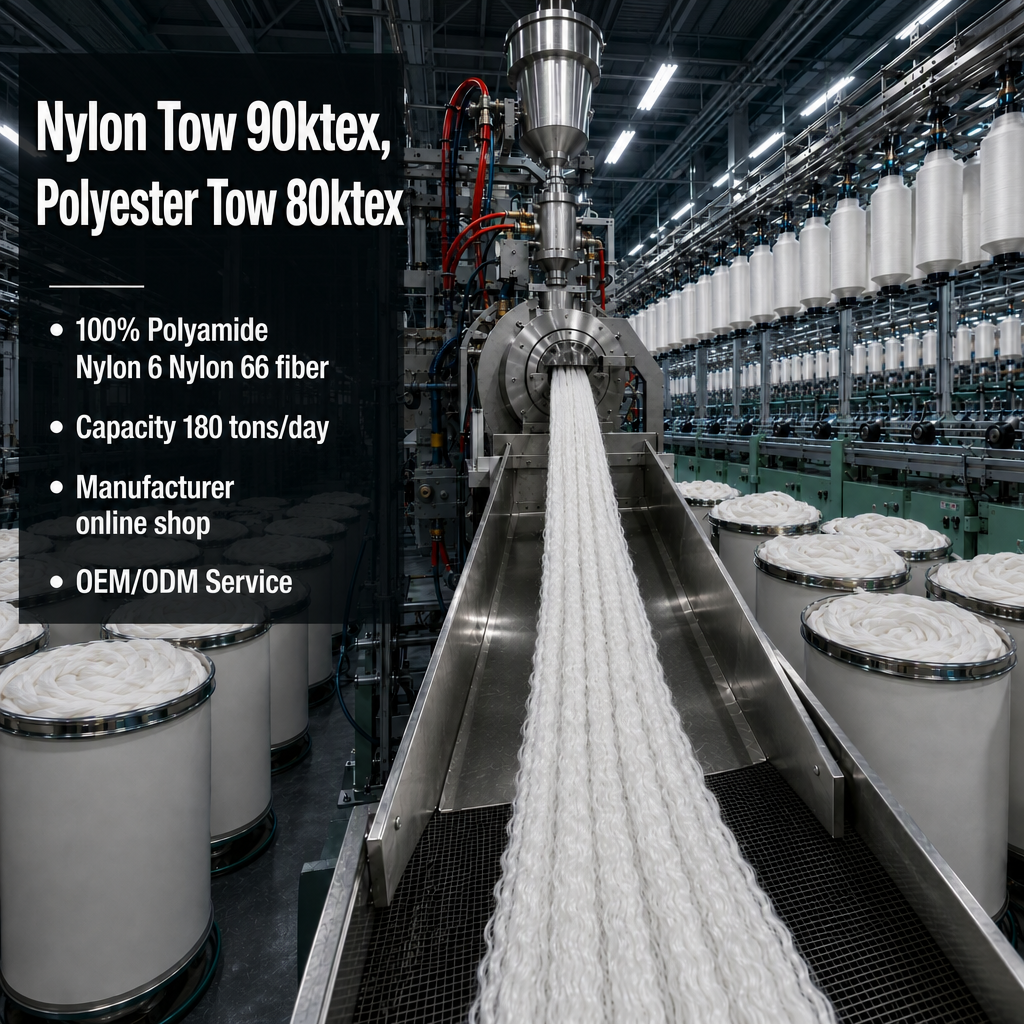
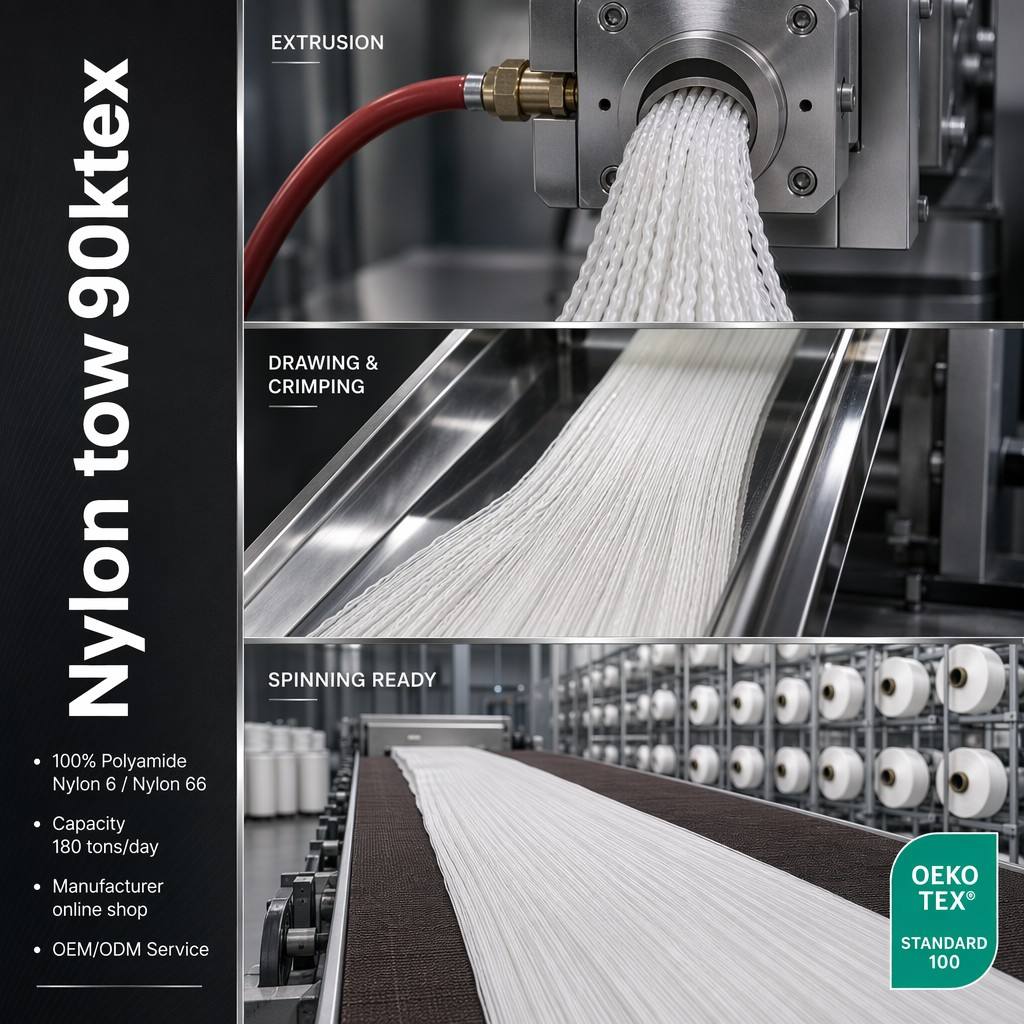
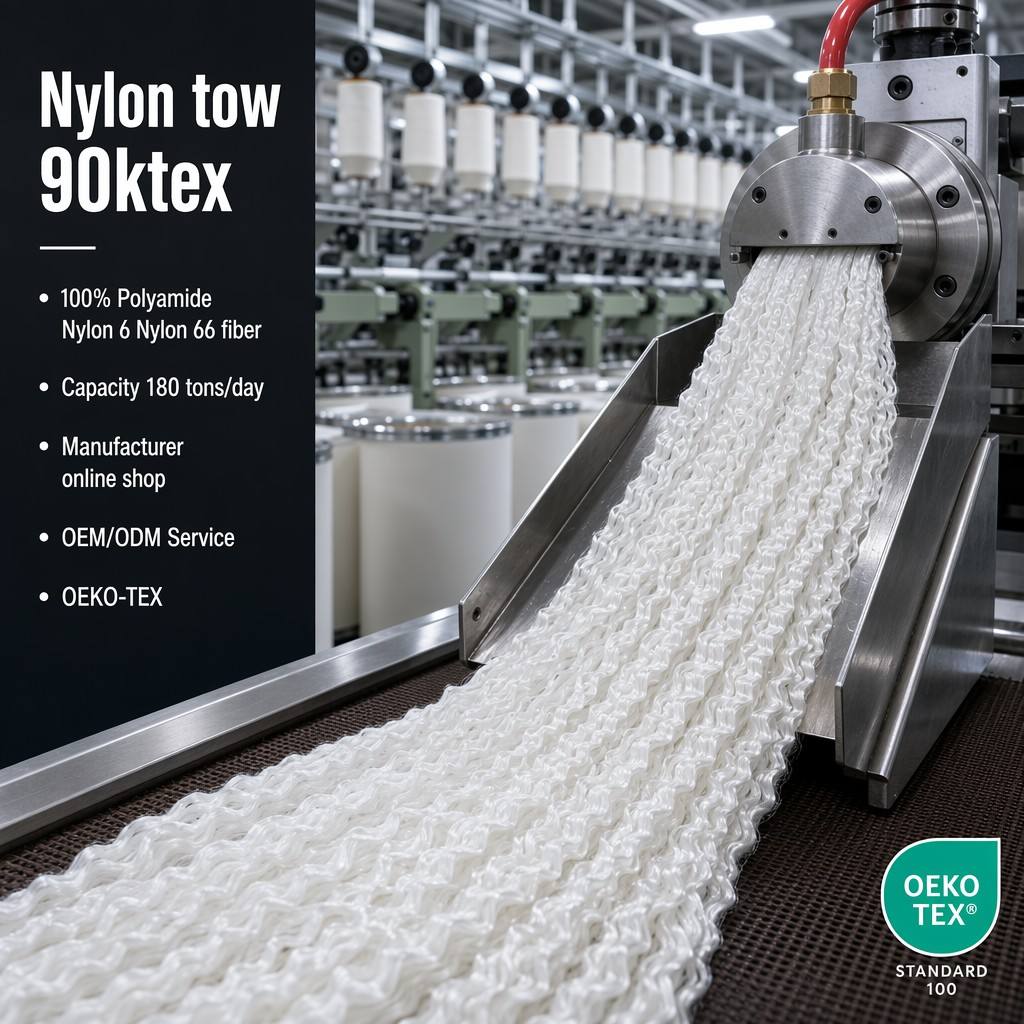
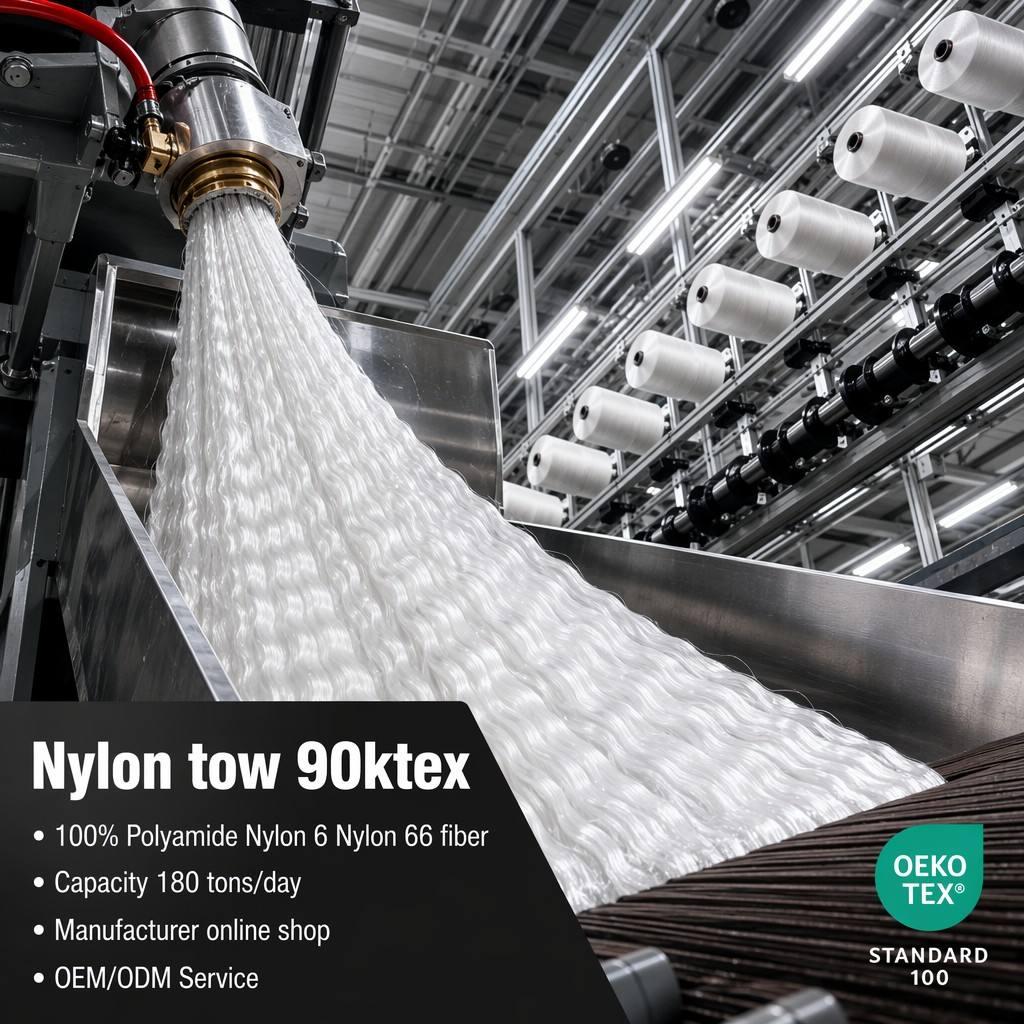
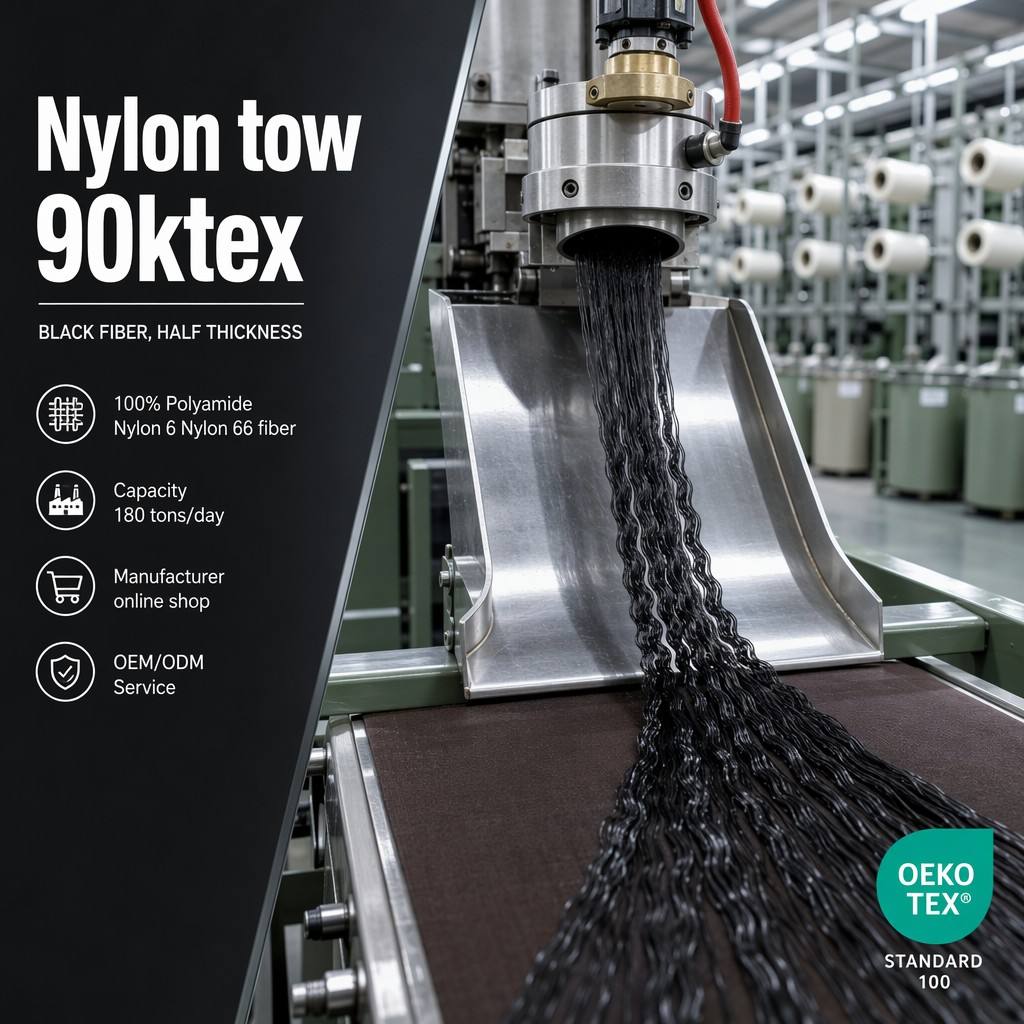
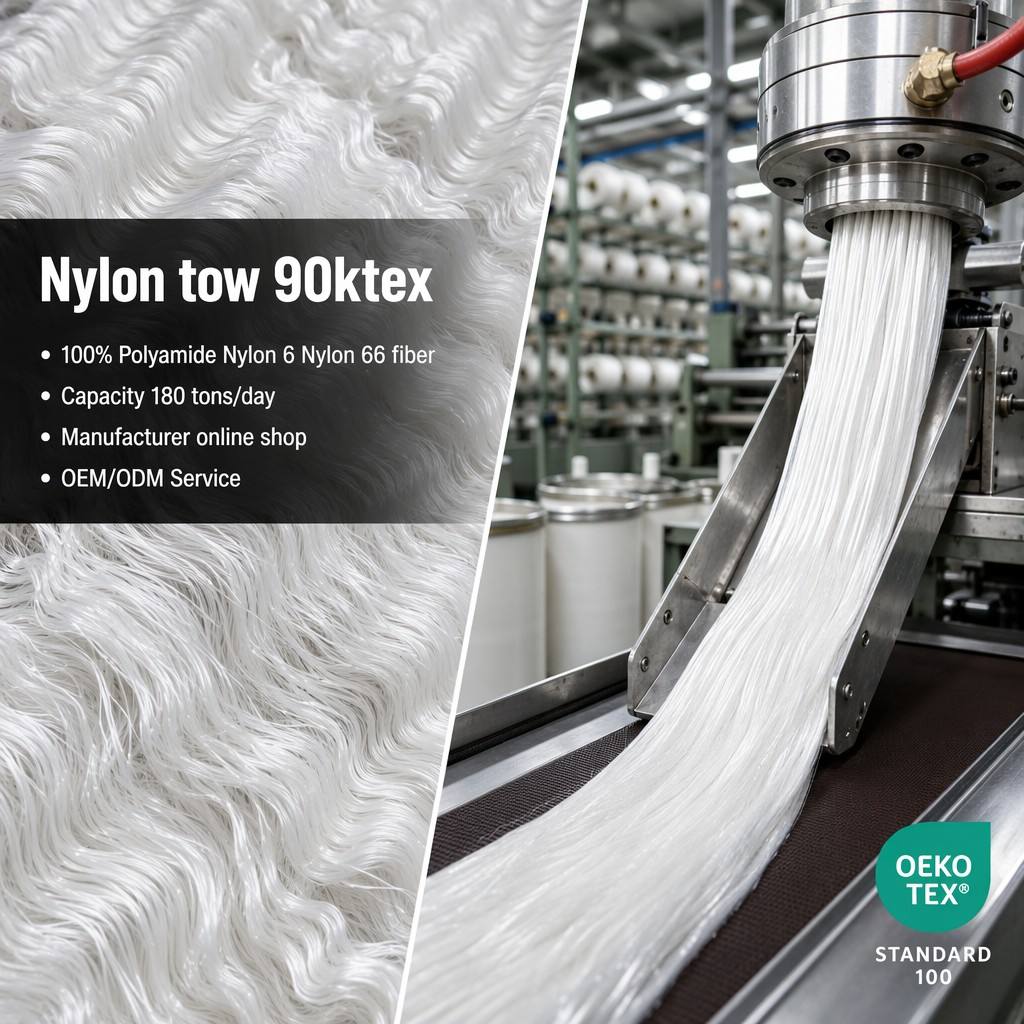
Third, process stability matters more than an attractive sample. The plant line shown in the reference image is the kind of continuous conveyor setup where lightweight web or tow material must stay controlled through movement, transfer, and possibly heat or drying stages. In that environment, variation in feed behavior can create waste faster than many buyers expect.
How to evaluate supplier capability without overcomplicating it
A reasonable supplier review should cover production scale, engineering support, and the ability to support long-term orders. Ningbo Sinopec Fiber reports a daily output of 100-150 tons, which suggests it can support substantial industrial demand. For buyers, that is useful mainly because it can reduce the risk of stop-start supply patterns, especially when the tow is part of a broader manufacturing line.
Still, scale alone is not enough. Ask for product definitions that are clear enough to avoid confusion between 90ktex nylon fiber, related tow forms, and any custom bundle requirements. If your line uses an inclined conveyor, a drying section, or a guided transfer system, the handoff points deserve special attention. Many sourcing problems begin not with the fiber itself, but with how it moves between stages.
Common mistakes to avoid
One common mistake is assuming all heavy nylon tow behaves the same. It does not. Another is focusing only on price and ignoring how the material will be handled in production. A third is skipping a short pilot run because the sample looked acceptable in the lab. That shortcut often costs more later, especially when the downstream process is sensitive to bundle stability or moisture behavior.
Practical buyer checklist
If you are comparing nylon tow tops 90ktex from multiple suppliers, keep the discussion concrete. Confirm the polymer type, packaging format, batch consistency, and what sort of process support the supplier can realistically provide. If your application involves nonwoven formation, filtration media, insulation, or other continuous web processing, ask how the tow is expected to be fed, opened, or transferred. Those details can matter more than a polished brochure.
For plants using continuous conveyor-based handling, a stable tow can improve throughput and reduce downstream rework. For buyers, that is the real decision: not whether the material is merely available, but whether it will behave predictably on your line.
FAQ: quick sourcing questions
Is 90ktex the right choice for every nylon application?
No. It is a process-specific format, and the right answer depends on how the material will be converted.
Are PA6 and PA66 interchangeable?
Not always. They should be selected against the final process requirement, not just the material family.
What should matter most in a supplier review?
Consistency, handling behavior, and the supplier’s ability to support repeat orders over time.
If you are developing a new line or replacing an existing source, start with a short technical discussion and a trial that reflects real production conditions. That is usually where the useful answers show up.
For long-term supply inquiries, Ningbo Sinopec Fiber Co., Ltd. can be approached as an industrial nylon fiber manufacturer with established production capacity and engineering support. The next step is to match your processing route to the right tow specification, not the other way around.