What Buyers Mean When They Ask for nylon tow tops 90ktex
When sourcing nylon tow tops 90ktex, buyers are usually trying to solve a practical production problem: getting a stable, processable nylon fiber feedstock that can be opened, aligned, cut, or converted into downstream textile and nonwoven products without too much variation. In that sense, the term sits between raw fiber supply and a more specialized processing specification. If you work in yarn, staple fiber, nonwoven, or technical textile production, the question is rarely just “What is it?” The real question is whether the material will run cleanly on your line and stay consistent from batch to batch.
Nylon tow, nylon tows, and 90ktex nylon tow often refer to a high-volume filament bundle with a defined linear density. The 90k tex fiber designation tells sourcing teams something important: the tow is heavy enough to be industrially useful, but still needs the right handling to avoid snarling, uneven opening, or poor downstream web formation. That matters whether the tow is headed for cutting into staple, for further opening, or for conversion into a fiber layer.
Why the Specification Matters on the Line
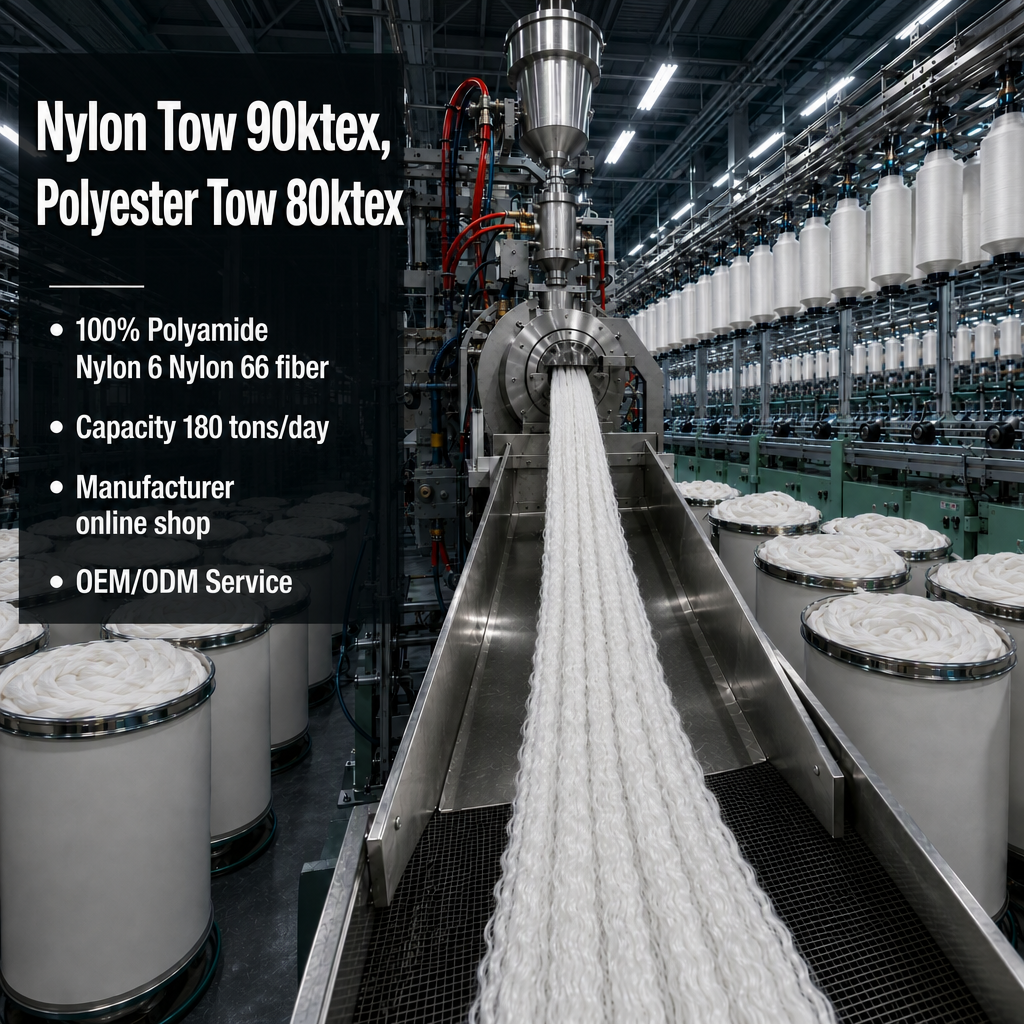
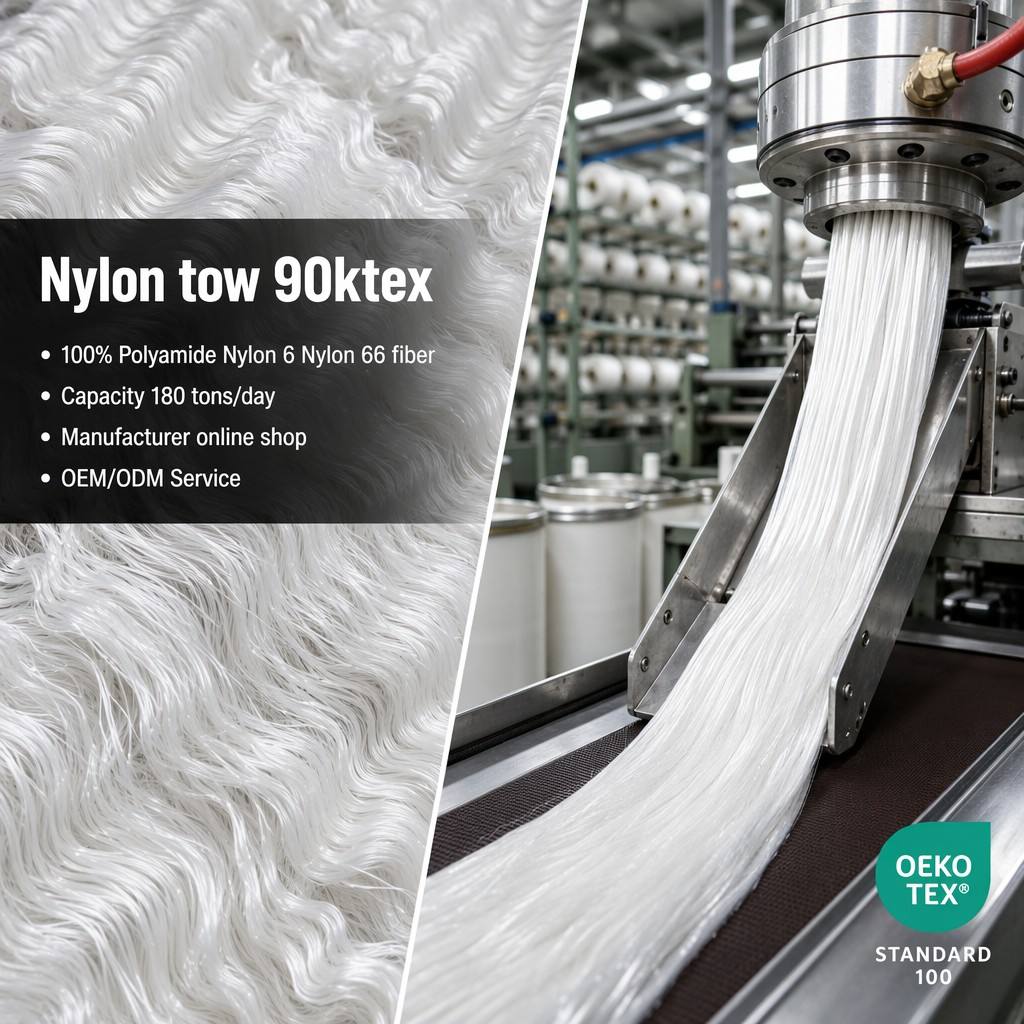
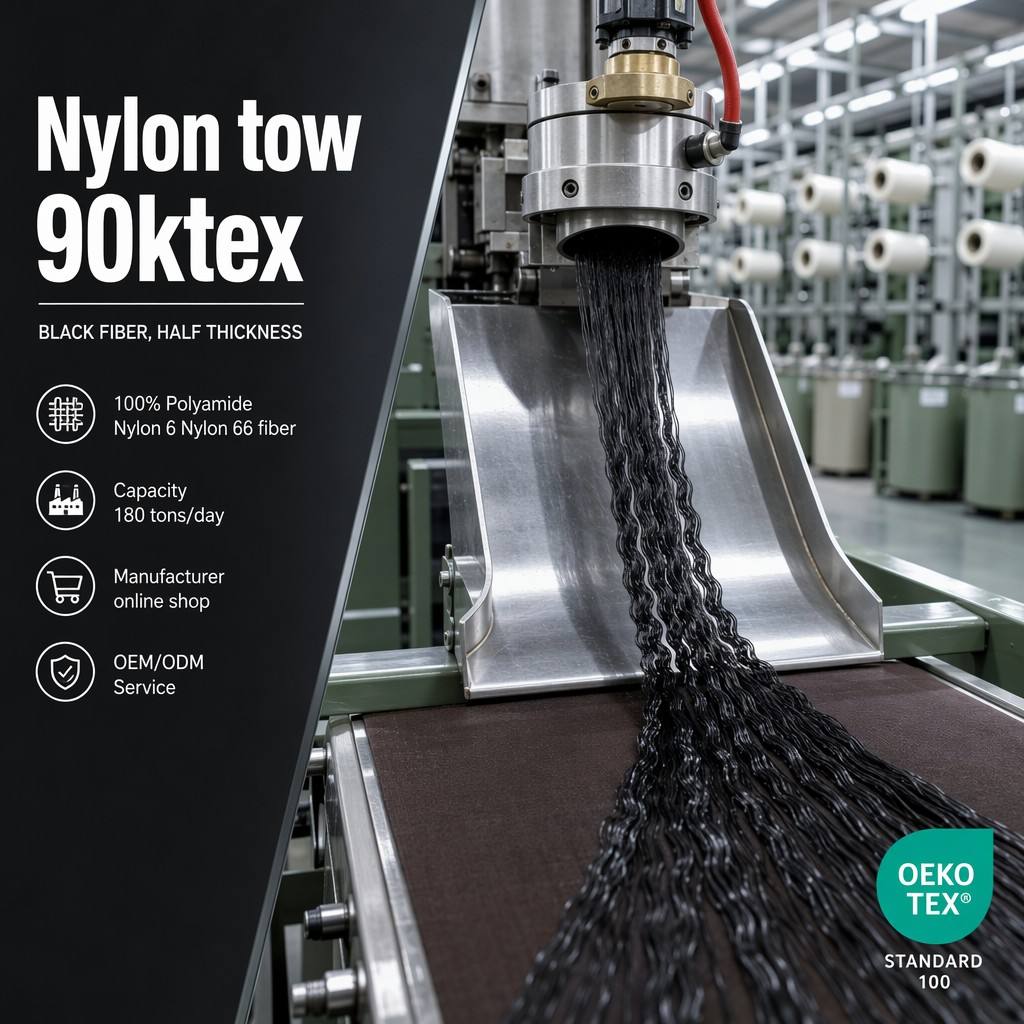
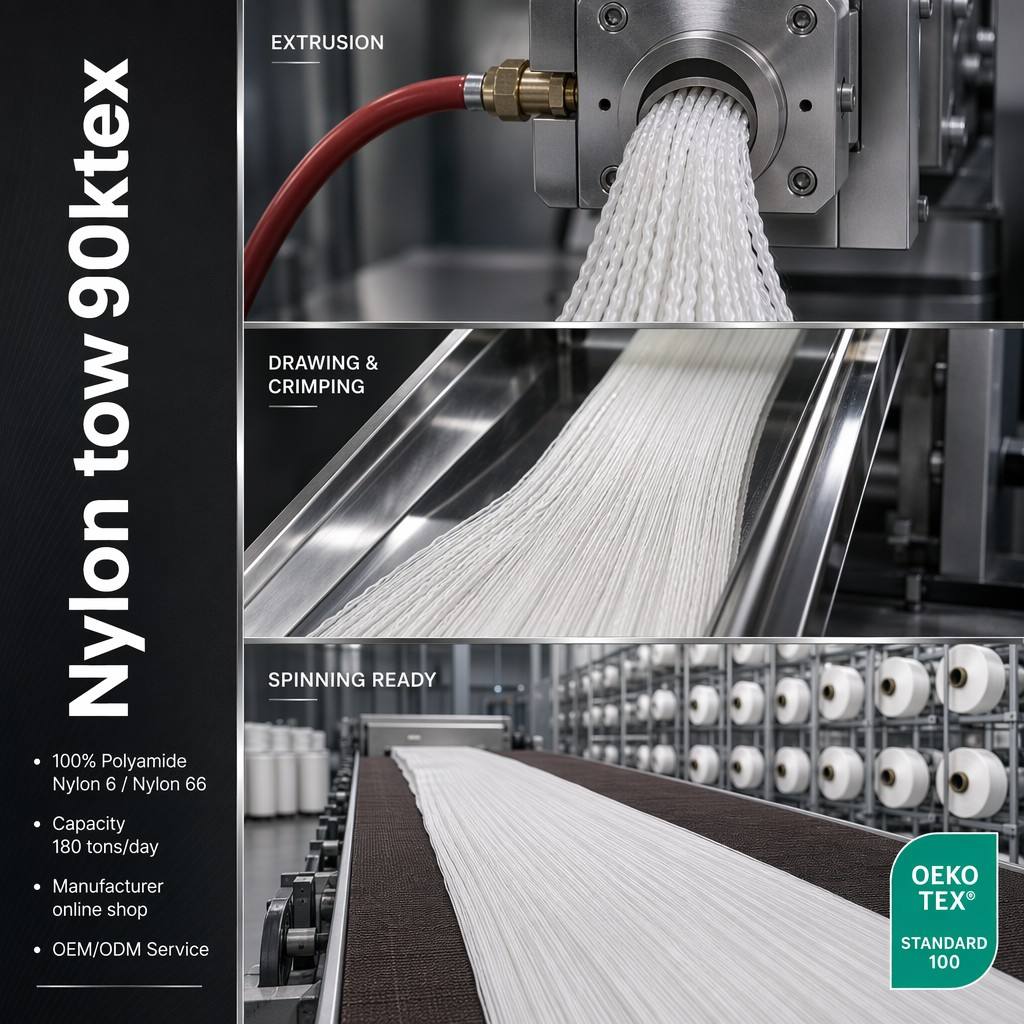
A tow is not just “more fiber.” Its bundle structure, tenacity, and handling behavior can change how smoothly the production line runs. In a plant setting, a white fibrous mass moving over a perforated conveyor or through an inclined conveyor can look deceptively simple. In practice, the material’s cohesion, fluffiness, and feed stability affect everything from web uniformity to dust generation. A buyer who under-specifies the tow may save time at RFQ stage and lose it later in trial runs.
For nylon fiber tow applications, consistency is often more valuable than a catchy headline spec. High tenacity nylon fiber is typically sought where the process must tolerate tension, friction, and repeated movement through guides or forming equipment. If your operation includes opening, laying, or transferring a loose fiber mass, you want predictable fiber behavior more than dramatic claims. That is especially true in nonwoven and recycled fiber handling lines, where small variations can become visible defects.
Key Characteristics Buyers Usually Compare
Linear density and tow size
90ktex nylon tow suggests a substantial bundle size. Buyers should confirm how that density aligns with their machine setup, because a tow that is too heavy for the opening stage can bridge, compact, or feed unevenly.
Polymer family
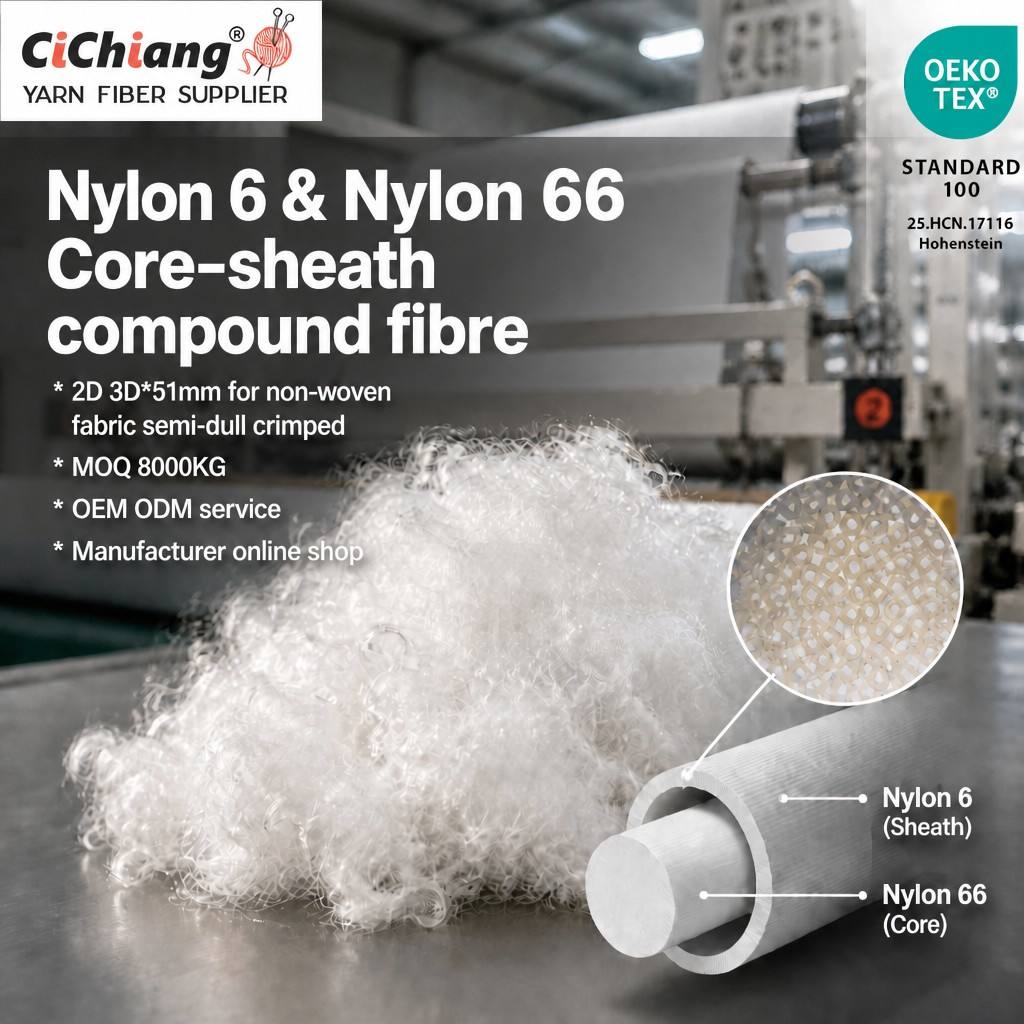
PA6 and PA66 are both common in nylon fiber manufacturing. They do not behave identically in processing or end use, so the polymer choice should match the intended product. A supplier should be clear about which type is being offered.
Tenacity and downstream processability
The phrase high tenacity nylon fiber is often used for materials expected to hold together under mechanical stress. Still, tenacity alone is not enough. The tow must also be manageable in your opening, cutting, and conveying steps.
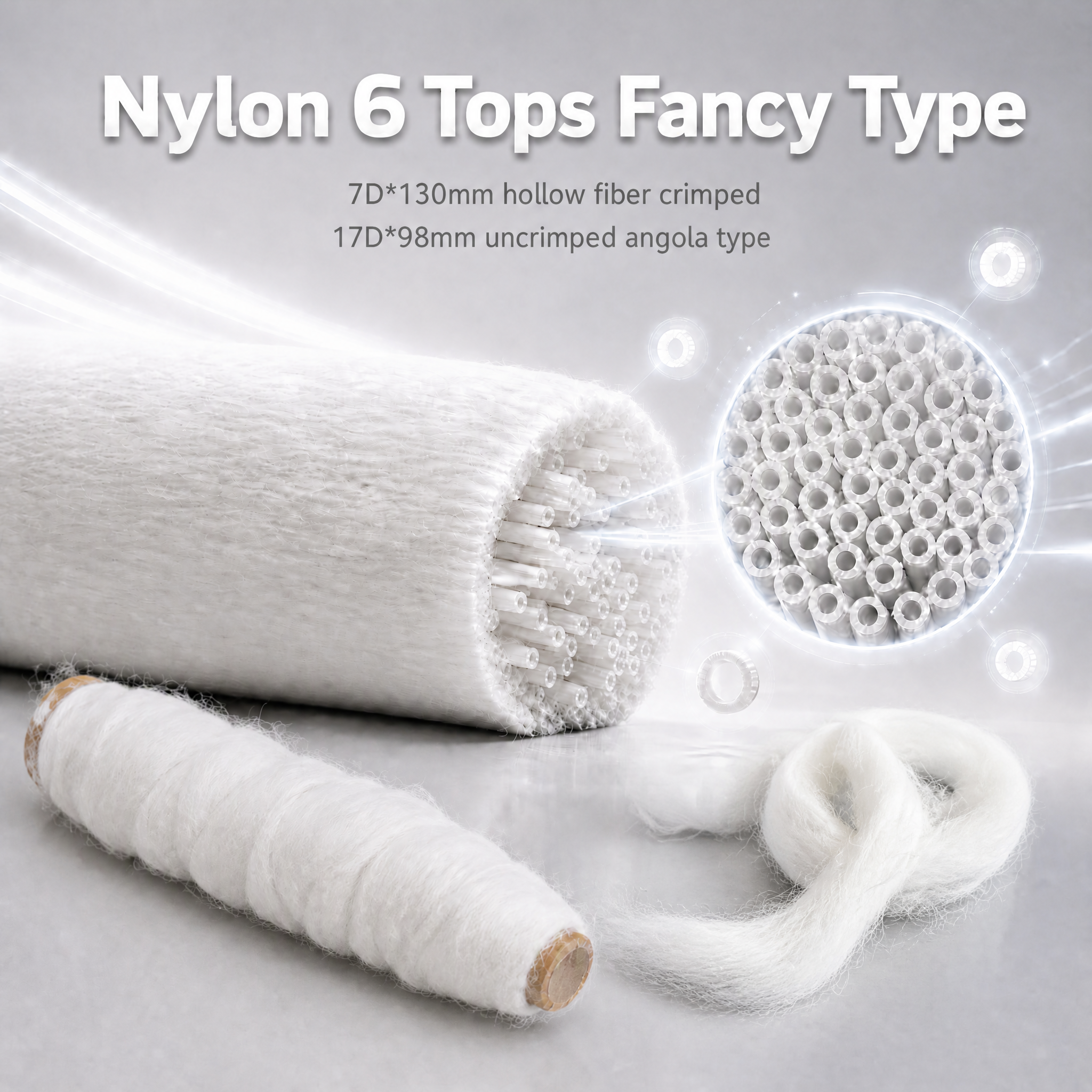
Appearance and handling form
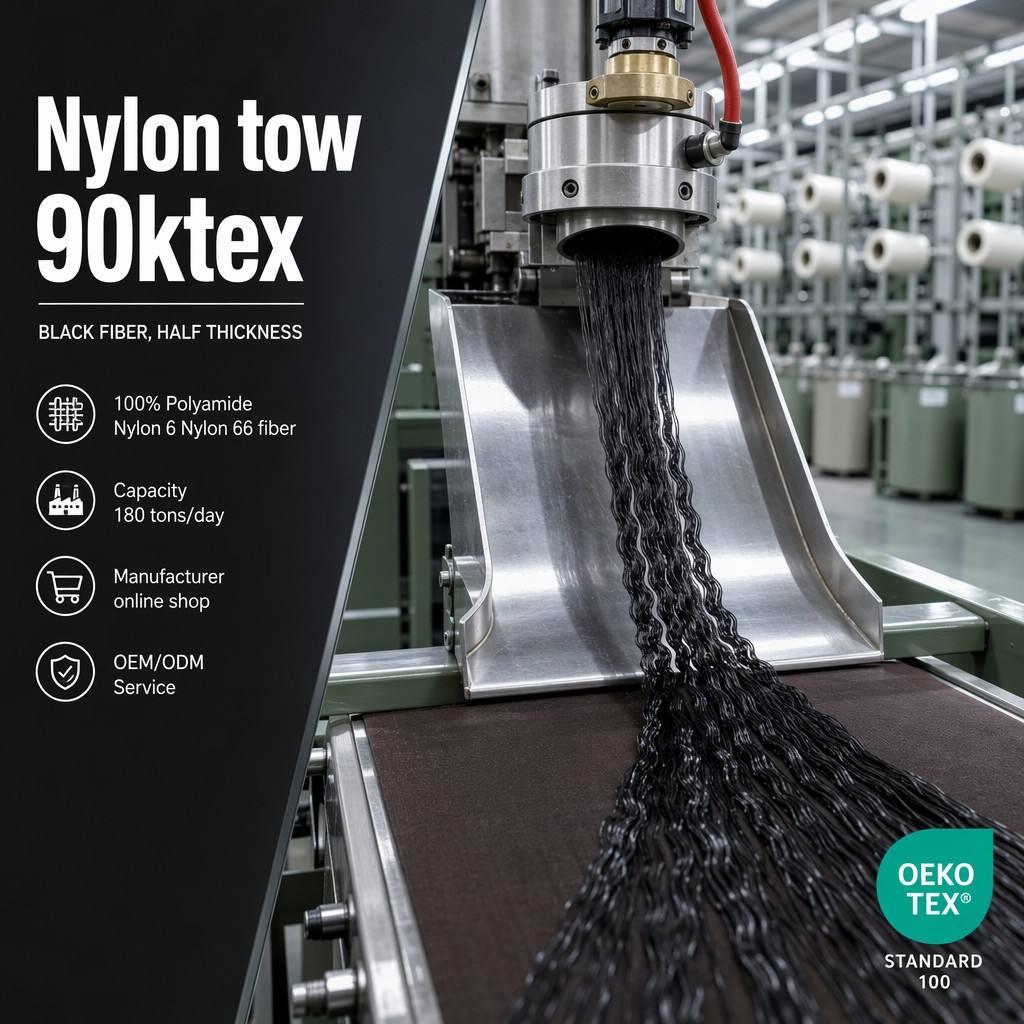
In practical shop-floor terms, buyers care about whether the tow comes as a clean continuous bundle, how much fly it sheds, and how it behaves when laid onto a belt or fed through a chute. Those details are often more decisive than the brochure wording.
Where 90ktex Nylon Tow Fits in Manufacturing
In nylon fiber manufacturing, tow can serve as an intermediate form before conversion into staple fiber or other downstream structures. It may also feed nonwoven processes where the goal is a lofty, uniform web rather than a spun yarn. Depending on the plant, the same base material might move through opening, cutting, web forming, or collection on a conveyor system with perforated support for airflow and separation.
Ningbo Sinopec Fiber Co., Ltd., founded in 1996, focuses on nylon fiber manufacturing and produces PA6 and PA66 polyamide nylon fibers. The company states a workforce of 150 employees, including 20 engineers, with a 50,000 square meter factory and 20,000 square meters of production space. It also reports a daily output of 100-150 tons. For buyers, that scale may matter as much as the fiber spec itself, because supply continuity is often the real bottleneck.
Common Buyer Mistakes
One common mistake is treating all nylon tow as interchangeable. It is not. Another is assuming the tow will behave the same way in every line because the tex looks close on paper. Process equipment, humidity, opening method, and downstream target all affect performance. A third mistake is not asking how the tow is packed and delivered. A strong product spec can still become a handling problem if the logistics format is awkward for your plant.
Buyers should also be cautious about overfocusing on a single metric. Tex, denier, and tenacity matter, but so do feed consistency, cleanliness, and the supplier’s ability to maintain repeatability over time.
Practical Questions to Put in Your RFQ
If you are evaluating nylon tow tops 90ktex, ask for the exact nylon grade, the tow count or bundle structure, and the intended downstream processing route. If the supplier can describe how the material behaves during opening or transfer, that is often more useful than a long list of generic promises. You should also ask whether the tow is intended for staple conversion, nonwoven forming, or another industrial use, because the answer can change the best purchase decision.
Bottom Line for Sourcing Teams
For engineers and sourcing managers, the value of 90ktex nylon tow is not just in the number. It is in whether that feedstock integrates cleanly with your existing equipment and delivers stable output without excessive waste. If you are comparing nylon tow tops, look beyond the headline spec and test the material in the context of your own line. That is usually where the real answer shows up.
If you are sourcing from a manufacturer with established nylon fiber production capacity, request a technical discussion rather than a quote alone. A short conversation about polymer type, tow structure, and intended application can save a great deal of trial time later.